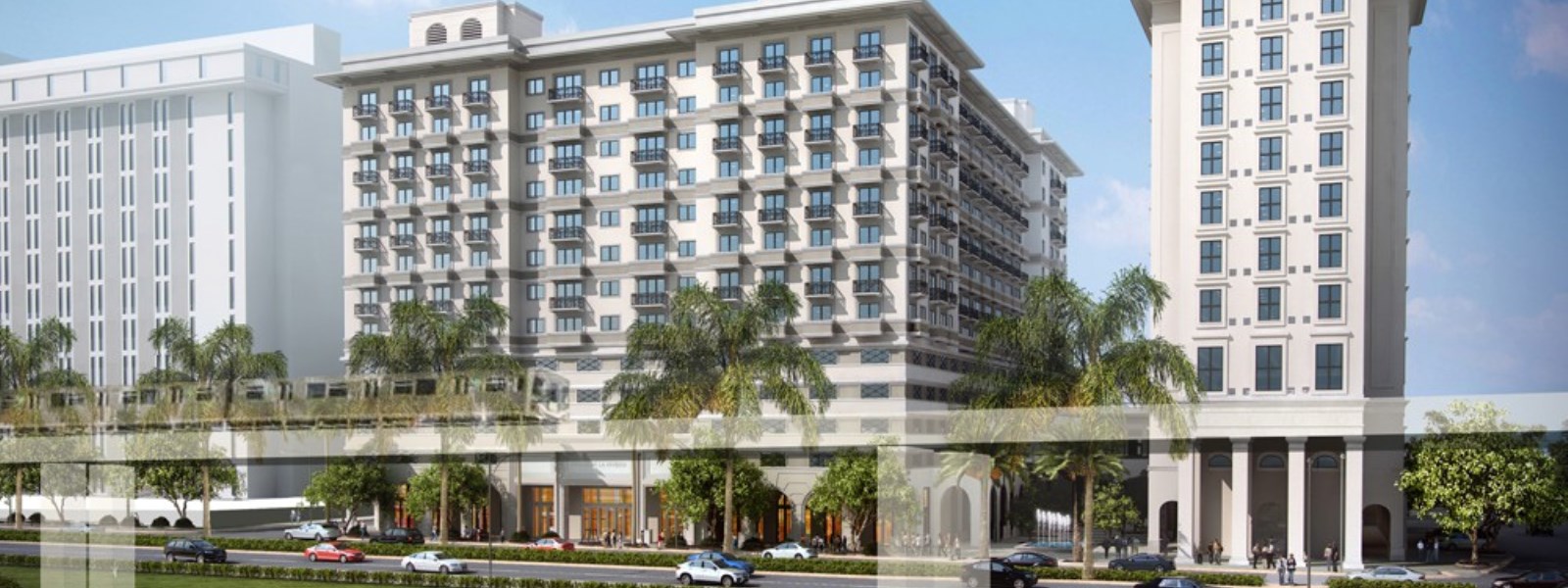
Westpoint Retail Plaza

Castle Real Estate Enterprises has engaged Ven-American Real Estate, Inc. to exclusively manage and lease Westpoint Retail Plaza, an immaculate 16,655-square foot neighborhood center, located at 10101-10251 W. Commercial Blvd. in Tamarac.

Tenants at the center include Dunkin Donuts, Subway, AT&T, Rotelli Pizza & Pasta, CareSpot Urgent Care, Gentle Dentistry, Brightway Insurance and Liberty Tax.

Under Ven-American Real Estate’s management, Subway held a Grand Re-Opening, unveiling a new mouth-watering store redesign focused on integrating technology into all aspects of the restaurant design.

Only one of every five Subway shops in the entire United States will feature this design, which includes:


  • All new décor, equipment and design
  • New self-ordering kiosks, allowing guests to “skip the line” and get in and out quicker
  • New touchscreen fountain beverage machine with flavor-customization capability
  • New digital menu display
  • New coffee and specialty coffee program using freshly-ground coffee beans
  • New Panini sandwich press
  • New sauces and toppings

Subway’s goal with the new design is to create a more welcoming and comfortable environment for “this generation’s consumer” while continuing its dedication to delivering the same delicious, fresh and healthy food products the brand has provided since 1965.

Andrew Kruss

“We are very honored to be a part of this technology-centric Subway store concept,” commented Andrew Kruss, Director of Commercial Services for Ven-American Real Estate, Inc.  “It’s the first one in the entire state of Florida, and being a part of any ‘first’ is always exciting,” he added.

The shopping center has also begun a “redesign” of its own.  The property has recently been freshly painted. In addition, plans call for an upgrade to the lighting throughout property – not only for energy efficiency purposes, but to provide a better quality of light and coverage, as well as reducing maintenance costs.

“Our goal is to continue to make tenants and visitors feel safe and make the property more aesthetically pleasing at night,” said Kruss.

Andrew Kruss is a Ygrene Certified Contractor and has helped many clients improve their energy and water efficiency. Projects include lighting, HVAC, roofing, energy controls and impact windows. At Monarch Commerce Center in Miramar, Florida, another Ven-American Real Estate, Inc.-managed property, Kruss was able to reduce energy consumption by approximately 40% while improving light coverage and quality.

“We have also reduced lighting related maintenance costs by approximately $5,700 per year,” Kruss explained.

Andrew Kruss has owned, managed, leased and sold commercial property for thirty years. He is a practical, solution-oriented, hands-on manager who believes in efficiency in property management and energy sustainability solutions.

Kruss added, “We look forward to working with the tenants and Castle Real Estate Enterprises to make the property more attractive, efficient and productive for the entire community’s benefit.”

The shopping center, conveniently located along the Sunrise/Tamarac city boundary, features 150 parking spaces, AT&T Fiber and Comcast Cable, as well as excellent visibility facing busy Commercial Blvd. cross streets Nob Hill Road & Hiatus Road, with 50,000 vehicles per day traveling between the neighborhood thoroughfares. The property is also located adjacent to heavily-traveled Sawgrass Expressway.

Year-end surges in the office, industrial and retail sectors foreshadow robust economic growth across South Florida for 2017, commercial real estate experts say.

A lack of new supply pushed office rents higher, particularly in the downtown corridors, and the optimism displayed by businesses looking to expand is prompting developers to strongly consider shovels in the ground after a decade of inactivity.

West City Partners has proposed a 500,000-square-foot office building in downtown Fort Lauderdale, although the project isn’t expected to break ground until an anchor tenant commits.

The Stiles real estate firm is in talks with Broward College for a ground lease at the two-building site on Las Olas Boulevard. Stiles would tear down the buildings and replace them with a 350,000-square-foot office tower, said Doug Eagon, the developer’s vice chairman.

“It is time to introduce the next generation of office space into the downtown market,” Eagon said.

Last year, Stiles paid $13.1 million for the Bank of America building next to Broward College.

“The firm is considering its options, with retail and residential likely,” Eagon said.

Meanwhile, demand is soaring for warehouse and distribution space as e-commerce suppliers struggle to keep up with online retail sales, according to a report from the Colliers  International real estate firm.

In the fourth quarter of 2016, Broward’s industrial vacancy rate plummetted to 4.4 percent from 6.6 percent in the fourth quarter of 2015, the Colliers data show. Palm Beach County’s vacancy dropped to a nine-year low of 4.2 percent.

Boca Raton and Jupiter had the county’s two lowest industrial vacancy rates, at 1.2 percent and 1.5 percent, respectively. Those two markets also had the two highest rents — $14.53 a square foot in Boca Raton and $11.43 a square foot in Jupiter.

“Palm Beach County has more than 422,000 square feet of industrial space under construction, the majority of it at McCraney Property Co.’s Turpike Business Park adjacent to Florida’s Turnpike at Belvedere Road,” Colliers said.

In Broward, Butters Construction and Development and Bristol Group Inc. are planning a 925,000-square-foot business park at the site of the former Deerfield Country Club off Interstate 95 and Hillsboro Boulevard.

Tom Capocefalo, senior managing director for the Savills Studley commercial real estate brokerage in Miami, said the tri-county region is geographically positioned to easily ship goods domestically or internationally to the end users.

“We’re finding that the South Florida marketplace is one of the top-tier distribution markets in the country,” Capocefalo said. “It’s incredible, the pace of it.”

“Industial developers are moving north into Palm Beach County because the county has more available property than either Broward or Miami-Dade,” said Ken Krasnow, executive managing director for Colliers in South Florida, said

“Land is a scarcity,” Krasnow said. “We’re not making any more of it.”

“Palm Beach County also had a banner year in retail, with more than 1 million square feet of space leased – the highest level since 2006 and nearly double the 515,050 of 2015,” Colliers said.

Broward totaled 1.4 million square feet in new retail leases, its best showing in a decade. The first phase of Dania Pointe, an $800 million shopping and entertainment center, is expected to open this year just east of Interstate 95 at Stirling and Bryan roads in Dania Beach.

Colliers said small blocks of space in the 2,000-square-foot range are most in demand as Broward tenants seek to control costs in an era of rising rents and the growth of e-commerce. With smaller spaces more in vogue, the challenge for retail landlords this year will be to find tenants for the available “big box” spaces across the region, market observers say.

Sports Authority filed for bankruptcy and went out of business, closing 13 stores across South Florida and auctioning 10 others. In January, Macy’s said it would close stores nationwide, including one at CityPlace in West Palm Beach.

“Landlords will first try to find a tenant to take the space in its current configuration,” said Peter Reed, managing principal at Commercial Florida Realty Services in Boca Raton. “When those efforts are exhausted, they’ll have to ask themselves, ‘How do I repurpose this?’ In some cases, they’ll be able to multi-tenant it, but in other cases the best thing may be to scrape it and do something different.”


Source: SunSentinel

Crescent Heights is preparing a Special Area Plan in Edgewater under the Miami 21 zoning code, according to the Herald.

The developer is planning a “whole community” that will include “a little bit of everything,” Russell Galbut told the paper.

Galbut confirmed that he is in contract to buy several Edgewater properties owned by The Village, a rehab facility which will have three years to vacate the property. The contract includes several properties, including 3180 Biscayne Boulevard.

He doesn’t expect the development to happen “this cycle,” but said that he doesn’t think anything is growing faster than the Brickell to Edgewater area.

If combined with Crescent Height’s 4.6-acre holdings at 3000 Biscayne, the developer’s holdings will be close to the 9-acre Special Area Plan threshold, and would span both sides of Biscayne Boulevard.


Source:  The Next Miami

David Martin’s Terra Group has canceled a $35 million offer for a group of 40 properties in the West Grove.

Yet, an attorney for Terra said at a bankruptcy hearing on Wednesday that the developer is still interested in buying the Coconut Grove land, which takes up the majority of six blocks from Elizabeth Street to Plaza Street, the Miami Herald reported. “Environmental concerns” killed the deal, attorneys said.

Terra’s interest in buying the properties, which are tied up in litigation, became public because two of the corporations that own the land filed for Chapter 11 bankruptcy protection. Negotiations for a new contract will begin soon, with a hearing for the pending sale set for early January, the Herald reported.

The sale has been held up by infighting among partners Julio C. Marrero, Phillip Muskat, Orlando Benitez Jr. and others. Benitez, who reportedly stated that he brought Terra Group to the deal, tried to stop the sale in July. Marrero called him a “rogue stockholder,” the Herald previously reported.

Developer Peter Gardner had bid on the land in 2013, then asking $30 million, but the deal fell through. In July, the city of Miami sued the owners over poor living conditions and code violations at the dilapidated apartment buildings along Grand Avenue, Hibiscus Street and Florida Avenue.

If Terra ends up purchasing the properties, it would mark its first major foray into the West Grove. The Coconut Grove-based firm has developed and plans to develop more property on the east end of the Miami neighborhood.


Source: The Real Deal

southeast-financial-center-5A company tied to Spanish billionaire Amancio Ortega has paid more than $500 million for the Southeast Financial Center, a 55-story office tower in the heart of downtown Miami, according to a report in the Daily Business Review.

A source with knowledge of the deal confirmed the news to the Miami Herald.

This marks the second South Florida mega-purchase for Ortega, who owns the Zara fashion brand. Last year, Ortega paid $370 million for an entire stretch of Lincoln Road in Miami Beach. Forbes lists Ortega as the world’s second-richest man with a net worth of $72.2 billion.

Financial giant JPMorgan owned the 1.2 million-square-foot tower at 200 S. Biscayne Blvd., which it put up for sale over the summer.

“It’s the largest single-building transaction in the history of Miami, to my knowledge,” said Ezra Katz, a commercial real estate investor who was not involved in the deal. “There is a very unique market for trophy properties. … It is clearly the finest location in town.”


Source: Miami Herald

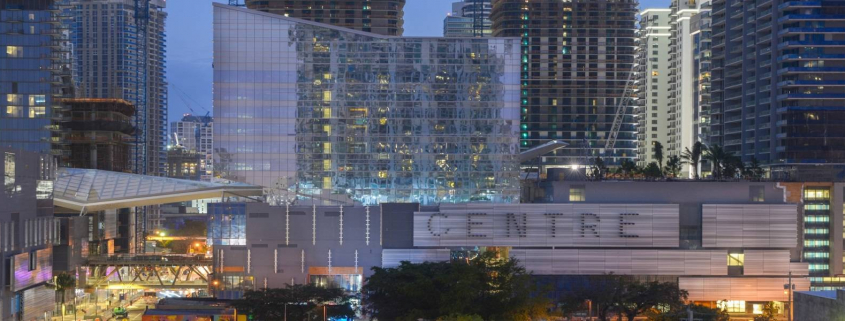
Coworking giant WeWork has signed a deal to lease nearly 65,000 square feet of uncompleted office space at Swire Properties’ Brickell City Centre project, sources told The Real Deal.

A source with knowledge of the lease told The Real Deal that WeWork will occupy space at Two Brickell City Centre, the second of two Class A mid-rise office buildings at the project.

A rendering of Two Brickell City Centre and WeWork’s Miguel McKelvey and Adam Neumann

A rendering of Two Brickell City Centre and WeWork’s Miguel McKelvey and Adam Neumann

The lease includes “nearly half” of the 132,280-square-foot building’s total space, though an exact size was not given. According to data from the CoStar Group, asking rents at the building average $53 per square foot, annually. That means the lease is likely worth millions of dollars.

Swire Properties has yet to complete the building, though its twin Three Brickell City Centre received its certificate of occupancy earlier this year.

This deal marks one of the largest expansions for WeWork in Miami, mirroring the shared office space provider’s explosive — and at times controversial — growth both in New York and throughout the country.

WeWork landed in South Florida in summer 2015 with its launch of an outpost on Lincoln Road, and the workspace provider jumped to a second 850-desk location at 429 Lenox Avenue in Miami Beach earlier this year.

In its biggest move so far, the company signed a lease for the entirety of downtown Miami’s 16-story Security Building, totaling about 96,000 square feet. WeWork has yet to open that space.

The company has battled both data leaks and challenges to its $16 billion valuation, all while working to aggressively expand in the hot co-working industry.


Source: The Real Deal

Slower sales and a glut of inventory has led to a buyers’ market for South Florida luxury properties, according to Miami Beach real estate agent Jill Eber.

“For almost five years we were just on an upward spiral,” Eber, of Coldwell Banker’s the Jills, told a gathering of real estate professionals Wednesday evening. “But, right now, it has adjusted and it has become more of a buyers’ market. As a result, developers are adjusting their pricing and increasing broker commissions to move units. In no way is this like 2008, 2009, and 2010. The market has been steady.”

Eber participated on a panel hosted by the Miami chapter of the Asian Real Estate Association of America at Brickell City Centre’s East, Miami hotel. The discussion was moderated by Coldwell Banker luxury real estate Vice President Craig Hogan and featured Debora Overholt, Brickell City Centre’s vice-president for retail, Swire Properties Vice President Maile Aguila, Eber, Miami Association of Realtors President Teresa Kinney and Ramona Messore, vice-president of Saks Fifth Avenue at Brickell City Centre.

Overholt and Aguila offered their insights into Swire’s ability to finish massive developments like Brickell City Centre. Overholt noted that the $1 billion nine-acre mixed use project is modeled after Pacific Place, a complex of office towers, hotels and a shopping centre the company built in Hong Kong 27 years ago.

“If you are familiar with Pacific Place, what we are developing is very similar to that,” Overholt said. “We are very excited to bring something fairly new to U.S. retailers, but something we already do well.”

Since opening in 1989, the four-floor mall at Pacific Place has more than 711,000-square-feet of retail space that houses a Harvey Nichols department store and 140 luxury brand shops and boutiques. Similar to Brickell City Centre, the mall is integrated into three Class A office towers, four five-star hotels, and a condominium. Swire spent $2.1 billion in 2011 on a redesign project led by Thomas Heatherwick.

Aguila told the audience Swire’s success with Pacific Place proves the company has the strength and wherewithal to deliver every phase of Brickell City Centre.

“When we do things, we do things long-range and take a long time,” Aguila said. “I remember when we were developing Brickell Key, we were all looking forward to a retail component and food and beverage component that just never happened. We saw that need. We had the vision to come into the area at the right time and the right place.”


Source: The Real Deal

Paseo-de-la-Riviera-Site

The site of the Paseo de la Riviera, a mixed-use redevelopment project in Coral Gables, was acquired for $44 million.

Coral Park Inn LLC, an affiliate of InterAmerican Hotels Corp., sold what’s currently a 54-year-old Holiday Inn across from the University of Miami to 1350 S Dixie LLC, a subsidiary of NP International, led by President Brent ReynoldsTotalBank funded the deal with a $21.5 million loan.

Paseo de la Riviera will have a hotel and an apartment building.

Paseo de la Riviera will have a hotel and an apartment building.

NP International plans to build Paseo de la Riviera with 252 hotel rooms, 224 apartments, 4,380 square feet of restaurants, 14,094 square feet of retail, and a parking deck. The project would include a pathway, called a paseo, between the two buildings from U.S. 1 to the public park behind the structure.

Many members of the Riviera Neighborhood behind the project voiced their opposition to it. When the city commission approved it in late 2015, they told the developer to reduce its height to no more than 126 feet. However, two residents of the city filed a lawsuit in March against the city and NP International seeking to declare that the project should not have been approved because it violates the city’s comprehensive plan.


Source: SFBJ

The 90-year-old Dade-Commonwealth Building in downtown Miami sold for $9.2 million to a group that promises to revitalize it.

The seven-story office building at 139 N.E. 1st Street was originally constructed in 1925 to serve as a branch of Meyer-Miser Bank, but it was heavily damaged by the Great Miami Hurricane of 1926. It was reconstructed the following year.

Dade Commonwealth Building2

The building still has a 32-ton magisterial stainless steel vault and its original columns.

A joint venture between Immocorp Capital, led by Gilbert Benhamou, and Wynwood Fund, led by Matthieu Merchadou-Melki, bought the 43,265-square-foot building on a 7,500-square-foot lot from Titan Development Partners, managed by Jesus V. Suarez. It last traded for $1.3 million in 2003.

“We intend to revitalize this corner in the heart of Downtown Miami,” said Benhamou. “This is an iconic building that, once upon a time, was the tallest building in Downtown Miami. We were seduced with the historical aspect and story of the Dade-Commonwealth Building.”

The buyers were represented by Urbanize PropertiesJanet Crucet and Kristine Flook plus Sterling Commercial’s Mika Mattingly. Ana Ventura of RE2000 Group represented the seller.


Source: SFBJ

David Beckham’s top Miami negotiator said Thursday that owners of the private land needed for a Miami soccer stadium “probably will blow this deal up,” sounding the alarm over a potential failure of negotiations he said must be completed within a few weeks.

Soccer star David Beckham arrives for an event at the Adrienne Arsht Center in February 2014 (PHOTO CREDIT: PATRICK FARRELL, MIAMI HERALD STAFF)

Soccer star David Beckham arrives for an event at the Adrienne Arsht Center in February 2014 (PHOTO CREDIT: PATRICK FARRELL, MIAMI HERALD STAFF)

In an interview with the Miami Herald Editorial Board, Miami Beckham United’s Tim Leiweke said the partnership continues to make progress with the city of Miami to purchase city land across the street from Marlins Park and then transfer it to the Miami-Dade School Board, which would shield the new stadium from property taxes. But he said parallel negotiations to purchase six private parcels on the proposed stadium footprint have stalled as land owners haggle for unreasonable prices.

“They know what we’re doing, and unfortunately they’ve let that create an absolutely unrealistic conversation. They can absolutely blow this deal up, and they probably will blow this deal up,” Beckham’s top Miami negotiator, Tim Leiweke said. “We’re willing to overpay. We just don’t want to be the stupidest guys on the face of the earth.”

If the negotiations fail, Leiweke said Beckham’s group has a fallback plan at another undisclosed site. He also said Miami Beckham United hasn’t ruled out looking to a different city.

“We do have a backup,” Leiweke said. “We will not be held hostage.”

SoccerStadium

His blunt remarks could be an example of public brinkmanship to put pressure on the land-holders trying to get top dollar for their real estate, or it could signal real trouble in Beckham’s third try for a stadium site in his two-year quest to bring Major League Soccer to Miami. Miami plans a referendum on the expected stadium plan in March, to coincide with the presidential primary.

At least one property owner within the stadium footprint, Violeta Jimenez, said no one from Miami Beckham United has approached her to officially start negotiations. And for now, she said, it is better that way.

“Ideally, I would prefer that they don’t offer me anything and to stay in my house until I die. I have lived here for years,” said Jimenez, who lives in a duplex and whose next-door neighbor is her sister Adelfa. “We don’t want to get millions; we want to live peacefully.”

She said news of the stadium talks prompted a flood of third-party offers for her property. And yet, she said, “I’m not totally opposed to negotiating a fair deal.”

The land adjacent to Marlins Park in Little Havana, where David Beckham’s group is trying to build a soccer stadium (PHOTO CREDIT: DAVID SANTIAGO, EL NUEVO HERALD)

The land adjacent to Marlins Park in Little Havana, where David Beckham’s group is trying to build a soccer stadium (PHOTO CREDIT: DAVID SANTIAGO, EL NUEVO HERALD)

The Beckham camp confirmed that its real-estate team has not yet spoken to Jimenez as it tries to work out deals with larger properties nearby. It isn’t clear which property owners allegedly asked for an exorbitant amount of money.

Rene Diaz, owner of Candy House Daycare, told el Nuevo Herald on Thursday that he met with Beckham negotiators last month. He said he asked to be paid an undisclosed amount for his property, plus the value of his business, in addition to compensation for relocation of his daycare. Diaz said the negotiators told him his requests were “reasonable.”

“They agreed and even said they would send me a written offer,” Diaz said. “I’m not going to give away my property. They are not going to build a stadium to lose money, they are coming here to make money. They are not a charity or a church.”

An attorney for Beckham United, however, disputed his characterization of the negotiations. Michelle Gonzalez said in a statement that she met with Diaz last month and asked him what he thought he should receive for his property, which according to the property appraiser has a market value of $368,000.

“The number he came back to us with was 30 times the fair market value of what the land has been appraised at,” Gonzalez said. “We feel that is completely unreasonable.”

Attempts to reach Diaz again Thursday evening for a response were unsuccessful.

Beckham was thwarted last year in bids to build on government land at PortMiami and downtown Miami. Leiweke, who recently came aboard as a partner and negotiator, was critical of the efforts that led to such high-profile failures.

“We’ve shot ourselves in the foot quite a bit in the last two years,” said Leiweke, president of the company behind Toronto’s MLS team and the former CEO of AEG, which owns an MLS franchise in Los Angeles.

Leiweke was instrumental in bringing Beckham to play for the L.A. Galaxy in 2007, a deal that included an option for Beckham to buy an MLS team himself at a deep discount.

MLS Commissioner Don Garber has already extended Beckham’s option as his Miami stadium chase dragged on, and Leiweke said the upcoming MLS owners meeting on Dec. 5 is the latest deadline. He said that without an agreement with the school board, city and land owners, he’s not confident MLS will extend the option again.

“I’ll let the commissioner decide,” Garber said. “But I don’t like those odds and it makes me very nervous about MLS in Miami.”

Beckham’s investment group is offering to build the $200 million stadium and pay Miami for the city-owned land needed for the stadium. It had been pursuing county ownership of the facility to shield the new stadium from property taxes, but last month abruptly switched the plan to Miami-Dade’s school system being the landlord.

Schools chief Alberto Carvalho touted the potential deal as a win for the schools, which get no tax dollars from government-owned stadiums. By owning Beckham’s stadium, it could have a 30,000-seat venue for large football games, graduations and events. But Leiweke revealed Thursday that one of Carvalho’s top requests wouldn’t be granted: building a magnet school dedicated to sports management inside the stadium itself.

“Quite frankly, we don’t have the space or the money for that,” Leiweke said. Instead, the stadium would accommodate visiting students to learn about sports. In a statement, Carvalho said both sides want to create “meaningful educational space” within the stadium.

Miami-Dade Mayor Carlos Gimenez saw the switch to school ownership as a political move by Miami Mayor Tomás Regalado, whose daughter, Raquel, sits on the school board and is challenging Gimenez in the 2016 mayoral race. Leiweke said Thursday it was Tomás Regalado who suggested the Beckham group meet Carvalho about potential ownership, which the city mayor called “an interesting concept.”

Leiweke said Beckham’s group will agree to continue paying the same property taxes that the private landowners currently pay local governments, but not the far larger bill for a stadium expected to cost about $200 million to build.

“If you put a true property tax on this property, this thing could never be built,” Leiweke said of the stadium.


Source: Miami Herald