Rents for Class A office space in Miami are high, at $50 or more per square foot, and will continue rising as the market tightens, real estate experts told attendees at a recent conference.

Panelists also said that, despite the city’s increasing traffic problems, they expected sustainable demand growth for Miami commercial properties in the future, since the city is an appealing location and a gateway to Latin America.

“The market is tightening up,” said Angelo Bianco, managing partner at Crocker Partners during the Bisnow panel event. “Developers are getting better rates and lower concessions.” At the same time, he added, “Capital markets seem to be taking a break and people are more cautious. Deals are taking longer to close.”

Asked if office rents in Miami were becoming too expensive, W. Allen Morris, chairman and CEO of The Allen Morris Co., said that rents here were high compared to a city like Atlanta, “but they’re low compared to other global cities like New York, London, San Francisco or Chicago.” If developers can find any additional land – without condos – they would build more commercial space, Morris said.

Panelists at the conference at the Wells Fargo Center in Miami also discussed attracting new commercial clients. Many cities like Miami constantly compete to attract new companies and their tech-savvy millennial employees. Smart CEOs want to ensure that they locate or relocate in a place where millennials will be pleased with attractive, often non-traditional office space; nearby amenities (restaurants, retail); transit options (millennials rely less on their own cars); cultural opportunities and good schools. The city needs to develop more “live, work and play” communities, they said.

“It’s attractive to live in Miami,” said Rudy Touzet, CEO of Banyan Street Capital. “Over the next 5 to 10 years, millennials will be moving to Miami, Tampa, Atlanta. Things like education and transportation have to be improved,” he said. The attractiveness of Miami “will fluctuate, but demand will be sustainable if development is controlled.”

“It’s a cool, international city,” Bianco said.

Parking remains an issue, however. While parking availability is currently a necessary part of an office complex, some developers are looking at making changes, such as building parking garages that can easily be converted into other types of commercial space as car use diminishes in crowded urban centers.

And even though Uber and other companies have located their headquarters in Wynwood, the trendy area has problems.

“It’s not easily accessible by bus or trolley routes,” said Barbara Savage, senior associate principal and Stantec Architecture & Design. “Wynwood doesn’t have the views of high-rise buildings but the area has ample amenities and works well for certain types of clients in the range of 5,000 to 15,000 square feet. Art Basel, a major international event and a big draw for wealthy individuals from the U.S. and overseas, “made it challenging for people to get in an out of the area.”

Moderator Brian Gale, vice chair at Cushman Wakefield, noted that four projects have been proposed for Wynwood, totaling about 700,000 square feet, but “We’ll have to see if they are developed,” he said.

Speakers gave mixed reviews on the impact the new Trump administration would have on future growth and business confidence. The government’s moves to reduce regulations in the Dodd-Frank Act “will be good and will allow new credit” for real estate and the rest of the economy, Morris said. The economy is growing and jobs are increasing, he added. But restrictions on immigration could affect Miami. Overall,  Morris expects “positive growth” under the new government.

“I’m disturbed by what we see in Washington,” Bianco said. “We are the place that people go for stability and investment. Even after the financial crisis – which we caused – people still bring their money here. Trump’s aggressive, un-presidential behavior and constant tweets are creating confusion. No one knows what he will do. They should, at least take away his cell phone.”

Members of a second Bisnow panel saw employees of the future working remotely from home (or anywhere else); open, informal, shared workspaces, and an emphasis on mixed-use “live, work, play” developments. Echoing some of the millennial preferences discussed in the earlier forum, the panelists said these preferences will drive major changes in how and where people work. Innovation and technology will play much greater roles for future employees.

“Why own a car if you can Uber everywhere?” asked Juliana Fernandez, founder of AEI.  “Why own an apartment if you can Airbnb? Where do I want to work today?”

Co-working in shared spaces will likely appeal to people who don’t want to always work from home. Moreover, shared workspaces offer employees and the self-employed opportunities to meet, exchange ideas, talk and collaborate with people from different businesses.

Other members of workplace panel were: Laura Kozelouzek, CEO of Quest Workspaces and the moderator; Grant Killingworth, first vice president, CBRE; John Guitar, senior vice president, Brightline; Natalia Martinez-Kalinina, director, Cambridge Innovation Center, Miami; and Edward Owen, Swire Properties.


Source: The Real Deal

Another new office building was just announced for Coconut Grove, marking the second in recent weeks after nearly 30 years.

CocoWalk owners Federal Realty Investment Trust, Grass River Property and Comras Company plan to raze the eastern building on Grand Avenue and Virginia Street and build a five-story, 73,000-square-foot Class A building on the site, Grass River principal Tom Roth told The Real Deal.

Just two weeks ago, Terra Group and Mayfair Real Estate Advisors announced plans to convert a parking garage at 2860 Oak Avenue into a mixed-use office building, citing the demand for office product and lack of available space in the neighborhood. Together, the two projects will add 140,000 square feet of office space to Coconut Grove.

“We believe there’s plenty of pent-up demand to serve both projects,” Roth said, adding that he believes CocoWalk is a better location.

One CocoWalk, designed by Beame Architectural Partnership, is the first phase of redevelopment for CocoWalk, which was purchased by the partnership in May 2015 in a deal valued at $87.5 million. The once-popular Mediterranean-style outdoor shopping mall has fallen out of style in past years. Roth said plans for phase two, which will focus on retail, will be announced in the coming months.

The office building, geared toward global brands, media and technology companies, creative and financial firms, will be delivered in mid-2019. It will have four floors of office space above a level of ground-floor retail space, plus a rooftop terrace and event space with full views of the neighborhood. CocoWalk will set aside about 250 parking spaces for its office users, which breaks down to 3.4 spaces per 1,000 square feet, Roth said.

“We didn’t buy CocoWalk to keep it as it is today. We really feel it needs to blend better with the rest of Coconut Grove,” Roth told TRD.


Source:  The Real Deal

Tibor Hollo will break ground on the 92-story One Bayfront Plaza in January 2019, according to an interview he gave this week with Miami Today.

Completion is estimated within 40 months of starting, he said. The building will top off at 1,049 feet, since that is the maximum permitted by the FAA in the area, Hollo said. He expects other developers will follow him and build at that height.

Most of One Bayfront Plaza will be devoted to apartments, with 1,052 units. The project will also include about 500,000 square feet of office space and 200,000 square feet of retail, along with a 200-room hotel. It will be directly connected to a Metromover station by bridge.

Residences will start on level 22. A sky recreation deck will have two giant pools, including one for hotel guests. A second amenity deck will be located on level 40.

Hollo is 90 years old. He currently has Panorama Tower under construction in Brickell, which is already the tallest structure in Miami. Hollo said that Panorama will top off at 867 feet, surpassing any other building in the area by 100 feet, and the tallest (residential) tower south of New York on the eastern seaboard.


Source: The Next Miami

Energy-efficient buildings have lower operating costs, but also tend to command higher rents and enjoy higher occupancy and tenant retention levels than traditional buildings.

A recent Energy Efficiency Survey, developed by the Institute of Real Estate Management (IREM) in collaboration with the Institute for Market Transformation, looked at what motivates office building owners to improve energy performance. The survey focused on how financial methods used to evaluate capital expenditures impact decisions to invest in improving energy efficiency.

IREM and the Building Owners and Managers Association (BOMA) distributed the survey to their members and received 307 responses, which represented 1.7 percent of the total survey distribution. The survey found that most respondents use simple payback calculations to evaluate energy efficiency projects, usually basing decisions on recovering the investment in one to two years. The study revealed that this simple payback does not capture the full benefits of energy efficiency, like Net Present Value (NPV) analysis, which incorporates potential revenue increases from higher rental income.

The survey also found that building owners are more inclined to invest in energy-efficiency improvements if they can charge higher rents, particularly in split-incentive situations, where energy-cost savings accrue solely to tenants. Split incentives had posed a barrier to investing in improving energy efficiency, but this was overcome with the “green lease,” which requires tenants to participate in energy and water conservation programs.

Additionally, the survey noted that while the property manager is responsible for the building’s everyday energy management, the asset manager usually makes the final decision on whether to invest in improving energy performance. When third-party managers have authorization to make capital expenditures it is usually a small dollar amount of $25,000 or less.

“But that authority exists almost not at all,” according to Brenna Walraven, founder/CEO of Corporate Sustainability Strategies Inc., which provides sustainability strategy development and execution plans.

CBRE’s Global Director of Corporate Responsibility David Pogue notes he is surprised IREM’s study focused on energy efficiency.

“Energy efficiency was a singular topic a decade ago, when everyone began getting buildings Energy Star-certified,” Pogue says.

Pogue was less surprised by the low rate of survey respondents, which he suggested is an indication that people viewed the survey topic as old news. When a 2009 study of 150 Energy Star buildings in 10 markets revealed that these buildings were commanding rent premiums of three to five percent and enjoyed high occupancy levels, landlords of class-A office buildings got on board, but those with lower quality assets did not necessarily.

“Today most of the office sector has broadly adapted green practices, though not every building is necessarily certified by a green-rating system,” Pogue says.

The 2016 Green Building Adoption Index study by the CBRE Group Inc. and Maastricht University showed that the rate of growth in ‘green’ building has slowed, rising from 39.3 percent in 2014 to just 40.2 percent last year, but adoption of green building practices in the 30 largest U.S. cities continues to be significant.

“While the rate of growth in ‘green’ buildings has slowed modestly, our latest study underscores that in most major markets, sustainable office space has become the ‘new normal,” Pogue notes.

The study reported that 11.8 percent of U.S. office buildings, representing 40.2 percent of office space, have been certified by either the U.S. Green Energy Council’s Leadership in Energy and Environmental Design (LEED) or the U.S. Energy Department’s Energy Star program.

“However, that nearly 40 percent of high-profile office buildings in core urban markets are green-certified because they have to be green to compete,” Pogue adds. “Those buildings tend to attract high-profile tenants, who demand a high-performance building environment.”

LEED rates a building’s impact on the environment, but Pogue points out that the next level of certification, International WELL Building Institute, rates a building’s impact on occupants. The WELL Building Standard places health at the center of indoor design, incorporating healthy ideas based on seven concept categories: air, water, nourishment, light, fitness, comfort and mind.


Source: NREI

Year-end surges in the office, industrial and retail sectors foreshadow robust economic growth across South Florida for 2017, commercial real estate experts say.

A lack of new supply pushed office rents higher, particularly in the downtown corridors, and the optimism displayed by businesses looking to expand is prompting developers to strongly consider shovels in the ground after a decade of inactivity.

West City Partners has proposed a 500,000-square-foot office building in downtown Fort Lauderdale, although the project isn’t expected to break ground until an anchor tenant commits.

The Stiles real estate firm is in talks with Broward College for a ground lease at the two-building site on Las Olas Boulevard. Stiles would tear down the buildings and replace them with a 350,000-square-foot office tower, said Doug Eagon, the developer’s vice chairman.

“It is time to introduce the next generation of office space into the downtown market,” Eagon said.

Last year, Stiles paid $13.1 million for the Bank of America building next to Broward College.

“The firm is considering its options, with retail and residential likely,” Eagon said.

Meanwhile, demand is soaring for warehouse and distribution space as e-commerce suppliers struggle to keep up with online retail sales, according to a report from the Colliers  International real estate firm.

In the fourth quarter of 2016, Broward’s industrial vacancy rate plummetted to 4.4 percent from 6.6 percent in the fourth quarter of 2015, the Colliers data show. Palm Beach County’s vacancy dropped to a nine-year low of 4.2 percent.

Boca Raton and Jupiter had the county’s two lowest industrial vacancy rates, at 1.2 percent and 1.5 percent, respectively. Those two markets also had the two highest rents — $14.53 a square foot in Boca Raton and $11.43 a square foot in Jupiter.

“Palm Beach County has more than 422,000 square feet of industrial space under construction, the majority of it at McCraney Property Co.’s Turpike Business Park adjacent to Florida’s Turnpike at Belvedere Road,” Colliers said.

In Broward, Butters Construction and Development and Bristol Group Inc. are planning a 925,000-square-foot business park at the site of the former Deerfield Country Club off Interstate 95 and Hillsboro Boulevard.

Tom Capocefalo, senior managing director for the Savills Studley commercial real estate brokerage in Miami, said the tri-county region is geographically positioned to easily ship goods domestically or internationally to the end users.

“We’re finding that the South Florida marketplace is one of the top-tier distribution markets in the country,” Capocefalo said. “It’s incredible, the pace of it.”

“Industial developers are moving north into Palm Beach County because the county has more available property than either Broward or Miami-Dade,” said Ken Krasnow, executive managing director for Colliers in South Florida, said

“Land is a scarcity,” Krasnow said. “We’re not making any more of it.”

“Palm Beach County also had a banner year in retail, with more than 1 million square feet of space leased – the highest level since 2006 and nearly double the 515,050 of 2015,” Colliers said.

Broward totaled 1.4 million square feet in new retail leases, its best showing in a decade. The first phase of Dania Pointe, an $800 million shopping and entertainment center, is expected to open this year just east of Interstate 95 at Stirling and Bryan roads in Dania Beach.

Colliers said small blocks of space in the 2,000-square-foot range are most in demand as Broward tenants seek to control costs in an era of rising rents and the growth of e-commerce. With smaller spaces more in vogue, the challenge for retail landlords this year will be to find tenants for the available “big box” spaces across the region, market observers say.

Sports Authority filed for bankruptcy and went out of business, closing 13 stores across South Florida and auctioning 10 others. In January, Macy’s said it would close stores nationwide, including one at CityPlace in West Palm Beach.

“Landlords will first try to find a tenant to take the space in its current configuration,” said Peter Reed, managing principal at Commercial Florida Realty Services in Boca Raton. “When those efforts are exhausted, they’ll have to ask themselves, ‘How do I repurpose this?’ In some cases, they’ll be able to multi-tenant it, but in other cases the best thing may be to scrape it and do something different.”


Source: SunSentinel

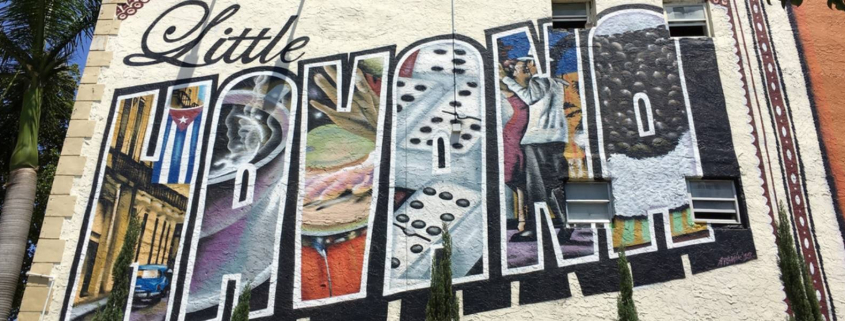
Little Havana, the neighborhood that is the heart and soul of Miami’s Cuban diaspora, was named a US “national treasure” on Friday.

The National Trust for Historic Preservation, a private organization, added the neighborhood to its list of sites it believes should be protected from developers, saying in a statement that it “stands as a testament to the immigrant spirit that built America.”

Little Havana is home to the Versailles, a historic cafe that pulses with Cuban music and sometimes offers free Cuban pastries to exiles who gather there to protest or celebrate events on their home island.

Several blocks away in Domino Park, dozens of retirees play the eponymous game amid sometimes heated political discussions every afternoon. Nearby, the city’s most popular Cuban salsa club is a must-see tourist destination. There’s also a museum of weapons, photos and documents from veterans of the ill-fated 1961 Bay of Pigs invasion.

However, Little Havana‘s residents now worry about being forced out by real estate development and rising prices.

“Little Havana is a symbol of the immigrant experience in America,” the historic trust’s president Stephanie Meeks said. “The National Trust welcomes the urban resurgence that is breathing new life into cities across the country, but we also believe that growth should not come at the expense of the vibrant historic neighborhoods like Little Havana.”

The buildings, some them Art Deco, date back to the 1920s and 1930s. On the commercial hub Calle Ocho, or Eighth Street, many buildings have coral-colored floors. But the burgeoning downtown and Brickell neighborhoods — with their modern 20-story buildings — are expanding toward Little Havana.

“As Miami continues to evolve, preservation will be essential in maintaining Miami’s unique urban neighborhoods,” Miami-Dade County heritage trust director Christine Rupp said. “Our long-term goal is to protect specific historic properties that tell the story of Little Havana and assist with the restoration of those historic buildings.”

Some 1.5 million Cubans live in the United States, 68 percent of them in Florida, according to the Pew Research Center.


Source: Yahoo!News

Rendering of the 24-story, 250,000-square-foot mixed use project planned for Brickell. (Image Credit: Metro 1 Development)

Real estate developer Tony Cho and hotel developer Robert Finvarb announced Friday they are developing a 250,000-square-foot, 24-story, mixed-use project in the heart of the booming neighborhood.

Located on Southwest First Avenue between Seventh and Eighth Streets, the project aims to attract a “neighborhood style hotel” and retail, as well as possible commercial and residential components. Cho and Finvarb recently acquired the site for $18.4 million.

The building will be adjacent to Metromover and Metrorail stations and a block from the site of the Brickell Backyard segment of the Underline project, an endeavor to transform the 10 miles below the Metrorail along South Dixie Highway into a green thoroughfare of bike paths, trails and street vendors.

Cho, who founded Miami-based Metro 1 Development, has worked on several neighborhood revitalization efforts. He most recently announced plans for the Magic City Innovation District, an area spanning 15 acres just north of Wynwood with a focus on art, entertainment, innovation and sustainability.

Finvarb is the founder of Miami-based Robert Finvarb Companies, which has developed 17 hotels since 2002 in seven states and the District of Columbia.


Source: Miami Herald

For decades, these three large city blocks in a prime location — straddling Miami Avenue and butting up against the Miami River and the Brickell financial district — lay inexplicably vacant.

Now, in the seeming twinkling of an eye, they have been utterly transformed. Brickell City Centre, which opened in November, is an urban animal of a concentrated intensity more evocative of Hong Kong or Tokyo than anything Miami has seen before: five towers connected by a multi-level, open-air shopping center plugged directly into a Metromover station and layered over underground parking tunneled beneath the streets. Pedestrians enter porous breezeways seamlessly from the surrounding streets, while above, shoppers cross bustling pedestrian fly-overs, protected overhead by a “climate ribbon” canopy that snakes across all three blocks like a long strip of origami.

It feels like a real city. And that’s precisely the stated goal of the relatively new, largely untested and increasingly controversial zoning category that produced it, and that now may be paving the way to a redrawing of broad swaths of Miami.

The goal: to create true urban neighborhoods and districts in underdeveloped areas of the city that, far from being self-contained islands, are painstakingly planned, interwoven and compatible with the city fabric around them. Often in exchange for greater height and density, developers must spend millions on new public spaces, streets and amenities — sometimes paying cash into public kitties — while giving city planners and the city commission a significant say in the shape of the final product.

The concept has taken off, to the consternation of some neighborhood activists. SAP was once reserved mostly to the city’s core, but developers building in far-flung, residential neighborhoods are now taking advantage.

“What the SAP does uniquely is, it sets up a table where the city comes in, stakeholders come in, and we can all figure out what the optimal shape this project can take is,” Miami planning director Francisco Garcia, who helped author the Miami 21 code while at the private planning firm Duany Plater-Zyberk, said in an interview. “In Miami, I don’t think there is any area that is not undergoing some degree of change, or redevelopment, or thinking about redevelopment. This is our world today here in Miami. So let’s approach this emphasis to redevelop and reshape the city in a creative way, and have it yield the best results.”

Aside from Brickell City Centre, which has two more planned phases yet to start, the SAP has also led to the lauded, near-total redevelopment of the formerly dormant Miami Design District. The rebirth of the district, about 60 percent complete, has meant new, street-friendly retail buildings and a pedestrian promenade connecting two large public plazas.

Meanwhile, on the north bank of the Miami River, River Landing would bring a multi-story restaurant and retail center with apartments to the site of the demolished Mahi Shrine in the Civic Center area. On the south bank, Chetrit Group’s $1 billion Miami River complex would bring 58- and 60-story towers and three levels of shops to a site formerly occupied by an abandoned restaurant and empty warehouses. Both projects would include new public spaces; Chetrit would underwrite upgrades to Jose Marti Park and contribute millions into an affordable housing trust fund.

If anything, these projects were celebrated. But as SAP applications proliferate across the city for everything from tech villages to mixed-use residential and commercial districts and even school and hospital redesigns, the sheer size and scale of some of the proposals is giving many city residents pause, if not provoking outright alarm.

Entrepreneur Moishe Mana’s massive Mana Wynwood SAP, which would bring shops, a trade center and residential towers rising up to 24 stories to two dozen acres of mostly vacant land, prompted a year of negotiation and public battles with other property owners in the rapidly redeveloping warehouse district. Mana won commission approval after agreeing to spend millions putting utilities under ground and redrawing the original plan to scale back construction facing the heart of Wynwood.

Elsewhere, developer Michael Simkins talked about using the SAP process to design an innovation center in blighted Park West immediately south of Interstate 395, including a controversial observation tower designed to also serve as a digital billboard, although his attorney says he’s currently reassessing whether to pursue an SAP.

And now a flurry of potential new SAPs has raised concerns that the process could become a runaway train barreling through established neighborhoods and dramatically changing their character. In and around the city’s Upper Eastside, three developers and a hospital have submitted applications to the city or are expected to soon, all within a tiny area of roughly 40 square blocks:

  • Legions West, a 1.2-million-square-foot complex abutting Legion Park, to be built on the site of a recently demolished American Legion post and neighboring Art Deco apartment buildings that formerly housed dozens of low-income families. The developer would spend millions on improvements to the park.
  • Eastside Ridge, proposed by the owners of Design Place, who want to turn 22 acres of moderately priced townhouse units into a mass of sky-high residential and office towers with nearly 3,000 condos.
  • Miami Jewish Health Systems, across Second Avenue from Design Place, which is planning an expansion of an existing campus. The hospital wants to open a new dementia-focused assisted living facility, research center and convention hotel, and redesign other aspects of its campus.
  • Magic City, a 15-acre assemblage including industrial buildings and a demolished trailer park straddling Little Haiti and Little River that developers Tony Cho and Bob Zangrillo want to convert into a technology, residential and cultural center.

Legions West and Eastside Ridge are perhaps the most controversial of the SAP submissions to date, in part because they would tower over neighbors and replace low-rise, low-cost rental housing. The Legions project would drop four towers up to 15 stories tall next to two protected historic districts: the MiMo Biscayne district with a 35-foot height limit, and the single-family Bayside Historic District. It would also include part of the adjacent and now-historic Legion Park in order to qualify for the needed nine acres to propose an SAP — an aspect that generated false fears that the developer, who plans to spend millions on upgrades, would privatize the park.

Renderings of the Eastside Ridge plan, which depict what seems to be a massive, gleaming steel-and-glass city-within-a city rising from the modest urban landscape of Little Haiti, has sent residents into a tizzy. Some in the community, already hyper-acute to the pressures of gentrification, believe they are being boxed in and pushed out by new development.

“The more we learn about these mammoth projects, the more concerned we are,” said Marleine Bastien, a Haitian-American activist who has been outspoken about gentrification of the neighborhood and the apparent lack of consideration for community input. “What we resent is for us to be brought in at the 11th hour when everything is cooked and ready to eat, and we get the crumbs.”

Garcia, Miami’s planning director, insists that community input is a central tenet of the Special Area Plan, which requires reams of paperwork, months of debate with city planners and multiple hearings in order to green-light a project. But some critics say there is evidence to the contrary.

“In Wynwood, they up-zoned 45 different properties to as high as 20 and 24 stories, which is a complete violation of the law,” said veteran Morningside activist Elvis Cruz, who argues that the city is flouting a Miami 21 requirement that all new development be compatible with its setting. “But that’s the way it works in the city. They just interpret things as they wish. It’s completely out of scale and character.”

People critical or skeptical of some of the newer SAPs even includes some prominent figures who have strongly backed such projects in the past. Horacio Stuart Aguirre, chairman of the Miami River Commission, which reviews projects along the waterway, said it’s one thing to approve SAPs on undeveloped land long contemplated for dense redevelopment, like the river properties close to downtown Miami, but entirely another to plunk those down amid settled, existing neighborhoods.

Though SAPs must be approved by the city commission, which has been no rubber stamp, Aguirre says he fears the “goodies” promised by developers of SAPs to the city — including new jobs, the creation of new public spaces and payments toward future affordable housing — prove too tempting to turn down. (None has been, yet.)

“Brickell City Centre is a wonderful idea, where it was done. It’s in Brickell, for crying out loud,” Aguirre said. “But should we have 20 of those reiterations all over the city? What happens to the character of individual neighborhoods? What happens to the idea of local communities?”

But Miami 21 designers say the SAP has always encouraged developers to embrace the neighborhoods in which they’re investing, and put in the extra expense, effort and time that sensitive master planning requires. They note that developers, even without SAPs, could always pursue up-zoning without providing anything in return to the community.

“They are a terrific improvement over the prior situation,” said Elizabeth Plater-Zyberk, whose firm authored the Miami 21 code. “It’s an invitation to making a better plan than what is there now.”

Garcia also says the city puts SAP proposals through a grind of an extensive review, and some submissions never make it out of the process because developers drop them after realizing what’s required for approval. He disputes the idea that developers and the city use SAPs in order to super-size projects.

“The perception by some is this is simply a race for the gluttonous,” Garcia said. “But I will tell you there are significant amounts of development capacity and density that are left on the table in each and every one of these SAPs.”

To be sure, height and density are part of the equation, but not the entire picture. What makes SAPs attractive to the city and developers is the flexibility afforded in designing what often are sprawling campuses. Roads can be moved. Buildings can be massed and shifted in ways they otherwise couldn’t. The rigidities of the city’s laws can be unlocked, although not ignored. “If I have the possibility to do that, why wouldn’t I?” asks Garcia.

Noting that the Design District SAP is hardly tall by Miami standards, Magic City’s Cho said he expects to submit an application for an SAP in part because the project he wants to build — the one he says is best for the area — is impermissible under the regular zoning code. For one thing, much of the 15 acres he and Zangrillo own are zoned industrial, and Cho says he’s hoping to include hundreds of low-cost residential units. Likely, that will be done by building “micro” units, tiny apartments made affordable by their size.

“The existing zoning is antiquated and outdated,” said Cho, who began investing years ago in Little Haiti real estate. “That’s not in the best interest of Miami. You don’t want a neighborhood that can’t develop residential.”

For Garcia, whose department hasn’t weighed in on Magic City, and has only begun to look at Eastside Ridge and Legions West, that’s the underlying truth behind Miami’s transformation. The city is evolving, and as downtown and Brickell become entirely built-out, and Wynwood’s land becomes price-prohibitive, developers will begin to invest and rebuild the city’s farther-flung neighborhoods. When that happens, he says, the city needs the tools to map out the right future.

“There has been a great explosion of building in Miami during the last six or seven years. But that’s a data-point. The real question is: Is that good? Is that bad?” he says. “It is a very positive trend and it is getting us closer to what Miami is and should be. Miami will not be in the near future a sleepy town that is a vacation resort for the wealthy. It should be a real city.”


Source: Miami Herald

The Little Haiti area will be South Florida’s hottest residential neighborhood in 2017, even as the wider region cools down, according to a recent report released by real estate website Zillow.

The company predicts home values in the gentrifying area north of downtown Miami will rise 4.6 percent this year. (Zillow included Little River, Buena Vista and the area around the Design District — together once known as Lemon City — in its analysis.) That’s the fastest rate in Miami-Dade, Broward and Palm Beach counties. But South Florida as a whole will grow at a 1.6 percent clip, Zillow said. Miami’s growth rate puts it at number 90 of the country’s 96 largest metro areas, according to Zillow projections.

Little Haiti, ‘The Next Wynwood’

With Brickell and the Beach overbuilt, developers are now zeroing in on under-valued neighborhoods close to the urban core.

“This could be the next Wynwood” is the mantra of many investors and home flippers crowding into Little Haiti. The average home there is valued at $191,500, up 19.6 percent over the last year, according to Zillow.

Just south of the booming neighborhood, the Archdiocese of Miami wants to sell the 15-acre campus of Archbishop Curley-Notre Dame High School in Buena Vista. Developers have also unveiled plans for large, mixed-use projects. And restaurants and commercial business are moving in, too, most recently Entercom Communications, one of the country’s biggest radio broadcasters, which signed a lease in Little River.

Some business owners and residents are worried they could be forced out by the wave of cash, and that Little Haiti’s unique cultural heritage is under siege. In March, with the support of many Haitian Americans, the city of Miami officially recognized the area roughly between 54th Street and 79th Street, and Northwest Sixth Avenue and Northeast Second Avenue, as Little Haiti.

Zillow predicts the other top neighborhoods in South Florida in 2017 will be the 441 corridor in Hollywood (the residential area south of the Seminole Hard Rock Hotel & Casino); South Middle River in Fort Lauderdale; Highland Garden in Hollywood; and Liberty City in Miami.

South Florida Slowdown

The overall slowdown in South Florida might come as a surprise after years of big gains. Fueled by foreign investment, real estate in Miami Beach, Brickell and other high-rise havens recovered quickly after the housing bubble burst, leaving less fashionable. But now that a strong dollar has cooled the condo market, overall growth is plummeting compared to other major metro areas.

“We’re expecting a drastic slowdown,” said Svenja Gudell, chief economist at Zillow. “Miami was the one market where I was starting to get concerned about a bubble because of the foreign investment flowing in and prices becoming so unaffordable. … A slowdown is actually a good thing because it could allow incomes to catch up.”

The volume of home sales in Miami-Dade fell by double digits in three of the four months leading up to November’s presidential election. Zillow also found that Miami has a higher unemployment rate and slower projected wage growth than other big cities. Recession in Latin America prevented Miami’s economy from booming at the rapid clip experienced in other parts of Florida and the Southeast in 2016.

The metro areas projected to experience the biggest increases in home values this year are Nashville, Tennessee; Seattle; Provo, Utah; Orlando; and Salt Lake City.


Source: Miami Herald

biggest office deals of 2016

Whether they’re downtown skyscrapers wrapped in glass or sprawling campuses out in the ‘burbs, office properties make up a huge part of the real estate marketplace here in South Florida.

And while glitzy new condo projects often steal the limelight, The Real Deal is showcasing the five biggest office deals struck in South Florida during 2016, as well as the players who made them happen.

1. Southeast Financial Center: $516.6M

Southeast Financial Center

Amancio Ortega, the world’s second-richest man and owner of clothing chain Zara, is not known for using half measures. The billionaire made a name for himself in Miami’s real estate scene when he bought a full block of Lincoln Road last year for $370 million in cash.

Then, in December, Ortega again blew the roof off the commercial market here when he bought downtown’s Southeast Financial Center for $516.6 million. The tower is a landmark in the Miami skyline at 55 stories, making it Florida’s tallest office building. And with 1.2 million square feet of leasable space, it’s also downtown’s biggest office building by about 400,000 square feet.

Just like his other record-breaking purchases around the globe, Ortega paid cash for the building. The seller was JP Morgan Asset Management, which had started shopping the property with brokerage HFF this summer to cash out on its investment.

Even with the jaw-dropping price tag, the $430 per square foot Ortega paid was actually at a discount when comparing it to other office deals in the area. The building is 88 percent occupied, mostly by law firms and financial groups, and asking rents range between $22 and $47 per square foot.

2/3. Tie between Miami Tower and Las Olas City Centre Plaza: $220M

Miami Tower

Coming in second place is a tie between another two landmark buildings, both of which sold for a flat $220 million and signaled confidence in their respective cities from market watchers.

The first deal to close this year was in May, when Japanese trade conglomerate Sumitomo Corp. of Americas purchased the color-changing Miami Tower for roughly $367 per square foot.

Decked out with a $1.5 million LED light system, the 47-story tower is hard to miss in Miami’s skyline. It has 600,000 square feet of rentable space, 92 percent of which was occupied at the time of its sale with asking rents ranging from $38 to $52.50 per foot.

For some commercial brokers, the deal illustrated how far Miami has come since the late 2000s real estate crash threw property values in a tailspin. The seller, LaSalle Investment Management, had paid $105 million for the tower just six years prior. Sumitomo’s long-term bet on the Miami office market also meant the city’s profile among foreign investors was only getting better.

Las Olas City Centre

Four months later and roughly 30 miles to the north of Miami Tower, Fort Lauderdale enjoyed a similarly massive deal when Deutsche Bank bought the Las Olas City Centre office building for $220 million.

Unlike the Miami Tower, Las Olas City Centre is only 23 stories tall with 408,064 square feet of rentable space. But that size difference meant the Fort Lauderdale office building fetched a much pricier $539 per square foot for its seller, JPMorgan Asset Management. The property was almost entirely leased at the time of its sale, as well.

The deal marked Fort Lauderdale’s most expensive office sale in 2016, capping off a year of rising commercial property values in the city. JPMorgan had bought the tower for $164 million just five years earlier.

4. Datran Center: $150M

Datran Center

Kendall, a sprawling suburban neighborhood relatively far from the action in downtown Miami, has become something of a hotspot for commercial investment this year.

That trend became all too easy to read in August, when an investment group led by ABS Partners Real Estate and Acre Valley Real Estate Capital bought the two-tower Datran Center office complex for $150 million. The seller was USAA Real Estate Co. and a Canadian real estate investment trust, who had placed the 18 and 20-story buildings on the market in July of last year.

Measuring just under 500,000 square feet, Datran’s sale broke down to roughly $300 per foot, rivaling the prices paid for more centrally located properties in the downtown area. Together, they’re about 80 percent occupied with rents ranging between $38 and $41 per square foot.

The towers’ distance from the downtown area was actually a selling point for the buyers, who said at the time that Datran was attractive because it was far from Miami’s “highly congested business district.” The buildings also neighbor the Dadeland South Metrorail station.

Much like this year’s other big-ticket commercial deals, the Datran sale also showed how South Florida’s office market is beginning to gain ground in the competition for investment dollars between other major U.S. metropolitan areas.

5. Courvoisier Centre: $140M

Courvoisier Centre

While all of the above deals came down to a handshake, this last one is more akin to a marriage.

Parkway Properties, looking to squeeze value out of its Courvoisier Centre office complex in Brickell Key, sold an 80 percent stake in the property to a group of Spanish investors led by conglomerate Corporación Masaveu for $140 million.

The deal was particularly shrewd for Parkway: not only was it keeping a 20 percent ownership stake, Courvoisier’s sale also meant Parkway would recoup the $145.8 million it paid to acquire the property in 2014. For Masaveu, whose real estate arm has a penchant for urban office buildings, the joint-venture translated to a major foothold in Miami’s preeminent commercial market: Brickell.

Courvoisier is composed of two office buildings totaling 385,841 square feet, plus a parking garage with 941 spaces. The sale was announced in November 2015, though it closed sometime at the beginning of this year. At the time of the closing, Courvoisier was 88 percent occupied with rents ranging from $40 to $52 per square foot.


Source: The Real Deal