On an ordinary day, George Dotzler may deal with wind speeds equivalent to a Category 5 hurricane, torrential rains akin to a monsoon and seismic shifts that feel like an earthquake. Rounding out the day could involve a heat wave and an arctic blast.

Mr. Dotzler, 58, is the director of operations for the Construction Research Laboratory, where builders, developers and architects go to test the durability and stability of glass building facades, called curtain walls. Located at what looks like an abandoned airfield in Miami, the lab has 38 sealed test chambers and all the equipment to replicate the forces of nature.

“It’s like ‘Mad Max’ here,” Dotzler said, referencing the 1979 movie’s dystopian landscape.

A mock-up of a facade at the testing lab.(Photo Credit: Scott McIntyre for The Wall Street Journal)

With skyscrapers sprouting up around the world, demand for structural testing is strong. Big-name architects are increasingly designing towers with quirky shapes, and developers must go to greater lengths to ensure that the unusual curves and crannies can withstand even the harshest conditions. While some testing is required by municipal law, most developers are going the extra mile, since they can’t afford to start mending ruptures and leaks once their buildings are up. Only three or four facilities in the U.S. have experience testing super-tall structures, Mr. Dotzler estimated.

In recent years, the company has been testing 53W53, a 1,050-foot-tall tower designed by architect Jean Nouvel that is under construction adjacent to the Museum of Modern Art in midtown Manhattan. Scheduled for completion in 2019, the 82-story building will have 145 luxury condominiums. The developers—a partnership between Houston-based Hines, Singapore-based Pontiac Land Group and Goldman Sachs —decided on a tapered structure with criss-cross structural framing on the exterior.

“Everything in this curtain wall is bespoke, custom-made for this building,” said David Penick, managing director at Hines. “Every piece of aluminum. Nothing is off the shelf.”

The developers had 6,000 panels of triple-paned glass custom-made by German manufacturer Interpane. Some were incorporated into two mock-ups, which typically include the trickiest, most vulnerable elements of the building, such as the corners, joints and vents, what Mr. Dotzler calls a “Frankenstein arrangement.”

“It’s like a doctor wanting to test a human being by putting together a mock-up with one ear, one nose and one elbow,” Dotzler said.

The mock-up went through a litany of tests. In one of the chambers, both inward and outward pressure was exerted on the glass as part of a water-infiltration test to see how much the design could sustain without cracking or leaking. The pressure was equivalent to about 77.5 mph winds.

Later, a Pratt & Whitney R-2800 aircraft engine with 13-foot propellers was positioned in front of the mock-up. Mr. Dotzler turned on the water spray rack and cranked up the speed of the generator to simulate a dynamic wind load—an effect that’s similar to a hurricane. Researchers then attached a hydraulics system to the structure of the building and shoved segments right and left in an attempt to determine whether they’d be secure in case of an earthquake or wind drift.

“Some of the pressures exerted on these facades far exceed what is likely to occur naturally,” Dotzler said. “If the facade survives these loads, it’s been well-designed and is sufficiently strong. The testing took several weeks and cost about $150,000. No major changes to the facade were made as a result.”

National Certified Testing Laboratories, based in York, Pa., tested a mock-up of an 88-story luxury condo tower scheduled for completion next year in downtown Manhattan. The building, called 125 Greenwich Street, was designed by Rafael Viñoly and features rounded corners.

Steven Della Salla, a managing partner at Bizzi & Partners Development, said his company paid about $210,000 to create the mock-up of 125 Greenwich Street, and another $163,000 for the tests themselves.

Mr. Dotzler said his company also is popular with Hollywood filmmakers, who like to shoot the facility’s post-apocalyptic aesthetic.

“We’ve hosted a couple of episodes of ‘Graceland’ and ‘Burn Notice,’ ” Dotzler said. “But we try to have them only after hours or on weekends.”


Source: Wall Street Journal

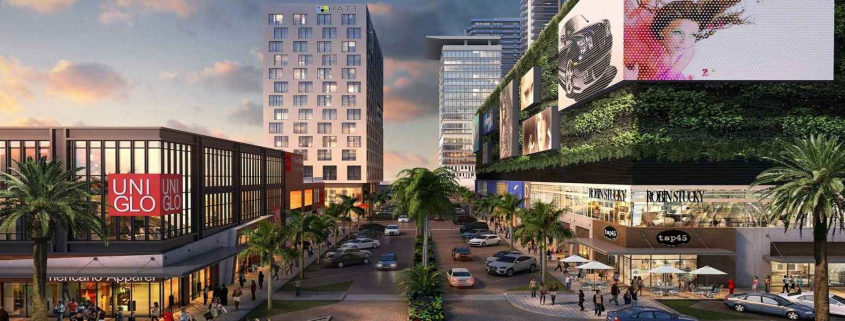
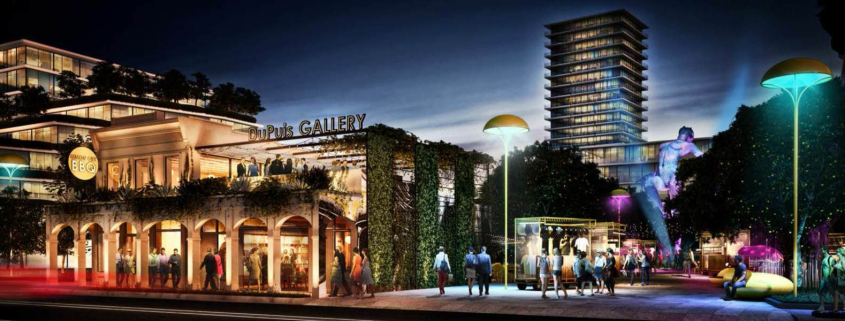
The Magic City Innovation District Special Area Plan was submitted to the city of Miami for review last month.

According to the documents, the developers are proposing to build:

  • 2,490 residential units
  • 1,763,820 office square feet (net)
  • 432 hotel rooms
  • 313,165 retail square feet (net)
  • 5,547 parking spaces in garages

In total, 17 buildings with the tallest at 27 stories are planned. Completion of the entire conccpt will take 10-15 years, with construction to begin in 2020, according to the project website (although existing buildings will be rehabilitated before then).

In a letter, the developer says they intend to build a Transit Oriented Development, with a stop to be built on the Brightline/Tri-Rail Coastal Link track.

Cirque Du Soleil Billionaire Guy Laliberté is listed as having a stake on an ownership statement submitted with the proposal.

Arquitectonica is the architect.

Source: The Next Miami

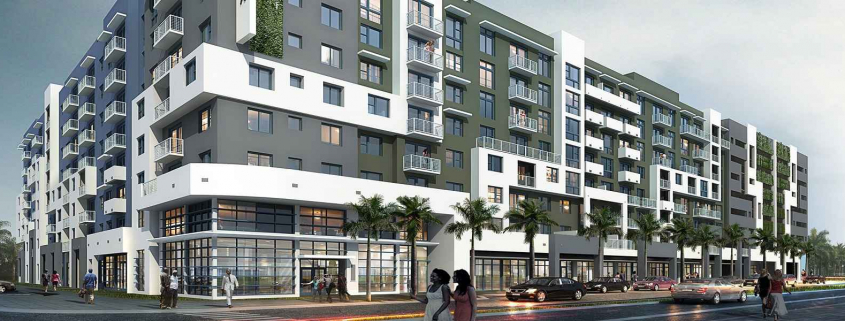
Developer EDEN Multifamily topped off construction of NOMA, an eight-story, 347-unit apartment building at 2145 Northeast 164th Street in the heart of North Miami Beach.

Scheduled to be completed in fall 2018, NOMA is EDEN’s first development in North Miami Beach and represents a significant milestone for the city, which is experiencing a renaissance following the 2015 completion of the City’s Mixed Use Town Center zoning district. The multifamily project is located in the emerging Community Redevelopment Area on the east side of the city.

EDEN and Coastal Construction, the project’s general contractor, are set to host a topping off celebration at the project site on February 2 at noon. City of North Miami Beach commissioners, city officials and other invited guests will be on hand to tour the project and enjoy the festivities.

“We are finding a strong demand from renters for boutique apartment buildings in urban areas—or the downtown areas of suburban markets—as an alternative to the high-rise towers that dominate these areas,” EDEN Multifamily president Jay Jacobson tells GlobeSt.com. “These renters are seeing that you can find value and convenience at new boutique buildings without sacrificing the level of amenities. The challenge for multifamily developers is to identify areas where this type of product can be delivered on a cost-effective basis.”

NOMA includes studio, one-, two- and three-bedroom apartments, an eight-story parking garage and ground-floor retail space. Building amenities include an inner courtyard with a heated pool, an elevated sundeck seating area with a firepit, community rooms, a state-of-the-art fitness center with a yoga/spin room and a dog walk and grooming area.

EDEN will enhance the public greenspace along the Snake Creek Canal with extensive landscaping, public seating, a walking path/bikeway and a significant public art installation. The multifamily property offers common area Wi-Fi and large community gathering spaces.

Coastal Construction is the general contractor. MSA Architects is the NOMA architect, with Bruce Howard and Associates providing landscape architecture and ID& Design Internationalas the interior designer.


Source: GlobeSt.

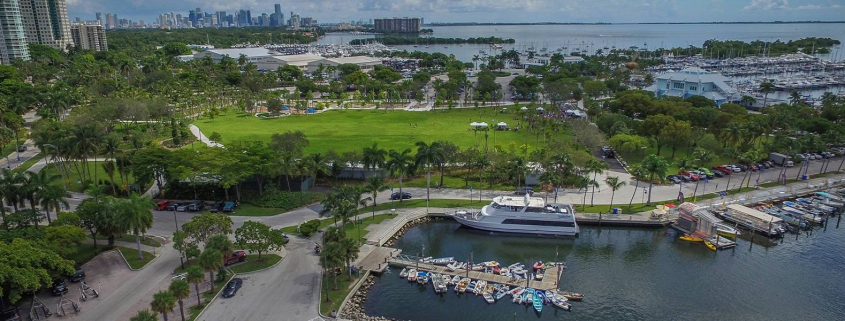
Coconut Grove is seeing boom times. How long will it last?

The Fairchild Coconut Grove

Oscar Rodriguez, principal of ROVR Development to get his insights on this market. ROVR is developing only new waterfront project rising in Coconut GroveThe Fairchild Coconut Grove.

GlobeSt.com: What are some of the main factors driving the recent boom in Coconut Grove?

Rodriguez: Coconut Grove has it all, from lushly landscaped quiet neighborhoods and architectural charm to a dynamic cultural, dining and entertainment destination and an active beautiful waterfront on Miami’s Biscayne Bay. All of this is within close proximity to Miami’s business and financial core, making Coconut Grove an ideal place to call home.

The community has so much to offer: beautiful parks, close proximity to the best schools including Gulliver Academy, Ransom Everglades School, Carrollton School of the Sacred Heart and The University of Miami, green canopied neighborhoods and amenity driven shopping and dining centers such as The Mayfair and Cocowalk. Coconut Grove is central to everything and has a hip vibe that can’t be replicated.

GlobeSt.com: What is your forecast for the market in Coconut Grove for 2018?

Oscar Rodriguez

Rodriguez: Coconut Grove has always had a unique heart and soul that will continue to be the source of its popularity and success. The area has attracted high profile residents and has developed exponentially in the past few years. Local and international demand for this one of a kind community will continue to propel Coconut Grove as one of the strongest markets in South Florida.

As more and more people are drawn to the area and discover its untapped potential, it will continue to grow and progress. But I believe it will always hold on to that unique vibe that makes it special and preserve that neighborhood feel.


Source: GlobeSt.

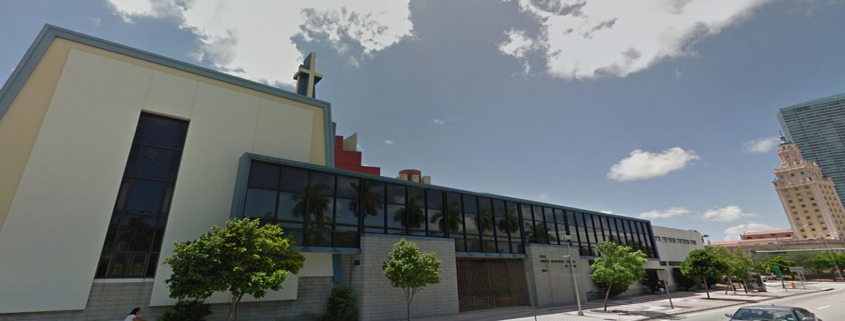
Property Markets Group acquired the site of a downtown Miami church along Biscayne Boulevard for $55 million, with plans to build a major mixed-use tower.

The First United Methodist Church of Miami sold its 1.15-acre property at 400 Biscayne Blvd. to New York-based PMG. The deal was partially funded by Toronto-based Greybrook Realty Partners, which previously announced plans to invest $32.2 million into the project. The site is near American Airlines Arena, Miami Dade College, and the College/Bayside Metromover Station.

PMG’s Ryan ShearEvan SchapiroMatt Ellish, and Yechiel Ciment negotiated the deal. They were represented by Saul Ewing Arnstein & Lehr attorneys Luis Flores, Rebecca Sarelson and David Yontz, plus Josh Kaplan at Bilzin.

“This is our third investment in the Biscayne corridor, increasing our ability to create innovative living experiences for residents,” Shear said. “We feel that this market is one of the most important areas of Miami from a future growth perspective, general location and view standpoint.”

The developer said it plans to build over 690 units and about 20,000 square feet of commercial space. The property is zoned for about 50 stories. The apartments would be branded by PMG’s new X Social Communities division, which appeals to young professionals seeking more attainable pricing. Its nearby X Miami apartment building, which is under construction, is part of the same brand.

The 400 Biscayne project would have co-working spaces, an oversized fitness center, communal kitchens, smart package lockers, smart home technology controlled by an app, and many pre-furnished units. As part of the project, PMG will build a new church on the site with a separate entrance for FUMC Miami.

“FUMC wanted to rebuild the church in the same location, so the relationship with the potential buyer was very important,” Flores said. “They liked the young and thriving energy that PMG brings to its developments and could see themselves doing business with the developer in the short and long term. The transaction is unique because we had to wear different hats at different times since we are the buyer and builder of the future church.”

“It was the right time for the church to take advantage of the revitalization of its neighborhood,” Pastor Dr. Audrey Warren said. “The project will ultimately allow the church to grow and meet its future operating needs.”

PMG said the architect of the building is Sieger Suarez, and Carlos Ott is consulting on the church that will be included in the structure.


Source: SFBJ

Developers planning to redevelop a former home of the U.S. Immigration and Naturalization Service (INS) in Miami borrowed $26 million to finance the project.

Three entities managed by Ye Zhang Florida Fullview Immigration Building, Fullview Immigration Building I and Wealthy Delight — borrowed the money from an affiliate of Madison Realty Capital.

In 2013, the developers paid $12.5 million for the former INS location at 7880 Biscayne Boulevard, which the federal agency vacated in 2008.

The developers have razed the building the INS occupied and plan to turn the 1.4-acre property into a mixed-use development called Triton Center, designed by Stantec.

Triton Center would encompass a 139-room Hilton Garden Inn hotel, 324 apartments, approximately 585 parking spaces, and 25,000 square feet of commercial space.


Source: The Real Deal

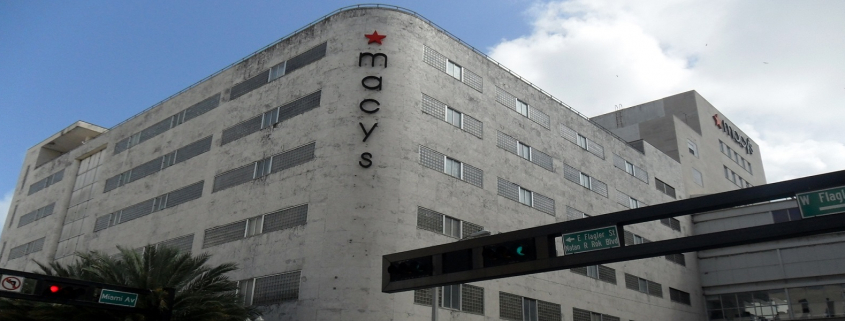
Macy’s historic location in downtown Miami is among the latest of its stores to fall victim to a national cutback plan that will include the elimination of 5,000 jobs in the United States.

The company said last week that it expects to save $300 million by closing 11 stores around the country early this year, cutting payroll and streamlining some in-store functions.

“We anticipate our net headcount reduction will be approximately 5,000, including the staffing adjustments across the stores’ organization, further streamlining in some non-store functions and impact closure of 11 stores,” said spokeswoman Jacqueline King in an email.

Besides the Miami store and one at The Oaks Mall in Gainesville, the company will shut four locations in California and others in Idaho, Indiana, Michigan, Ohio and Vermont. The moves are the latest in a plan disclosed in late 2016 to close 100 stores. Thus far, the company has disclosed 81 of the 100. The latest on the hit list will start eight- to 12-week clearance sales.

Macy’s said it intends to close about 19 more stores as leases expire or real estate sales are completed. Last year, Macy’s closed its store at CityPlace in West Palm Beach. Nearly a dozen stores remain in operation in Broward and Palm Beach counties. More than a half-dozen operate in Miami-Dade County.

“Our primary focus in 2017 has been to continue the strong growth of digital and mobile, stabilize our brick-and-mortar business and set the foundation for future growth,” CEO Jeff Gennette said in a statement. “Looking ahead to 2018, we are focused on continuous improvement and will take the necessary steps to move faster, execute more effectively and allocate resources to invest in growth.”

The Miami building is viewed as an anachronism by developers, planners and analysts as the downtown area attracts a younger population that generally avoids department stores and prefers to shop online.

“The departure is a good thing,” Mika Mattingly, a Colliers International real estate agent. “There are so many positives. There are a lot of scenarios that are inviting. First among them: educational institutions that could use the space.”

Located at 22 E. Flagler St., the downtown Miami store once anchored the Florida-based Burdines chain, which got its start in 1898. Burdines joined Federated Department Stores in 1956. Looking to leverage the Macy’s brand, Federated lumped the names together into Burdines-Macy’s in 2004, only to strip away the Burdines label a year later. At one point, the location served as corporate headquarters for Macy’s Florida.

“I think this is a huge opportunity for the current owner to really capitalize on a piece of real estate that is completely underutilized,” said Zach Winkler of JLL, a national commercial real estate brokerage firm.

A decade ago, the Downtown Development Authority feared Macy’s might leave downtown as the company wielded the possibility as a bargaining chip for a more aesthetically pleasing downtown.

“It’s been a pillar of downtown for a long time,” said Alyce M. Robertson, executive director of the DDA. “It’s sad to see a major retailer go. Had this happened 10 years ago, we would have faced a much more serious impact.”

But now, amid a post-recession construction boom that delivered high-rise hotels, retail, condos and offices, the urban center is a more vibrant place.

“The population has more than doubled,” Robertson said. “It’s a younger demographic. The property itself could use a facelift. It’s not the most welcoming place. They used to have a restaurant on the first floor on the west side. It would be nice to have some kind of street-level presence to engage the pedestrians on the new Flagler Street when it’s built out.”

Jason Shapiro, managing director of Aztec Group, a Miami real estate finance and investment firm, said the building should be divided up into smaller spaces for restaurants, smaller retail and shared work spaces.

“It’s still the core of the core from a location perspective,” Shapiro said. “I’d be surprised if you didn’t see a wholesale change for the better in the next couple of years.”


Source: SunSentinel

An Aventura orthopaedic surgeon and his wife are spearheading plans to convert a prime slice of vacant land on Biscayne Boulevard and 17th Street into a 53-story mixed use tower.

Barry J. Silverman and Judy Silverman manage V Downtown Inc., a company that is proposing to build the new high-rise in Miami’s Arts & Entertainment District.

Miami’s Urban Development Review Board signed off on several waivers requested by V Downtown for the project at 1775 Biscayne Boulevard at its meeting on Wednesday.

Rendering of the proposed tower at 1775 Biscayne Blvd.

The project, designed by Kobi Karp, would have 444 residential units, 200 hotel rooms, 45,600 square feet of commercial space, 64,500 square feet of office space, and 546 parking spaces. The project would include a rooftop amenity deck for the residences and a lower amenity deck for the hotel and retail uses, which would be open to the public and provide access to views of Biscayne Boulevard and Biscayne Bay. The development is adjacent to the Omni Center and just east from Opera Tower.

The commercial spaces would be on the ground and lower levels and followed by the office space on floors two through seven. The hotel would occupy the 10th through 17th floors with the residential units taking the upper floors, according to documents filed with the city.

V Downtown sought waivers to increase the lot coverage to 88 percent instead of the 80 percent that is currently allowed; to allow a floor plate of 19,800 square feet where only 18,000 square feet is allowed for the residential side; to reduce the required parking by 30 percent because the project is located near the Omni Metromover station and bus depot; and to allow the parking structure to extend along the entire length of the proposed frontage. The garage would have an artistic or glass treatment to help conceal it, documents show.

The Silvermans are known for their philanthropic work with Jewish organizations such as the American-Israel Public Affairs Committee, the Greater Miami Jewish Federation Foundation and the Aventura Turnberry Jewish Center. Through the Barry and Judy Silverman Foundation, the couple have funded local educational and social services with a special focus on people with disabilities and special needs.


Source: The Real Deal

Emilio Palomo (the past chair of the Master Brokers Forum, an elite network of the top real estate professionals in Miami, and the owner/broker of Riteway Properties III) recently went to a party for the opening of a Miami Beach hotel.

He was not familiar with this particular hotel or the people behind it, and attended on the invitation of a colleague. After a few minutes, it became clear to him that most of the guests were from Argentina (or of Argentine descent), and he was not surprised to learn that the owners are themselves native Argentines who have been — somewhat quietly — buying and upgrading Miami Beach hotels for many years.

Emilio worked with buyers and sellers from around the world over the course of his 47-plus years in Miami real estate. He feels fortunate to live in a city that draws so much global interest, with buyers coming from Europe, Asia, Latin America, Canada, and (of course) the U.S. Many find our real estate prices to still be reasonably low compared to their home nations.

Some foreign buyers come here because of political instability and lack of security in their countries, others because of our weather, beaches and everything else Miami has to offer. Whatever the reason, Miami has become one of the most desired international destinations in today’s market for a permanent or second (or third!) home.

And while buyers from Russia, Brazil, Colombia and Venezuela have drawn the biggest headlines for their respective impacts, he believes that Miami’s Argentines have not received nearly enough attention for their significant contribution to the economy and real estate market.

Some of this may be due to the nature of Argentines themselves, who in Emilio‘s opinion and experience tend to be quite modest and discreet. Thanks to referrals from friends in the banking community, over the years he has built a solid base of Argentine clients, and become friendly with many of them. (His Cuban-American family has become close with one particular group for whom he sold and managed units, and recently joined them to make some amazing wine in Mendoza, Argentina.)

But it would seem that the days of Argentines flying under Miami’s “real estate radar” are in the past. Some of the city’s most visible and exciting new projects are being created by developers with deep roots in Argentina, including:

  • Mid-Miami Beach’s acclaimed Faena District, a six-block project that features luxury hotels, bars, condominiums, a cultural center and a retail complex, from the visionary mind of Argentine developer/artist Alan Faena.
  • The Aston Martin Residences, the car maker’s first branded condominium project, which recently broke ground. The 66-story building located at the mouth of the Miami River is being developed by G&G Business Developments, a Miami-based firm owned by Argentine supermarket magnate German Coto and his mother Gloria.
  • The Oceana-branded condominiums in Key Biscayne and Bal Harbour, created by Buenos Aires native (and international art collector) Eduardo Costantini.

In addition to these high-profile projects, observers may have noticed a quiet explosion of Argentine restaurants and other businesses in Miami over the past few years, reflecting the growing population of residents and visitors. From what Emilio has noticed, many of the wealthiest Argentines make their homes in Key Biscayne, but there are also many to be found in Aventura, Miami Beach, Brickell, Downtown, Midtown and Edgewater.

Unfortunately, not all news involving Argentine interest in Miami real estate have been positive.

Last month, The Miami Herald reported that former president Cristina Fernández de Kirchner was accused by the nation’s top anti-corruption official of secretly owning more than 60 Miami properties bought with “dirty money.”

While this item is concerning, Emilio believes that Argentina’s recent change in government, and the stability being demonstrated by its new reform-minded leadership, will put the country on a path toward sustained economic growth. This would obviously allow even more Argentine investment in Miami — the “clean” kind we very much prefer.

Emilio is looking forward to many more years of welcoming Argentines and others who continue to make Miami a dynamic, evolving, and truly international city.


Source: Miami Herald

More than 400 people attended a recent Miami-Dade Beacon Council‘s annual meeting at the InterContinental Miami, where business and civic leaders touted the agency’s recent wins and toasted its new chair.

For the first time, the county’s economic development group combined its annual meeting with its key ceremony, providing insights into the companies it helped expand or move to Miami-Dade.

The Beacon Council reported that 46 companies relocated or expanded in Miami-Dade County in the 2016-2017 fiscal year, bringing in more than 2,100 new jobs to the region and generating $209.7 million in new capital investment.

The event marked the first annual meeting attended by the organization’s new CEO and President Michael Finney, who previously served as the president and CEO of the Michigan Economic Development Corporation.

“I’ve been impressed with… the warm Miami welcome,” Finney said. “There is really commonality here and a desire to work with one another that’s in full display.”

One of the key accomplishments highlighted at the event was Amazon breaking ground on an 855,000-square-foot fulfillment center in Opa-Locka in June. The project is expected to open by the end of 2018, and Amazon said the warehouse will bring at least 1,000 jobs to the local economy.

While Amazon was not in attendance at the event, other companies present included online boat marketplace Boats Group, which brought in 80 new jobs to the county and a capital commitment of $1.05 million; and Dunham Bush, a Malaysian manufacturer, which added 51 new jobs and $12.5 million in capital.

The economic development agency also touted its new programs and task forces. Specifically, it mentioned its “Connect and Grow” program, which works to connect entrepreneurs and innovators and their new products and technologies to established businesses.

The Beacon Council‘s new Chair Nelson Lazo, CEO of Doctors Hospital, addressed the audience. Lazo takes over for Jaret Davis, co-managing shareholder of Greenberg Traurig’s Miami office, as the agency marks the start of its new fiscal year.

“It is time we told the new story of Miami instead of letting old narratives define who we are to the world,” said Lazo, after thanking Davis for his service.

Davis received video tributes from the economic development group and the University of Miami, which will honor him for contributions to his alma mater on Nov. 4 during its homecoming game at Hard Rock Stadium. Miami-Dade County Mayor Carlos A. Gimenez was one of many to laud Davis‘ contributions to the county’s economic landscape.

“You’re outstanding and a great treasure…. for everything you have done for this community,” said Gimenez, who then handed Davis a a plaque commemorating Thursday, Oct. 26 as Jaret Davis Day.

Since 1985, the Miami-Dade Beacon Council has assisted more than 1,000 businesses that have created nearly 70,000 direct jobs and generated more than $4.6 billion in capital investments, it said.


Source: SFBJ