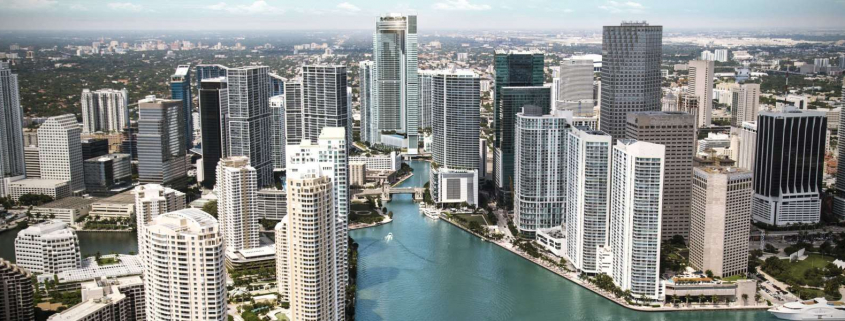
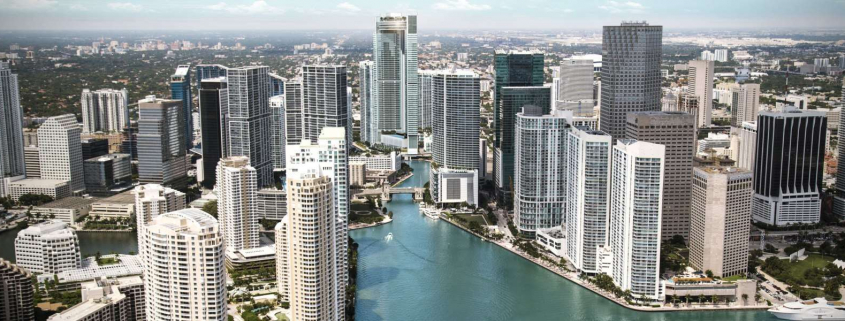
Despite the condo market slowdown, developer Shahab Karmely is confident his project and the Miami River are poised for big growth.

Click photo to view video of Shahab Karmely discussing the Miami River and One River Point at the TRD Broward Showcase and Forum panel by TRD’s Alistair Gardiner

In a post-panel interview, Karmely and The Real Deal South Florida’s Managing Editor Ina Cordle discussed One River Point and the river at TRD‘s Third Annual Broward Real Estate Showcase & Forum in April.

Presales at One River Point are about to pass the 18 percent to 20 percent mark. Buyers there are mostly from South America, but also from Georgia, New York and Canada.

“We have headwinds – not us, just everybody else,” Karmely said. “On the other hand, we are financially very secure. We have no financing.”

The Real Deal previously reported that Karmely’s silent partner is Daniel Loeb, the billionaire investor who runs one of the most prominent activist hedge funds, Third Point LLC. Karmely’s KAR Properties has spent more than $112 million on acquisitions along the River, in Wynwood and in Hallandale Beach since 2013, and more on pre-develoment costs.

Karmely was part of a panel discussion on the economics of new development amid a new administration and continuing global market fluctuation.

To watch the panel in full, click here.


Source: The Real Deal

Every month, the Miami Association of Realtors announces the top 10 foreign countries that use its website to search for Miami real estate.

As you might expect, this list typically features the “usual suspects” month after month, such as Colombia, Canada, Brazil, Venezuela, Argentina and France. However, the most recently published report (from January 2017) included an unfamiliar newcomer: Turkey, ranked at No. 7.

Miami has always attracted foreign buyers, and we are very used to seeing strong interest from Latin America and Europe. But this marked the first time that a Middle Eastern country was included among that report’s top 10.

While time and circumstances could make this inclusion an outlier, it is also a fairly good demonstration of Miami’s rising profile among wealthy and sophisticated real-estate buyers from that part of the world.

Last September, CBRE Capital Markets reported that commercial investment in Miami from the Middle East totaled $517 million between January and June 2016 alone, making it the 10th most popular global market for Middle Eastern investment during this time period, and the fifth most popular in the U.S.

Why Miami?

A number of factors have coincided to propel this dramatic increase in demand for Miami real estate from the region. First, turmoil and unstable governments throughout the Middle East have pushed wealthy families to seek more and varied residency options, beyond the usual “comfort zones” of London and New York.

Second, Miami is considered a relatively new city, with many recently-constructed buildings and houses that offer state-of-the-art amenities, which appeal to prosperous Arabs.

Third, with the recent addition of world-renowned luxury hotels, restaurants, architecture, retail and cultural offerings (Four Seasons, Zuma, Zaha Hadid, Art Basel, etc.), Miami now enjoys a higher level of sophistication than in years past.

And finally, more direct flights from Dubai, Doha and Istanbul have literally put Miami within reach for more Middle Eastern buyers.

Put all these elements together, and Miami is now viewed as a secure, modern, upmarket, accessible and (important for Middle Easterners!) warm American city, with reasonably-priced real estate and amenities curated for high net-worth individuals.

(Recent buyers from Turkey present specific and compelling evidence of this observation. A few years ago, there was a big spike in their attention to projects like the Four Seasons in Surfside and the Capri in South Beach — just around the time that Erdoğan was elected president and began seriously consolidating power in that country.)

Three Broad Categories

Miami’s Middle Eastern buyers fall into three broad categories:

  • Wealthy individuals seeking pied-à-terres, to enjoy a few months of leisure
  • Investors looking to purchase at big projects like the W Downtown and the St. Regis Bal Harbour
  • Students attending college, usually at the University of Miami. Our country attracts many foreign students, and let’s face it — what 20 year-old wouldn’t love to spend four years here?

The really interesting phenomenon is that many of these Middle Eastern college students become the “gateway” for other family members, encouraging mom, dad, grandma and others to join them in Miami. Family is extremely important to Middle Eastern buyers, and real-estate professionals should be prepared to find housing for them that is suitable for and capable of expansion, or has more available units nearby.

No Trump Concerns

While President Donald Trump’s Middle Eastern travel/emigration policy (or “Muslim Ban,” as it has been described) draws international headlines and lots of cable news chatter, you might be surprised to know that clients from that region pay it little attention.

Prosperous Middle Eastern individuals do not feel unfairly “targeted” in any respect and feel no need to protest or complain. Their concerns are about finding safe, secure and reliable investments should they need to flee their home countries due to political, religious or military turmoil. This would be the case regardless of who occupies the White House.

While the region continues to be very unstable and capable of dramatic change, a mass influx of Middle Eastern buyers is not expected to Miami in the near or distant future. However, the trend of more wealthy individuals choosing Miami over major U.S. cities like New York or Los Angeles is here to stay, and Turkey and other Arab countries may become regulars on that list of online real-estate Web searchers.


Source: Miami Herald

Future tenants of Brickell’s mammoth Panorama Tower are a little closer to being able to look down on the rest of Miami.

Developer Tibor Hollo’s Florida East Coast Realty is celebrating the topping-off of its 830-foot luxury rental tower at 1101 Brickell Ave.. The ceremony is a customary way for builders to commemorate the completion of the top floor of a new structure.

At 85 stories, Panorama Tower will be the tallest building in Florida and the tallest residential building south of Manhattan, according to the developer. The tower will house 821 apartments, ranging in size from one to three bedrooms and starting at 1,135 square feet., along with a sick array of amenities, including a lap pool, sun deck, weight room, pet groomer and a serenity pool for when you’re stressing about your high rent — an average of $3 per square foot.

Another 208 rooms will serve as a boutique hotel. The structure will house 100,000 square feet of office space and 50,000 square feet of high-end retail shops and restaurants.

Construction on the Panorama, which is estimated to cost a total of $800 million, is expected to be completed by the end of this year. The leasing program has not officially started, but more than 100 units are already reserved.

Including the building’s antenna, the Panorama Tower will reach 868 feet into the sky, which is higher than two football fields stacked end-to-end and taller than the Four Seasons Hotel Miami, which measures 800 feet to tip.

Panorama will only hold the crown of Miami’s tallest for a couple of years. The building will be dwarfed by at least two other giant skyscrapers in development, both expected to reach 1,049 feet: One Brickell City Centre and One Bayfront Plaza.


Source: Miami Herald

GlobeSt.com caught up with Chris Dekker, vice president of Mayfair Real Estate Advisors and Tere Blanca, president and CEO of Blanca Commercial Real Estate, to get their take on the office aspects of this project in part one of this exclusive interview.

GlobeSt.com: It’s been 30 years since a new office building was built in Coconut Grove. Why are two new buildings launching at the same time?

Dekker: Coconut Grove is experiencing three decades of pent-up office demand from in and around the area that has led to a submarket vacancy rate of less than 2%—the lowest in all of South Florida. The Grove is coming alive with new condos, restaurants and shops, so we view the development of new Class A office space as the final ingredient that will complete the neighborhood’s comeback. Mary Street, like Terra’s nearby towers at Grove at Grand Bay and Park Grove, represent a new wave of design-driven infill development that is taking advantage of Coconut Grove’s walkability and central location.

GlobeSt.com: Coconut Grove has primarily been known as a retail and residential destination. How does office space factor into the neighborhood’s commercial mix?

Blanca: The addition of new class A office space at One CocoWalk will make the CocoWalk shopping complex more relevant for locals again, after more than a decade of being a destination for tourists. By welcoming new companies and hundreds of additional employees into the neighborhood, we’ll be boosting the area’s daily population and driving more activity on the streets throughout the day, which will benefit the Grove’s retailers and restaurants on a daily basis.


Source: GlobeSt.

Four developers will seek to rezone property in Miami for major projects, including a 43-story apartment tower by the Melo Group.

The city’s Planning, Zoning and Appeals Board will consider all four applications on March 15. If approved there, the applications would need to pass two readings before the City Commission. These rezoning applications deal with the allowable height and density on the sites, not the specific building designs, which would go through a different approval process.

1. Apartment Building Proposed By Meo Group In Arts & Entertainment District

Miami-based Melo Group, one of the largest residential developers in Miami with its condo and apartment towers, wants to rezone the 1.22-acre site it owns through affiliate Art Plaza LLC in the Arts & Entertainment District. It paid $16 million in 2014 for the property at 1336, 1348 and 1366 N.E. 1st Ave., 50 and 58 N.E. 14th Street, plus 1335 N.E. Miami Court. It’s near where Melo Group is currently building the Square Station apartments.

The area is zoned for 500 units per acre. Attorney Iris Escarra, who represents Melo Group in the application, said it’s not feasible to build to that density level under the site’s current zoning because it doesn’t allow enough square footage. Melo Group intends to build an apartment building with ground-floor commercial space, she said. That location is ideal for Miami workers because it’s near the School Board Station Metro Mover and Melo Group would but a public entrance to encourage mass transit and walking, she added.

The property’s current zoning of T6-24-A would permit a 22-story building of 518,000 square feet with 304 units. Rezoning Art Plaza LLC’s land to T6-24B would allow a 43-story building of 1.28 million square feet with 630 units, according to Escarra’s estimate.

“Square Station has the same zoning,” Escarra said. “This area is really in need of that particular zoning change. It’s important to get people to take the School Board Stop.”

2. Apartment Tower Proposed In Omni

Developers Damian Narvaez and Alex Karakhanian plan to build an apartment building in the Omni neighborhood.

Their co-owned company 2247 N.W. 17th Avenue LLC paid $6.6 million in May 2016 for the 43,262-square-foot site at 1900 N.E. Miami Court. It currently has a 50,317-square-foot building from 1923 that recently housed Aspira Charter School.

The developer seeks to rezone the property from T6-8 to T6-12, which would increase the permitted height from eight stories to 12 stories. The density would remain at 500 units per acre. Attorney Steven Wernick, who represents the developers, said rezoning the property would allow his clients to propose a building closer to the area’s permitted density. If approved, it will design an apartment building with ground floor retail, he said.

“The site is in need of redevelopment to bring more housing into the area,” Wernick said.

Based on an average unit size of 700 square feet, the current zoning would permit a 266,963-square-foot building with 220 units. The new zoning would allow a 444,226-square-foot building with 358 units. Wernick said the final number of units would depend on the design of the building and the size of each unit.

3. MiMo Site Could Be Rezoned

The owner of a 1.33-acre site in MiMo wants to rezone the property for more density.

Todd Leoni manages the three companies 7000 Biscayne LLC, 7100 Biscayne LLC, and 7120 Biscayne that own the property. It covers 7000, 7010, 7020, 7030, 7100, and 7120 Biscayne Blvd. plus 565 N.E. 71st Street. The property currently has a three-story office building, two restaurants and a car wash.

The property is currently zoned T4 and T5. The proposed zoning of T6-8 would allow 85 units. There would be no change in the permitted height, as buildings in the MiMo historic district are limited to 35 feet.

It’s not clear exactly what the developer plans to build. Attorney Gilberto Pastoriza, who represents 7000 Biscayne LLC, couldn’t immediately be reached for comment.

4. Mixed-Use Proposed In Allapattah

A mixed-use multifamily project is planned for the emerging neighborhood of Allapattah.

Luar Investments LLC, owned by Raul Rodriguez, owns the 44,442-square-foot site at 2950 N.W. 7th Ave., 720, 730, and 744 N.W. 30th Street, and 735 N.W. 29th Street. It currently has an 8,956-square-foot building that’s used by an ambulance company and the parking lot is utilized for ambulance parking to serve the nearby hospitals.

It’s currently zoned T4 with 36 units per acre. The developer wants it rezoned to T5 with 65 units per acre. This would allow about 48 units on the site.

Miami attorney Ben Fernandez wrote in the application that Luar Investments intends to build a mixed-use multifamily development with ground floor commercial space. He couldn’t be reached for comment.


Source: SFBJ

Tibor Hollo will break ground on the 92-story One Bayfront Plaza in January 2019, according to an interview he gave this week with Miami Today.

Completion is estimated within 40 months of starting, he said. The building will top off at 1,049 feet, since that is the maximum permitted by the FAA in the area, Hollo said. He expects other developers will follow him and build at that height.

Most of One Bayfront Plaza will be devoted to apartments, with 1,052 units. The project will also include about 500,000 square feet of office space and 200,000 square feet of retail, along with a 200-room hotel. It will be directly connected to a Metromover station by bridge.

Residences will start on level 22. A sky recreation deck will have two giant pools, including one for hotel guests. A second amenity deck will be located on level 40.

Hollo is 90 years old. He currently has Panorama Tower under construction in Brickell, which is already the tallest structure in Miami. Hollo said that Panorama will top off at 867 feet, surpassing any other building in the area by 100 feet, and the tallest (residential) tower south of New York on the eastern seaboard.


Source: The Next Miami

Year-end surges in the office, industrial and retail sectors foreshadow robust economic growth across South Florida for 2017, commercial real estate experts say.

A lack of new supply pushed office rents higher, particularly in the downtown corridors, and the optimism displayed by businesses looking to expand is prompting developers to strongly consider shovels in the ground after a decade of inactivity.

West City Partners has proposed a 500,000-square-foot office building in downtown Fort Lauderdale, although the project isn’t expected to break ground until an anchor tenant commits.

The Stiles real estate firm is in talks with Broward College for a ground lease at the two-building site on Las Olas Boulevard. Stiles would tear down the buildings and replace them with a 350,000-square-foot office tower, said Doug Eagon, the developer’s vice chairman.

“It is time to introduce the next generation of office space into the downtown market,” Eagon said.

Last year, Stiles paid $13.1 million for the Bank of America building next to Broward College.

“The firm is considering its options, with retail and residential likely,” Eagon said.

Meanwhile, demand is soaring for warehouse and distribution space as e-commerce suppliers struggle to keep up with online retail sales, according to a report from the Colliers  International real estate firm.

In the fourth quarter of 2016, Broward’s industrial vacancy rate plummetted to 4.4 percent from 6.6 percent in the fourth quarter of 2015, the Colliers data show. Palm Beach County’s vacancy dropped to a nine-year low of 4.2 percent.

Boca Raton and Jupiter had the county’s two lowest industrial vacancy rates, at 1.2 percent and 1.5 percent, respectively. Those two markets also had the two highest rents — $14.53 a square foot in Boca Raton and $11.43 a square foot in Jupiter.

“Palm Beach County has more than 422,000 square feet of industrial space under construction, the majority of it at McCraney Property Co.’s Turpike Business Park adjacent to Florida’s Turnpike at Belvedere Road,” Colliers said.

In Broward, Butters Construction and Development and Bristol Group Inc. are planning a 925,000-square-foot business park at the site of the former Deerfield Country Club off Interstate 95 and Hillsboro Boulevard.

Tom Capocefalo, senior managing director for the Savills Studley commercial real estate brokerage in Miami, said the tri-county region is geographically positioned to easily ship goods domestically or internationally to the end users.

“We’re finding that the South Florida marketplace is one of the top-tier distribution markets in the country,” Capocefalo said. “It’s incredible, the pace of it.”

“Industial developers are moving north into Palm Beach County because the county has more available property than either Broward or Miami-Dade,” said Ken Krasnow, executive managing director for Colliers in South Florida, said

“Land is a scarcity,” Krasnow said. “We’re not making any more of it.”

“Palm Beach County also had a banner year in retail, with more than 1 million square feet of space leased – the highest level since 2006 and nearly double the 515,050 of 2015,” Colliers said.

Broward totaled 1.4 million square feet in new retail leases, its best showing in a decade. The first phase of Dania Pointe, an $800 million shopping and entertainment center, is expected to open this year just east of Interstate 95 at Stirling and Bryan roads in Dania Beach.

Colliers said small blocks of space in the 2,000-square-foot range are most in demand as Broward tenants seek to control costs in an era of rising rents and the growth of e-commerce. With smaller spaces more in vogue, the challenge for retail landlords this year will be to find tenants for the available “big box” spaces across the region, market observers say.

Sports Authority filed for bankruptcy and went out of business, closing 13 stores across South Florida and auctioning 10 others. In January, Macy’s said it would close stores nationwide, including one at CityPlace in West Palm Beach.

“Landlords will first try to find a tenant to take the space in its current configuration,” said Peter Reed, managing principal at Commercial Florida Realty Services in Boca Raton. “When those efforts are exhausted, they’ll have to ask themselves, ‘How do I repurpose this?’ In some cases, they’ll be able to multi-tenant it, but in other cases the best thing may be to scrape it and do something different.”


Source: SunSentinel

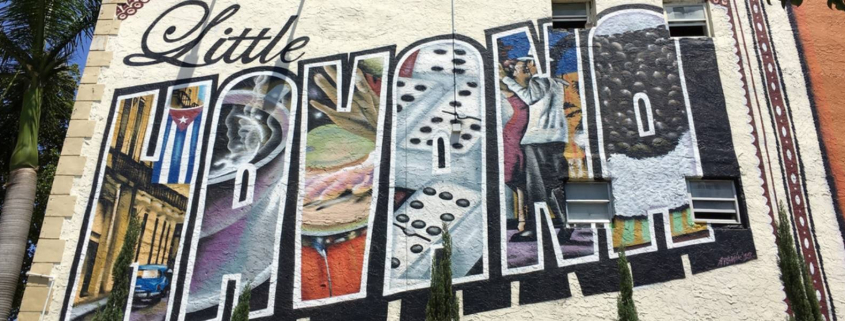
Little Havana, the neighborhood that is the heart and soul of Miami’s Cuban diaspora, was named a US “national treasure” on Friday.

The National Trust for Historic Preservation, a private organization, added the neighborhood to its list of sites it believes should be protected from developers, saying in a statement that it “stands as a testament to the immigrant spirit that built America.”

Little Havana is home to the Versailles, a historic cafe that pulses with Cuban music and sometimes offers free Cuban pastries to exiles who gather there to protest or celebrate events on their home island.

Several blocks away in Domino Park, dozens of retirees play the eponymous game amid sometimes heated political discussions every afternoon. Nearby, the city’s most popular Cuban salsa club is a must-see tourist destination. There’s also a museum of weapons, photos and documents from veterans of the ill-fated 1961 Bay of Pigs invasion.

However, Little Havana‘s residents now worry about being forced out by real estate development and rising prices.

“Little Havana is a symbol of the immigrant experience in America,” the historic trust’s president Stephanie Meeks said. “The National Trust welcomes the urban resurgence that is breathing new life into cities across the country, but we also believe that growth should not come at the expense of the vibrant historic neighborhoods like Little Havana.”

The buildings, some them Art Deco, date back to the 1920s and 1930s. On the commercial hub Calle Ocho, or Eighth Street, many buildings have coral-colored floors. But the burgeoning downtown and Brickell neighborhoods — with their modern 20-story buildings — are expanding toward Little Havana.

“As Miami continues to evolve, preservation will be essential in maintaining Miami’s unique urban neighborhoods,” Miami-Dade County heritage trust director Christine Rupp said. “Our long-term goal is to protect specific historic properties that tell the story of Little Havana and assist with the restoration of those historic buildings.”

Some 1.5 million Cubans live in the United States, 68 percent of them in Florida, according to the Pew Research Center.


Source: Yahoo!News

Rendering of the 24-story, 250,000-square-foot mixed use project planned for Brickell. (Image Credit: Metro 1 Development)

Real estate developer Tony Cho and hotel developer Robert Finvarb announced Friday they are developing a 250,000-square-foot, 24-story, mixed-use project in the heart of the booming neighborhood.

Located on Southwest First Avenue between Seventh and Eighth Streets, the project aims to attract a “neighborhood style hotel” and retail, as well as possible commercial and residential components. Cho and Finvarb recently acquired the site for $18.4 million.

The building will be adjacent to Metromover and Metrorail stations and a block from the site of the Brickell Backyard segment of the Underline project, an endeavor to transform the 10 miles below the Metrorail along South Dixie Highway into a green thoroughfare of bike paths, trails and street vendors.

Cho, who founded Miami-based Metro 1 Development, has worked on several neighborhood revitalization efforts. He most recently announced plans for the Magic City Innovation District, an area spanning 15 acres just north of Wynwood with a focus on art, entertainment, innovation and sustainability.

Finvarb is the founder of Miami-based Robert Finvarb Companies, which has developed 17 hotels since 2002 in seven states and the District of Columbia.


Source: Miami Herald

For decades, these three large city blocks in a prime location — straddling Miami Avenue and butting up against the Miami River and the Brickell financial district — lay inexplicably vacant.

Now, in the seeming twinkling of an eye, they have been utterly transformed. Brickell City Centre, which opened in November, is an urban animal of a concentrated intensity more evocative of Hong Kong or Tokyo than anything Miami has seen before: five towers connected by a multi-level, open-air shopping center plugged directly into a Metromover station and layered over underground parking tunneled beneath the streets. Pedestrians enter porous breezeways seamlessly from the surrounding streets, while above, shoppers cross bustling pedestrian fly-overs, protected overhead by a “climate ribbon” canopy that snakes across all three blocks like a long strip of origami.

It feels like a real city. And that’s precisely the stated goal of the relatively new, largely untested and increasingly controversial zoning category that produced it, and that now may be paving the way to a redrawing of broad swaths of Miami.

The goal: to create true urban neighborhoods and districts in underdeveloped areas of the city that, far from being self-contained islands, are painstakingly planned, interwoven and compatible with the city fabric around them. Often in exchange for greater height and density, developers must spend millions on new public spaces, streets and amenities — sometimes paying cash into public kitties — while giving city planners and the city commission a significant say in the shape of the final product.

The concept has taken off, to the consternation of some neighborhood activists. SAP was once reserved mostly to the city’s core, but developers building in far-flung, residential neighborhoods are now taking advantage.

“What the SAP does uniquely is, it sets up a table where the city comes in, stakeholders come in, and we can all figure out what the optimal shape this project can take is,” Miami planning director Francisco Garcia, who helped author the Miami 21 code while at the private planning firm Duany Plater-Zyberk, said in an interview. “In Miami, I don’t think there is any area that is not undergoing some degree of change, or redevelopment, or thinking about redevelopment. This is our world today here in Miami. So let’s approach this emphasis to redevelop and reshape the city in a creative way, and have it yield the best results.”

Aside from Brickell City Centre, which has two more planned phases yet to start, the SAP has also led to the lauded, near-total redevelopment of the formerly dormant Miami Design District. The rebirth of the district, about 60 percent complete, has meant new, street-friendly retail buildings and a pedestrian promenade connecting two large public plazas.

Meanwhile, on the north bank of the Miami River, River Landing would bring a multi-story restaurant and retail center with apartments to the site of the demolished Mahi Shrine in the Civic Center area. On the south bank, Chetrit Group’s $1 billion Miami River complex would bring 58- and 60-story towers and three levels of shops to a site formerly occupied by an abandoned restaurant and empty warehouses. Both projects would include new public spaces; Chetrit would underwrite upgrades to Jose Marti Park and contribute millions into an affordable housing trust fund.

If anything, these projects were celebrated. But as SAP applications proliferate across the city for everything from tech villages to mixed-use residential and commercial districts and even school and hospital redesigns, the sheer size and scale of some of the proposals is giving many city residents pause, if not provoking outright alarm.

Entrepreneur Moishe Mana’s massive Mana Wynwood SAP, which would bring shops, a trade center and residential towers rising up to 24 stories to two dozen acres of mostly vacant land, prompted a year of negotiation and public battles with other property owners in the rapidly redeveloping warehouse district. Mana won commission approval after agreeing to spend millions putting utilities under ground and redrawing the original plan to scale back construction facing the heart of Wynwood.

Elsewhere, developer Michael Simkins talked about using the SAP process to design an innovation center in blighted Park West immediately south of Interstate 395, including a controversial observation tower designed to also serve as a digital billboard, although his attorney says he’s currently reassessing whether to pursue an SAP.

And now a flurry of potential new SAPs has raised concerns that the process could become a runaway train barreling through established neighborhoods and dramatically changing their character. In and around the city’s Upper Eastside, three developers and a hospital have submitted applications to the city or are expected to soon, all within a tiny area of roughly 40 square blocks:

  • Legions West, a 1.2-million-square-foot complex abutting Legion Park, to be built on the site of a recently demolished American Legion post and neighboring Art Deco apartment buildings that formerly housed dozens of low-income families. The developer would spend millions on improvements to the park.
  • Eastside Ridge, proposed by the owners of Design Place, who want to turn 22 acres of moderately priced townhouse units into a mass of sky-high residential and office towers with nearly 3,000 condos.
  • Miami Jewish Health Systems, across Second Avenue from Design Place, which is planning an expansion of an existing campus. The hospital wants to open a new dementia-focused assisted living facility, research center and convention hotel, and redesign other aspects of its campus.
  • Magic City, a 15-acre assemblage including industrial buildings and a demolished trailer park straddling Little Haiti and Little River that developers Tony Cho and Bob Zangrillo want to convert into a technology, residential and cultural center.

Legions West and Eastside Ridge are perhaps the most controversial of the SAP submissions to date, in part because they would tower over neighbors and replace low-rise, low-cost rental housing. The Legions project would drop four towers up to 15 stories tall next to two protected historic districts: the MiMo Biscayne district with a 35-foot height limit, and the single-family Bayside Historic District. It would also include part of the adjacent and now-historic Legion Park in order to qualify for the needed nine acres to propose an SAP — an aspect that generated false fears that the developer, who plans to spend millions on upgrades, would privatize the park.

Renderings of the Eastside Ridge plan, which depict what seems to be a massive, gleaming steel-and-glass city-within-a city rising from the modest urban landscape of Little Haiti, has sent residents into a tizzy. Some in the community, already hyper-acute to the pressures of gentrification, believe they are being boxed in and pushed out by new development.

“The more we learn about these mammoth projects, the more concerned we are,” said Marleine Bastien, a Haitian-American activist who has been outspoken about gentrification of the neighborhood and the apparent lack of consideration for community input. “What we resent is for us to be brought in at the 11th hour when everything is cooked and ready to eat, and we get the crumbs.”

Garcia, Miami’s planning director, insists that community input is a central tenet of the Special Area Plan, which requires reams of paperwork, months of debate with city planners and multiple hearings in order to green-light a project. But some critics say there is evidence to the contrary.

“In Wynwood, they up-zoned 45 different properties to as high as 20 and 24 stories, which is a complete violation of the law,” said veteran Morningside activist Elvis Cruz, who argues that the city is flouting a Miami 21 requirement that all new development be compatible with its setting. “But that’s the way it works in the city. They just interpret things as they wish. It’s completely out of scale and character.”

People critical or skeptical of some of the newer SAPs even includes some prominent figures who have strongly backed such projects in the past. Horacio Stuart Aguirre, chairman of the Miami River Commission, which reviews projects along the waterway, said it’s one thing to approve SAPs on undeveloped land long contemplated for dense redevelopment, like the river properties close to downtown Miami, but entirely another to plunk those down amid settled, existing neighborhoods.

Though SAPs must be approved by the city commission, which has been no rubber stamp, Aguirre says he fears the “goodies” promised by developers of SAPs to the city — including new jobs, the creation of new public spaces and payments toward future affordable housing — prove too tempting to turn down. (None has been, yet.)

“Brickell City Centre is a wonderful idea, where it was done. It’s in Brickell, for crying out loud,” Aguirre said. “But should we have 20 of those reiterations all over the city? What happens to the character of individual neighborhoods? What happens to the idea of local communities?”

But Miami 21 designers say the SAP has always encouraged developers to embrace the neighborhoods in which they’re investing, and put in the extra expense, effort and time that sensitive master planning requires. They note that developers, even without SAPs, could always pursue up-zoning without providing anything in return to the community.

“They are a terrific improvement over the prior situation,” said Elizabeth Plater-Zyberk, whose firm authored the Miami 21 code. “It’s an invitation to making a better plan than what is there now.”

Garcia also says the city puts SAP proposals through a grind of an extensive review, and some submissions never make it out of the process because developers drop them after realizing what’s required for approval. He disputes the idea that developers and the city use SAPs in order to super-size projects.

“The perception by some is this is simply a race for the gluttonous,” Garcia said. “But I will tell you there are significant amounts of development capacity and density that are left on the table in each and every one of these SAPs.”

To be sure, height and density are part of the equation, but not the entire picture. What makes SAPs attractive to the city and developers is the flexibility afforded in designing what often are sprawling campuses. Roads can be moved. Buildings can be massed and shifted in ways they otherwise couldn’t. The rigidities of the city’s laws can be unlocked, although not ignored. “If I have the possibility to do that, why wouldn’t I?” asks Garcia.

Noting that the Design District SAP is hardly tall by Miami standards, Magic City’s Cho said he expects to submit an application for an SAP in part because the project he wants to build — the one he says is best for the area — is impermissible under the regular zoning code. For one thing, much of the 15 acres he and Zangrillo own are zoned industrial, and Cho says he’s hoping to include hundreds of low-cost residential units. Likely, that will be done by building “micro” units, tiny apartments made affordable by their size.

“The existing zoning is antiquated and outdated,” said Cho, who began investing years ago in Little Haiti real estate. “That’s not in the best interest of Miami. You don’t want a neighborhood that can’t develop residential.”

For Garcia, whose department hasn’t weighed in on Magic City, and has only begun to look at Eastside Ridge and Legions West, that’s the underlying truth behind Miami’s transformation. The city is evolving, and as downtown and Brickell become entirely built-out, and Wynwood’s land becomes price-prohibitive, developers will begin to invest and rebuild the city’s farther-flung neighborhoods. When that happens, he says, the city needs the tools to map out the right future.

“There has been a great explosion of building in Miami during the last six or seven years. But that’s a data-point. The real question is: Is that good? Is that bad?” he says. “It is a very positive trend and it is getting us closer to what Miami is and should be. Miami will not be in the near future a sleepy town that is a vacation resort for the wealthy. It should be a real city.”


Source: Miami Herald