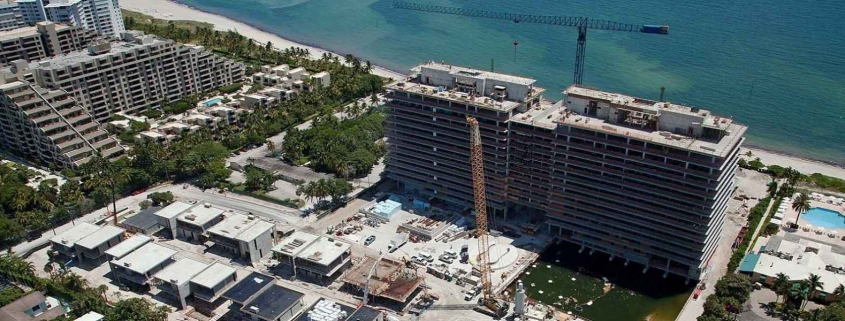
MiamiApartmentConstruction_5

Miami’s apartment scene is booming, with the market projected to deliver 13,245 new units in 2016, per Rent Cafe.

This ranks eighth nationally, closely behind Austin (13,568) and Seattle (13,384).

Texas paves the way, with Houston topping the list at nearly 26,000, followed by Dallas (23,159).

Midtown has been especially hot with rental projects, with several new developments announced within the past few months.

Top20MetrosApartmentDeliveries


Source: Curbed Miami

The Coconut Grove office building that houses Miami Today’s headquarters is officially up for grabs at $20 million.

2000 South Dixie Highway Coconut GroveLocated at 2000 South Dixie Highway, the building is fully occupied, including a handful of notable tenants like Miami Today, one of the city’s longest-running business publications, and Tinsley Advertising, a storied ad agency that’s worked with brands like Airbus and Paramount Pictures.

The building is owned by a limited liability company named after its address. State corporate records show the entity’s registered agent is Jose Pita, head of a company called Sunrise Grove Management that manages properties for investors.

After purchasing the property, built in 1972, for $4.925 million in 2010, the current owners started a major renovation program. New impact-resistant windows were installed, the interiors were modernized, and the building’s two-story atrium was redone. At 53,074 square feet, the building’s asking price breaks down to just under $377 per square foot.

Listing agent Scott Sime of Sime Realty told The Real Deal that the owners sensed it was a good time to sell now that the office market has matured.

The current tenants are paying roughly $28 per square foot, triple-net, according to data from the CoStar Group. And Sime said as those leases expire, a new owner could potentially bring those rents higher. A second-quarter report from commercial brokerage CBRE shows asking rents in the neighborhood now hover at about $34 per square foot for Class A space, and $31.64 for Class B space.

2000-South-Dixie-HighwayAs for whether developers could be potential buyers because of the property’s 90,000 square feet of land, Sime said “That is certainly a possibility. But this property functions very well in its current state as an income producing property.”


Source: The Real Deal

Slower sales and a glut of inventory has led to a buyers’ market for South Florida luxury properties, according to Miami Beach real estate agent Jill Eber.

“For almost five years we were just on an upward spiral,” Eber, of Coldwell Banker’s the Jills, told a gathering of real estate professionals Wednesday evening. “But, right now, it has adjusted and it has become more of a buyers’ market. As a result, developers are adjusting their pricing and increasing broker commissions to move units. In no way is this like 2008, 2009, and 2010. The market has been steady.”

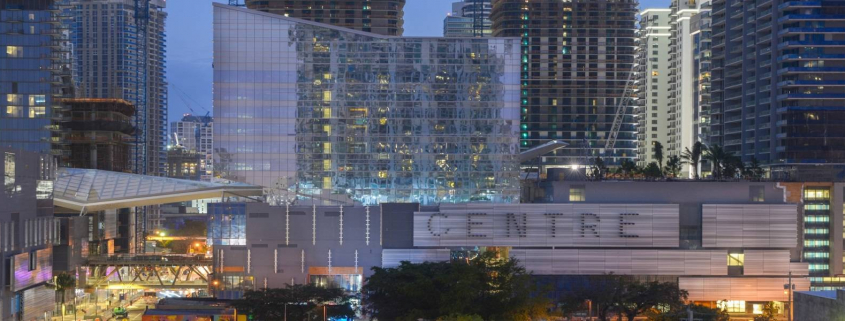
Eber participated on a panel hosted by the Miami chapter of the Asian Real Estate Association of America at Brickell City Centre’s East, Miami hotel. The discussion was moderated by Coldwell Banker luxury real estate Vice President Craig Hogan and featured Debora Overholt, Brickell City Centre’s vice-president for retail, Swire Properties Vice President Maile Aguila, Eber, Miami Association of Realtors President Teresa Kinney and Ramona Messore, vice-president of Saks Fifth Avenue at Brickell City Centre.

Overholt and Aguila offered their insights into Swire’s ability to finish massive developments like Brickell City Centre. Overholt noted that the $1 billion nine-acre mixed use project is modeled after Pacific Place, a complex of office towers, hotels and a shopping centre the company built in Hong Kong 27 years ago.

“If you are familiar with Pacific Place, what we are developing is very similar to that,” Overholt said. “We are very excited to bring something fairly new to U.S. retailers, but something we already do well.”

Since opening in 1989, the four-floor mall at Pacific Place has more than 711,000-square-feet of retail space that houses a Harvey Nichols department store and 140 luxury brand shops and boutiques. Similar to Brickell City Centre, the mall is integrated into three Class A office towers, four five-star hotels, and a condominium. Swire spent $2.1 billion in 2011 on a redesign project led by Thomas Heatherwick.

Aguila told the audience Swire’s success with Pacific Place proves the company has the strength and wherewithal to deliver every phase of Brickell City Centre.

“When we do things, we do things long-range and take a long time,” Aguila said. “I remember when we were developing Brickell Key, we were all looking forward to a retail component and food and beverage component that just never happened. We saw that need. We had the vision to come into the area at the right time and the right place.”


Source: The Real Deal

An entrepreneur who’s bought a big chunk of downtown Miami while promising some mold-breaking surprises was apparently not kidding: He wants to build an eye-catching 49-story tower with apartments so small there’s no room for ovens in the tiny kitchens. And there’s no parking.

Actually, that last bit’s not quite right. There will be parking — for bicycles. Is Miami really ready for this?

Moving-company and arts mogul Moishe Mana — who’s also building a mini-city on a large swath of Wynwood and has lately spent tens of millions to buy up property on and around downtown’s Flagler Street — certainly thinks so.

A rendering of developer Moishe Mana’s proposed “micro-living” apartment tower. (Zyscovich Architects)

A rendering of developer Moishe Mana’s proposed “micro-living” apartment tower. (Zyscovich Architects)

He’s the first in Miami to formally propose putting up a building consisting entirely of what’s been dubbed “micro-units” — compact, hyper-efficient and affordable apartments meant for young singles who want to live in dense urban neighborhoods and get around primarily on foot and public transit. The plan, which Mana’s team says fully conforms with downtown zoning rules, will have its first and likely only public review before the city’s Urban Design Review Board on Monday

MicroApartments3The blueprint calls for 328 apartments starting at 400 square feet, the minimum allowed by city code. The penthouse units top out at a relatively generous 600 square feet, but most will be 500 square feet and under, said the project’s architect, Bernard Zyscovich.

The apartments would be equipped with built-in furnishings, including beds and tables, that tilt, fold or slide into walls and cabinets, Zyscovich said. And the building, at 200 North Miami Ave., would be flush with amenities, including built-in superfast WiFi and fully equipped common kitchens and dining rooms for when residents want to entertain.

“It’s like living in a Transformer,” Zyscovich said. “The idea was, let’s make these apartments in the urban core, let’s make them small and let’s build in all the stuff that makes it desirable. We’re going for that authentic coolness that comes from being in the middle of everything. It’s for a particular type of person, probably Millenials but not exclusively so, who want to live an urban life and simplify their life, and not have all their money going to rent and furniture and maintaining a car.”

Rents, which have not been set, would be at market rates, but would be significantly lower than the norm downtown and in surrounding neighborhoods like Brickell — where high costs have some renters taking in roommates and doubling up in bedrooms — by virtue of the apartments’ small size. The substantial savings Mana will realize by not having to build costly structured parking will also help keep rents down, Zyscovich said.

A rendering of developer Moishe Mana’s proposed “micro-living” apartment tower. (Zyscovich Architects)

A rendering of developer Moishe Mana’s proposed “micro-living” apartment tower. (Zyscovich Architects)

The project takes advantage of a zoning exemption that allows buildings close to transit stations in downtown Miami to dispense with parking. The building, on a sliver of land that Zyscovich said would make it hard to fit in a parking garage in any case, sits a short stroll from the Government Center Metrorail station, three Metromover stops and the station for the All Aboard Florida train service, now under construction.

There is lots to walk to nearby, including courthouses, government buildings and offices with tens of thousands of jobs, not to mention classes at Miami Dade College’s downtown campus two blocks away. The All Aboard station will have a food market, and Whole Foods and Publix stores can be reached by Metromover or city trolley.

Those who insist on having a car have options: The building site abuts a big city parking garage, and another public garage sits a couple of blocks away.

Two South Florida analysts predicted Mana will have no trouble renting out the building at a time where rents in Miami have risen much faster than salaries, creating a housing affordability crisis.

If Mana rents his apartments in the middle of the range for the area, or about $2.25 a square foot, that means someone could get into one of the 400-square-foot units for $900 a month, a relative bargain, while enjoying the privacy of his or her own space, noted Jack McCabe at McCabe Research in Broward County.

“They will fill it up,” McCabe said even as he expressed surprise at the apartments’ size and lack of fully equipped kitchens — though they will have cooktops. “Affordability is key right now. There is definitely demand for more-affordable rentals without a real kitchen in a cramped apartment that allows you to enjoy the lifestyle in downtown Miami.”

McCabe said the common kitchens, which Zyscovich said would have to be booked in advance, are a desirable feature for many people, and the compact units would not bother many of the South Americans and Europeans now flocking to the city who are used to living in smaller spaces than Americans.

The “micro-living” concept, which is catching on in other U.S. cities like Seattle, San Francisco and New York — the Big Apple’s first such building just opened in the Kip’s Bay neighborhood on the east side of Manhattan — can help solve not just the affordability problem but also relieve traffic congestion, said Suzanne Hollander, a broker and lawyer who teaches at Florida International University’s Hollo School of Real Estate.

“It’s very smart. It’s pioneering,” Hollander said. “Micro units are tiny solutions to big urban problems, and Miami is becoming a big urban city. It gives options to a lot of people who otherwise would not have them, so they can enjoy the urban living we are building.”

Micro-living buildings also carry other potential social benefits that could prove attractive not just to Millenials but also to retirees or business executives who need a pied-a-terre, she added.

“People sleep in a micro-unit. But, really, the whole building is their home,” Hollander said. “And the amenities here are amazing. What they’re trading is space for an A-plus location. This all encourages people to interact not just inside the building, but in the neighborhood, making everything more social.”

Another benefit, she said: Because the units are new and built to code, they are safer alternatives to the unregulated rooms in older homes or apartment houses that are often the only alternative for people on limited incomes.

Micro-units in New York and elsewhere are even smaller than Mana’s, with those in New York’s Carmel Place ranging from 260 to 360 square feet after the city waived its 400-square-foot minimum. That’s something some advocates are pushing to happen in Miami as well.

The no-parking alternative has a longer track record in Miami. Other developers have used the transit exemption to build no-parking residential towers downtown, including Related Group’s Loft buildings, but those units are for sale and tend to be larger. Units at Centro Miami, a high-rise condo tower now nearing completion, also without parking, range from 500 to over 1,111 square feet.

A new city zoning rule also allows for small buildings near transit routes to forgo parking. A small developer has broken ground on townhouse-like apartments without parking in East Little Havana.

Though Mana’s apartments will be small, the tower’s design aims to make a big impression, Zyscovich said. It looks like stacked blocks, with some sides on the west and south screened with a “veil” of metal mesh to shade them from the sun.

“It wants to say, I may filled with micro-units, but I’m cool,” the architect said.


Source: Miami Herald

MiamiWorldcenter_6

Miami officials will consider the design plans of five new projects in the booming city, including the redesigned Miami Worldcenter, an apartment tower with no parking by a prominent developer and a mixed-use building in Midtown.

All five items will go before the city’s Urban Design Review Board on July 25.

The 27-acre Miami Worldcenter is a major mixed-use project that would reshape the north side of downtown. Construction has already started on its first phase, although it hasn’t gone vertical yet. The master developer is Miami Worldcenter Associates, led by Art Falcone and Nitin Motwani, with Los Angeles-based CIM Group as an equity partner.

The main public plaza at Miami Worldcenter

The main public plaza at Miami Worldcenter

The new design reflects Miami Worldcenter’s transformation from big-box, enclosed retail to “high street” retail that is integrated with the urban street grid and incorporates public space and art.

Other major projects proposed or under construction in downtown Miami and Brickell can be found on the Business Journal‘s interactive Crane Watch map.

The new Miami Worldcenter design was partially inspired by Dacra’s work in the Miami Design District, as its presentation includes numerous photos from that upscale retail district to the north. Miami Worldcenter would have a long paseo that crosses several streets, capped with public plazas at both ends – similar to the Paseo Ponti/Palm Court Plaza/Paradise Plaza stretch of the Miami Design District.

The Miami Worldcenter paseo would start around Northeast 1st Avenue and stretch from Northeast 7th Street to Northeast 10th Street. It would have a 25,000-square-foot main plaza of public space on the south side and a 14,000-square-foot plaza on the north side. Those plazas could be used for special events and performances, the application said. The public spaces would be lined with trees, water features and art. There would be a vehicle drop off circle at Northeast 2nd Avenue.

Miami Worldcenter was designed by Elkus Manfredi Architects and ADD, with Kimley Horn as the landscape architect. Greenberg Traurig attorney Ryan Bailine represents the developer in the application.

The lot coverage of Miami Worldcenter’s first phase, encompassing about 10 acres, would be reduced from 88 percent to 81.5 percent. The density would decrease.

The first phase would total 3.91 million square feet, down from 4.73 million square feet in the previously-approved design. That reduction would mostly come on the commercial/retail side, with 338,036 square feet planned instead of 1.09 million square feet. Most of the retail would be on the ground floor, with some extending to a second floor. The retail buildings would have parking on the upper floors, and in most cases restaurants or amenities on the rooftops.

The residential unit count in Miami Worldcenter phase one would increase to 1,011, from 914, and the parking spaces would increase to 3,998 from 3,901. The 58-story Paramount Miami Worldcenter condominium could have up to 577 units in 1.34 million square feet, instead of 485 units, and the 44-story Luma apartment tower would have 434 units in 545,762 square feet, instead of 429 units. Luma would be developed in partnership with Orlando-based ZOM.

Paramount would rise atop a podium filled with amenities and it would be connected via an elevated bridge to a parking structure with even more amenities atop it. Luma would also have an amenity deck. The features would include multiple pools, a soccer field, two tennis courts, a half-court basketball room, two racquetball rooms and fitness areas. The condo tower would also have a yacht-shaped amenity deck on its top floor.

The application notes that up to 8.24 million square feet could be developed in the future phases of Miami Worldcenter. The next phases of the project would include a 386-unit apartment tower along Northeast 7th Street, a mixed-use tower in partnership with Newgard Development and the Marriott Marquis Hotel and convention center in partnership with MDM Group. Representatives of Miami Worldcenter couldn’t immediately be reached for comment.

Moishe Mana Proposes Apartments Without Parking

New York developer Moishe Mana wants to build 328 apartments with no parking in downtown Miami.

49-story apartment tower rendering

49-story apartment tower rendering

The 49-story would total 322,355 square feet at 200, 218 and 222 N. Miami Ave. Not counting the amenities and common areas, it would have 277,536 square feet of residential space, so that averages 846 per unit.

Downtown Miami allows developers to forgo parking requirements within close proximity of public transit. This property is near the Government Center Metrorail Station and a public parking garage. That garage is slated to be redeveloped with an apartment building incorporated into it.

Mana’s North Miami Avenue Realty LLC acquired the 14,325-square-foot site in 2014 for $4.2 million. It currently has some small retail buildings constructed from 1922 to 1925. They would be demolished to make way for the apartment tower.

Zyscovich Architects designed Mana’s project, which would feature a rooftop pool deck, a gym, a social room, an exterior courtyard on the 15th floor and micro amenity spaces of around 900 square feet on some residential floors. Mana is one of the largest landowners along Flagler Street in downtown Miami and has proposed a massive redevelopment in the Wynwood neighborhood.

Mixed-Use Project Could Rise In Midtown

Midtown 8 rendering

Midtown 8 rendering

A 28-story building in Midtown Miami would combine residential and retail space. Midtown 8 would total 389,989 square feet on the two-acre site at 2901 and 2951 N.E. 1st Ave. That would break down to 387 apartments, 29,549 square feet of ground-floor retail and 519 parking spaces.

The project would have an amenity deck featuring a pool on top of the eight-story parking garage, which would be connected to the apartment building by a series of elevated bridges. There would be an open-air driveway through the center of the project and a linear park with an art along the FECI rail line behind the building.

The property is owned by Midtown Opportunities VIB, but it’s under contract to developer Wood Partners, with offices in Atlanta and West Palm Beach. Midtown 8 was designed by StantecGreenberg Traurig attorney Ryan Bailine said his client hopes to apply for building permits for Midtown 8 in August or September and obtain them before the end of the year.

Wynwood Attracting Major Projects

Wynwood 26 rendering

Wynwood 26 rendering

The UDRB will also consider two new proposals in Wynwood, which has attracted many development applications after the neighborhood was rezoned. The Wynwood 26 apartment/retail building by the Related Group was previously covered by the Business Journal when the plan went before the Wynwood Design Review Committee.

Wynwood 25 rendering

Wynwood 25 rendering

East End Capital‘s Wywnood 25 with apartments and retail was also considered by the WDRC shortly after it was announced.


For a slideshow for the new renderings of Miami Worldcenter, plus the other projects, that will be presented to the UDRB, click here.


Source: SFBJ

A new urban living complex is slated for once-gritty Wynwood.

East End Capital has filed plans with the City of Miami for Wynwood 25, a mixed-use development that would feature 289 rental apartments, collaborative work spaces, bike storage, dog-washing facilties and a rooftop pool terrace, plus retail space, according to a release. The 400,000-square-foot project is located between NW 24th and 25th Streets immediately west of Northwest Second Avenue.

wynwood-25-rendering-2

The apartments — mostly studios and one bedrooms — are designed to appeal to cost-sensitive millennials. About 80 percent are expected to rent for less than $2,000 per month, according to the developer. The project was designed by Miami architect Kobi Karp to reflect the neighborhood’s industrial history. A pedestrian walk between 24th and 25th streets will include interactive art.

The project includes 340 parking spaces in the parking-challenged neighborhood.

“Wynwood is known for its cutting-edge art, world-class restaurants, creative office and hip retailers,” said Jonathon Yormak, managing principal of East End Capital, via a release. “Wynwood 25 marks the neighborhood’s next phase — an architecturally significant building that brings reasonably priced rental housing to people who appreciate Wynwood’s unique character and want to be a part of the community.”

Plans now must go before the Wynwood Design Review Board and the City of Miami’s Urban Design Review Board. East End hopes to break ground in the first quarter of 2017.


Source: Miami Herald

American Dream Miami was supposed to break ground by the end of 2016, but it has been pushed back until 2017 due to a delay in the approval process.

Miami-Dade delayed the process by asking for more details on the traffic impact of the project, after a study showed that the mall would generate more trips than was first forecast.

A commission vote on the project will now take place 9 months later than originally expected. Developers had hoped to have a comprehensive development master plan amendment voted on in May or June, but that has been pushed back to February or March 2017.

Last year, the owners of Aventura Mall and Sawgrass hired ‘top tier’ lobbyists in an attempt to kill the project.


Source: The Next Miami

The largest zoning code overhaul in Miami history was given a preliminary green light.

Moishe Mana‘s massive special area plan, a mechanism used for projects of more than 9 acres that permits a developer to mold zoning within existing regulations, nabbed a unanimous OK from city commissioners Thursday evening.

The New York developer is pursuing a sprawling, multi-phase project in Miami‘s once crime-laden industrial neighborhood now known as the Wynwood arts district. The 20-plus acre development requires an overhaul of regulations in the city’s recently established Neighborhood Revitalization District, a zoning code specific to Wynwood intended to keep its arts-oriented environment intact and luxe high-rises out.

Rendering of the Mana Wynwood Special Area Plan proposed by Moishe Mana.

Rendering of the Mana Wynwood Special Area Plan proposed by Moishe Mana.

Labeled Mana Wynwood, the special area plan would be the largest-ever in Miami. It’s with this mechanism that the mega-developers behind Brickell City Centre and Miami’s Design District were able to build, said Iris Escarra, a Miami-based shareholder with Greenberg Traurig. The land use attorney is representing Mana‘s team along with Greenberg shareholder Carlos Lago in Miami.

“We’re taking it to the next level,” Escarra said of the current zoning.

Mana‘s team is planning a major commercial venue centered on arts and culture, with some added residential components.

The anchor attraction will be Mana Contemporary, a museum modeled after the developer’s 300,000-square-foot entertainment venue in New Jersey. A quarter of the land will be kept as open space. Mana Commons, a proposed 2.5-acre park, was likened to Millennium Park in Chicago during Thursday’s meeting.

“This is truly a transformational project,” said Bernard Zyscovich, founder of Zyscovich Architects, the firm designing the venue. “It’s unusual because unlike most of the clients that walk into my office, this is not a project driven by residential development.”

The architect touted the Mana‘s vision in creating jobs via mixed-use commercial space catered to the arts and cultural education.

“Once completed, Mana Wynwood would result in 22,000 direct and indirect full-time jobs,” Zyscovich said.

City commissioners asked the team to include benefits and job opportunities for Overtown residents before bringing the plan for its second reading in late July.

The Wynwood Business Improvement District has worked feverishly with Mana‘s team over the past year to ensure the mega-development is compatible with Wynwood‘s unique character and the most recent zoning.

David Polinsky, a member of the BID‘s board, said the group will back the development subject to three major conditions: The Mana team should support the expansion of the BID to include the western area of the plan; Mana properties bordering Northwest 22nd Avenue, or the “Calle Ocho” of Wynwood, should follow the neighborhood’s current zoning; and the area’s temporary uses should be restricted, including the special events Mana can host, until shovels hit the ground.


Source: DBR

As several hundred business leaders gathered for the Greater Miami Chamber of Commerce’s Goals Conference, the typical celebratory mood was tempered in the aftermath of the mass killings in Orlando.

But the resolve to dig in and tackle some of the region’s most critical issues seemed to have strengthened. For this conference, it was more about looking ahead than looking back, and accelerating an innovation economy, bridging the economic divide, solving the traffic nightmares and confronting sea level rise with a smart strategy were all issues on the table, as well as the talk of the hallways and lounges at the chamber’s annual two-day planning retreat. Cuba and cyber-security were also discussed as the event opened last Thursday at the Hilton Miami Downtown.

FIU President Mark Rosenberg assumed the chairmanship of the Greater Miami Chamber of Commerce on Thursday. Florida International University

FIU President Mark Rosenberg assumed the chairmanship of the Greater Miami Chamber of Commerce on Thursday. Florida International University

A sense of urgency was highlighted in remarks by incoming Chamber Chairman Mark Rosenberg, Florida International University’s president, and a new economic report by the FIU-Miami-Creative Initiative.

“Miami has a window of opportunity to capitalize on its economic strengths,” said Richard Florida, director of the Martin Prosperity Institute at the University of Toronto and Visiting Fellow of the FIU-Miami Creative City Initiative. “We can’t be left behind … let’s get it done,” Rosenberg said.

Much of the talk was about the need for region-wide cooperation and solutions involving businesses, chambers, governments and economic development organizations across South Florida. Indeed, in a surprising sign of regional cooperation, the GMCC and Fort Lauderdale Chamber announced in April they are exploring a merger. “It would be a one plus one equals three,” said outgoing Chamber Chairman Christine Barney.

On accelerating the startup community, Florida said the Miami region starts from a good place, with a culturally rich, urban, diverse lifestyle and environment that help facilitate “collisions” – spontaneous meetings of the minds – that accelerate innovation. Another asset: A creative class of tech, arts, media, academia and other professionals that is more than 700,000 people strong. It’s also No. 2 in the nation in an index that ranks areas based on tolerance and openness, Florida said. But recent reports have highlighted that Miami’s startups aren’t scaling up. [Read the new Creative Class Group-FIU study here.]

“What we really need to do is go from quantity to quality,” he said.

Panelists — Xavier Gonzalez of eMerge Americas, Rebekah Monson of The New Tropic and Melissa Krinzman of Krillion Ventures, had several suggestions, all involving the chamber, with 4,100 members employing more than 400,000. Noting that the startup community was ill-represented in the ballroom, find more ways to connect the two groups, said Gonzalez. The Chamber’s members can be the ultimate user group for startups needing to test their concepts in the business community, said Krinzman.

“The established business community can really help the startup community level up,” said Monson.

Startups thrive on wrapping their heads around big problems, Monson said, and there was a monstrous one discussed in the afternoon panel: Sea level rise. In fact, some of the panelists there said they need the startup and millennial communities to get involved.

Susanne Torriente, Chief Resiliency Officer of the city of Miami Beach, said the fact that Miami was chosen as one of the Rockerfeller Foundation’s 100 Resilient Cities presents an opportunity for Miami to take the lead in this, and urged government and business groups to come together rather than everyone working in silos.

“This is an incredible opportunity for creating one strategy for the whole region,” said Torriente.

Other ideas offered by the panelists, who included Steven Davis of the Everglades Foundation, developer Andrew Frey, Buck Martinez of FPL and Tiffany Troxler, a research scientist at FIU: Build a set of best practices for businesses, with a priority agenda that can be an action plan; increase awareness through exhibits, conferences, messaging and think tanks; and increase the density allowed on appropriate transit-friendly urban areas in order to take pressure off the suburbs and the Everglades.

The conference continues Friday with a session of mayors, another one addressing transportation and a closing luncheon with the theme “Pivot to Asia.” [See the Chamber’s goals around these issues here]

“We have the power to make an impact,” said attorney Marlon Hill, addressing the luncheon crowd after receiving a leadership award along with nine other business leaders. “Just go out there and get it done.”

Honoring Miami’s Leaders

A number of business leaders received awards at the Greater Miami Chamber of Commerce Goals Conference, including:

Adrienne Arsht, M. Athalie Range Miami Pioneer for Progress Award
The Honorable Steve Leifman, Henry M. Flagler Community Award
Dwight Hill, Banking/Finance Award
Nelly Rubio, Entrepreneurial/Professional Award
Jeannett Slesnick, Government Award
Daniel “Dan” Jacobson, Legal/Law Award
Jose Cela, Nonprofit/Cultural Award
Marlon A. Hill, Bill Colson Award
Dr. Michael Alessandri, Visionary Leader of the Year
Alexandra (Alex) Villoch, Power Leader of the Year


Source: Miami Herald

Fort Lauderdale-based Stellar Homes Group has become the first developer in South Florida to include solar panels standard with all of its new projects.

Stellar Homes Group will include rooftop solar panels standard at Valero at Sailboat Bend in Fort Lauderdale

Stellar Homes Group will include rooftop solar panels standard at Valero at Sailboat Bend

The builder said that photo voltaic (PV) systems from Orlando-based Solar-Ray will be installed on the roofs of homes in its Cavalia Estates in Davie, Velero at Sailboat Bend in Fort Lauderdale, and Boca Villas in Boca Raton. Each PV panel would have a retail value of $9,160 to $16,128 per home, but Stellar Homes Group said it would include them without raising prices, and would include a 30-year warranty on them.

“Our 5Kw PV solar panel package, combined with Stellar Homes Group’s additional energy conservation features, is expected to result in an estimated energy cost savings of approximately $81,000 over 20 years,” Stellar Homes VP Tony Valle said. “Our homebuyers can choose a solar package to suit their needs and can take advantage of the 30 percent federal tax credit.”

StellarHomesSolarPanelsSolar-Ray President Michael Brown said its PV panels should save buyers $350 to $400 per month on utility bills. The systems will include free monitoring and control options for homeowners, he added.

Other green features of the Stellar Homes projects will include hybrid water heaters, positioning windows to maximize natural light, LED lighting, low flow shower heads and drought-resistant landscaping.


Source: SFBJ