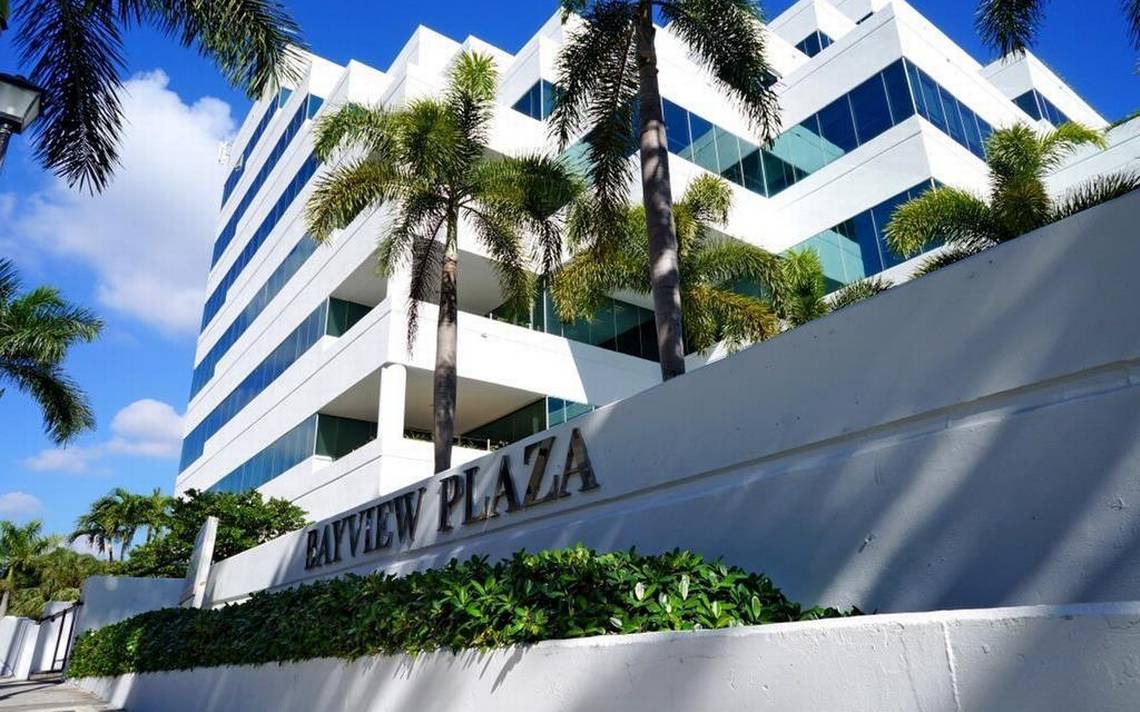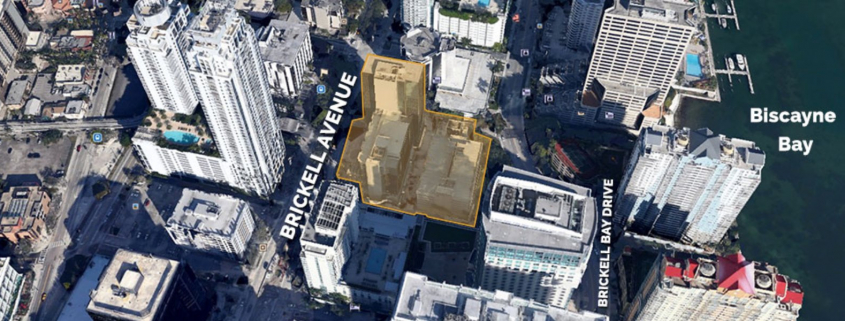
BayviewPlazaTwo office buildings in Coconut Grove were sold for a combined $42 million, commercial brokerage Marcus & Millichap announced Thursday.

The first, dubbed the Bayview Executive Plaza, is a 57,155-square-foot building at 3225 Aviation Avenue. It is occupied by the Femwell Group Health, Wolfberg Alvarez & Partners and the accounting firm Pinchasik Yelen Muskat Stein.

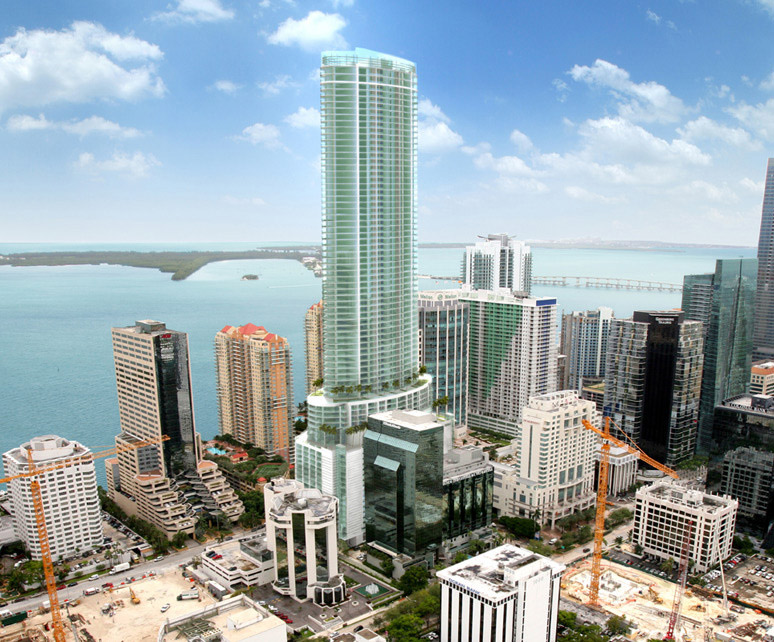
The second, named Continental Plaza, is a, 80,380-square-foot building at 3250 Mary Street. It’s across the street from Park Grove, an upcoming mixed-use development that has plans for three 20-story condo towers with retail and office space.

Both were purchased by a company titled Allegra Holding, and both were sold by TA Associates Realty.

Douglas Mandel and Benjamin Silver of Marcus & Millichap brokered the sale for both the buyer and the seller. “These buildings are well positioned to reap the benefits associated with the explosive growth of new developments in The Grove, and the buyer will be able to take advantage of future spikes in demand that will push rental rates to new highs,” Mandel said in a statement.


Source: The Real Deal

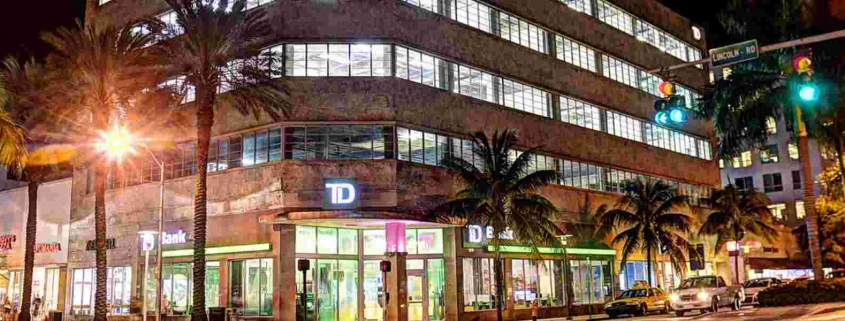
One of the largest leasing deals in Miami-Dade last year was for 37,700 square feet in a building on Miami Beach’s Lincoln Road.

The lessee: WeWork. Founded in 2010, this New York-based company specializes in creating shared workspaces for startups, private contractors, artists, small firms and international corporations — basically, everyone. WeWork, which was valued at $5 billion in December, has opened locations in nine cities across the U.S., plus two in Israel. The firm’s four floors at 350 Lincoln Road, a 1940s-era building that will be its first Miami location, will be among WeWork’s newest locations once renovations are complete.

“As we build out our global network with locations in major global cities, Miami of course is on our map,” Mark Lapidus, head of real estate for WeWork, told The Real Deal. He cited the city’s growing “entrepreneurial market” and its status as a “gateway to Latin America” as reasons for opening the new location.

WeWork is far from first to market in Miami with the shared office space concept. Local players have been operating here since at least 2010, and many are in the process of expanding.

Pipeline Brickell founders, Philippe Houdard and Todd Oretsky.

Pipeline Brickell founders,
Philippe Houdard and Todd Oretsky.

“The demand for what we offer is very high,” said Philippe Houdard, co-founder of Pipeline, which has operated in a 23,000-square-foot office space in Brickell since 2012. So high, Houdard added, that occupancy for Pipeline’s private suites and reserved desks is near 100 percent, with tenants ranging from established corporations such as Italian car design company Pininfarina to relatively unknown companies including Ironhack, a computer programming school, and Crea7ive, a local web design company.

Monthly rates for shared offices can range from $99 for a mailbox and a phone number to more than $3,000 for a private suite. Services, much like the rates, vary from operation to operation, but typically a shared-office space in Miami offers access to refreshments, high-speed Internet, meeting rooms, and — perhaps most significantly — networking opportunities and camaraderie.

“There is a sense a community,” said Ana Maria Yumiseva, owner of Frecuencia Latinoamerica, a mobile technology company that operates in Pipeline’s Brickell office.

Donna Abood, managing director of the Miami office for Avison Young, said Miami-Dade is fertile ground for shared office space. “When you have entrepreneurs, you have a lot of startup businesses, and their need to collaborate is great,” said Abood, a 30-year veteran of South Florida commercial real estate.

An added bonus: co-working spaces typically offer short-term leases or require no leases at all.  Short-term and month-to-month leases are traits shared by an ancestor of the co-working space: the serviced “executive suite” office model. In the 1980s, companies such as Regus started opening executive suite offices in Miami-Dade that provided separate businesses a shared secretary and a conference room. Unlike the new generation of co-working spaces, tenants in executive suites (which continue to operate in Miami) tend to keep to themselves. “They aren’t looking for collaboration,” Abood said.

Büro Miami features open areas as well as private suites.

Büro Miami features open areas as well as private suites.

Michael Feinstein, CEO of the Büro Group, said his company was the first to bring the collaborative co-working space model to Miami (Abood said that if Büro wasn’t the first, they were certainly one of the first). Feinstein said he had spent a lot of time in coffee shops when he worked as a resort development consultant back in 2009. Then inspiration struck.

“We had not seen anyone actually [create] a shared work environment, so we went about doing it ourselves,” said Feinstein, who started Büro in Midtown Miami in 2010 with the help of friends, family and  later on, an investment from G3 Capital.

Büro now provides space for more than 100 companies (The Real Deal South Florida is a temporary tenant). The company operates in a second, 10,000-square-foot location in Sunset Harbour in Miami Beach, and Feinstein doubled his office space in Midtown Miami from 10,000 to 20,000 square feet last year. They are also opening additional spaces in the Coppertone building in the Miami Modern Historic District and the Engle Building in Coconut Grove.

Pipeline is growing, too. This summer they will open a Coral Gables office, which will include specialized services for lawyers, Houdard said. Pipeline is also planning to build an 80,000-square-foot space in Miami’s Little Haiti area. They also operate in Philadelphia.

Pipeline and Büro are seeing increased competition in the market, and not just from behemoths like WeWork. In Little Haiti, Urbana Atlantic Group and Conway Commercial Real Estate just finished converting a 26,000-square-foot office building, once used as a BellSouth headquarters, into MADE at the Citadel, a co-working space that offers shared work space in addition to a shared workshop area for artists.

“We are just opening our doors now and about 40 percent of our office space is already accounted for,” said Timothy Conway, managing director of Conway Commercial Real Estate. “And we have not done much marketing, if any.”

Another shared office space entity, The Lab Miami in Wynwood, just celebrated its two-year anniversary. Its managing director Tamara Wendt said co-working spaces are proliferating because they’re attractive to young professionals.  “Millennials and tech startups are drawn to co-working spaces because it’s a low barrier to entry and low cost for office space,” explained Wendt.

Wendt and other sources estimate that there are 15 to 20 shared offices ventures operating in Miami-Dade. Companies providing shared office spaces are still a relatively new concept in the area and are not yet specifically tracked. Wendt noted that the growth of shared offices is not just local or national — it’s a global phenomenon. “Co-working spaces are doing well around the world,” she said. “It’s a very fast-growing segment.”


Source: The Real Deal

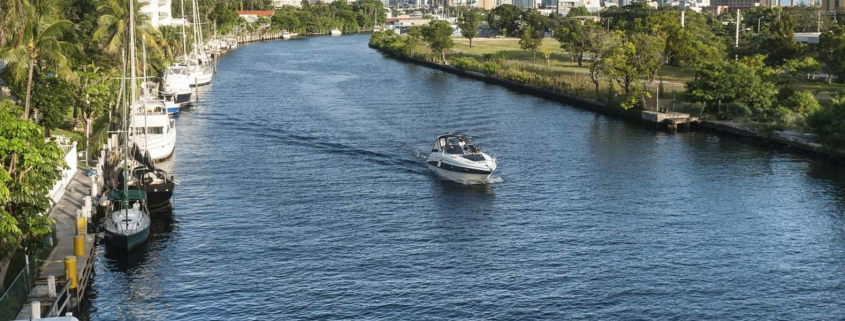
A group of developers is preparing a plan for live/work loft units and a boat storage facility with a marina along the Miami River.

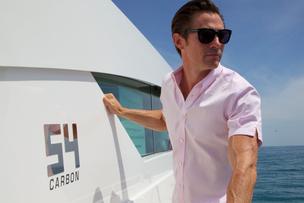
Chapman Ducote on a Delta Powerboats yacht.

Chapman Ducote on a Delta Powerboats yacht.

Chapman Ducote, the managing member of the development group, said he’s planning two buildings at 600 N.W. Seventh Ave. One would be a dry stack for boat storage attached to a high-end marina. The other building would have live/work lofts with high ceilings and a modern look, in addition to some retail, he said. While the size of the buildings aren’t finalized, Ducote said the mixed-use building would be eight to 12 stories tall.

“There is a beautiful neighborhood on the other side of the canal from us and we want to be in tune with what works in the neighborhood,” Ducote said. “We will remove a boat yard that isn’t very pretty and replace it with a nice modern building.”

Miami Boat Storage, an Aventura-based partnership between AL US Investments, Quillpoint Capital Investments and Ducote, recently bought the 47,152-square-foot lot for $3.65 million to save it from foreclosure. Ducote is also the president and CEO of Miami Beach-based credit card processing firm Merchant Services LTD, a professional racer on the American Le Mans series, and a major investor Delta Powerboats, a Swedish company that builds yachts fully out of carbon fiber.

“The live/work concept, particularly in other cities, is starting to work and get some legs behind it,” Ducote said. “You have residential and office in the same dwelling with a wall separating the two.”


Source: SFBJ

Miami’s Downtown Development Authority has released a video that provides a glimpse of what the skyline will look like when the current crop of construction projects have been completed.

The video helps to visualize the massing of Miami’s evolving skyline by showing buildings that are both proposed and under construction. Buildings where construction is underway are represented in blue, while planned and proposed towers are represented in green and purple, respectively.

It doesn’t include every project, and isn’t exact about height. Fast-rising Edgewater is mostly ignored. It also doesn’t show detailed renderings, as Brickell Magazine did last year.

Below is the Miami DDA video rendering:


Source: The Next Miami

It’s up to developers and city officials to protect projects in Miami Beach from the threat of global sea level rise, architect Reinaldo Borges warned an audience gathered inside a conference room at the W South Beach on Thursday.

“Developers need to change their perspective,” Borges said. “They go in with a short-term investment mentality. That mindset has to change.”

Business leaders discuss sea level rise at the Miami Beach Community Resiliency Summit

Business leaders discuss sea level rise at the Miami Beach Community Resiliency Summit

Borges, a principal of Borges & Associates Architects, lamented that hotel projects his firm worked on like the Royal Palm Miami Beach and the Bentley Beach Hotel will be negatively impacted by sea level rise. Before new projects break ground, Borges suggested city officials find ways to provide developers with incentives if they build structures at a higher elevation.

The Miami-based architect was part of a panel of business community leaders at the Miami Beach Community Resiliency Summit Friday morning. Other speakers such as Wendy Kallergis, president and CEO of the Greater Miami and the Beaches Hotel Association, and Gabriole Van Bryce, a member of the association’s sustainable hospitality council, talked about successful efforts to convince builders and owners to make their properties greener.

“We have really helped hotels reduce the impact of climate change by reducing greenhouse gas emissions,” Van Bryce said. “We want to further reduce the effects of greenhouse emissions by promoting a cool roof initiative to place local gardens on rooftops.”

Al Roker, host and weatherman for NBC’s “Today Show,” kicked off the summit by providing attendees with a few cold hard facts about climate change. “In the next 50 years, Miami’s high tide will be five feet higher,” Roker said. “At the city’s 100th anniversary concert last night, I told the crowd, ‘I hope you’re enjoying this now because where you are standing now will be underwater one day.’”  The popular morning show personality also said the mainstream media made a mistake by coining the term “global warming,” instead of using “climate change.”

Following his presentation, Roker told The Real Deal that developers, city officials, and residents have to work together to address the real threat of climate change. “Everybody should be concerned,” Roker said. “Are buildings ready? Is the infrastructure ready? Those are all real concerns condo owners, private property owners, businesses and everybody should be concerned about.”


Source: The Real Deal

PanoramaTower2Foundation construction at developer Tibor Hollo’s Panorama Tower in Brickell, the future tallest tower in Miami, has reached ground level, and appears poised to go vertical any moment now.

About five months ago, they had just begun driving piles down for the foundations, when construction of the 822 foot tower had finally picked up after an agonizingly slow beginning.


Source: Curbed Miami

Local leaders broke ground Friday to make way for a new film and television studio in Miami.

Actually, it was more of a demolition ceremony than ground breaking.  A large piece of construction equipment began knocking down an old warehouse to make way for a television and movie production house While it may not be lights, camera, action just yet, the Florida Film & Television Center located at 50 NW 14 Street, is expected to be up and running within the next 15 months.

“The  film industry has always been an important component of the City of Miami’s cutting appeal,” said Mayor Tomas Regalado in a written statement. “The Florida Film & Television Center will continue to move the City forward in the film industry.”

“This will be the very seedling of a very large industry in Miami that will become an oak tree called the film industry,” said City Commissioner Marc Sarnoff at Thursday’s ceremonies. The new studio will house two 15,000 square feet film sound stages with 12,000 square feet of office space, editing suites and accessory rooms.

The lot is meant to hold productions of all sizes including major movies, television series, and independent films. “Domestic and international production companies want to be in Miami and this state-of-the-art facility will go a long way in securing Miami’s status as a top destination for film and television production,” said Commissioner Sarnoff.

EUE/Screen Gems Studios will design, build, operate and manage the studio, which is on a fast-track construction schedule, and expected to be operating within 15 months.  The company will receive some 12 million tax dollars from the Omni Community Redevelopment Agency to finance  construction of the studio.

It is money well spent, according to Omni CRA Director Pieter Bockweg. “From everything that we have researched and studied, the need for film studios is prime right now for this area,” Bockweg said.

Indeed, the groundbreaking comes just a day after a would be studio, set to be near Miami Gardens, won initial approval  for a $10 million grant from Miami-Dade property taxes, according to CBS4 Miami news partner, the Miami Herald.

The spokesman for Miami-Dade Mayor Carlos Gimenez told the paper, the proposed complex, named Miami Ocean Studios  is backed by Gimenez. His administration first recommended $5 million but then upped it to $10 million for the 900,000 square foot facility.

The production and entertainment complex would be on county land  that currently houses three charities — Arc of South Florida, His House, and Center for Family and Child Enrichment. As part of the plan, the county would give money and negotiate a lease for the land located at 20000 47th Ave.  Ocean studios would also have to provide suitable space for the charities on the property or in another spot.

At the ceremonies for the start of the Miami project Thursday, EUE/Screen Gems President Chris Cooney said the message is simple:  Television and movie producers hire lots of people at high salaries and spend lots of money. “They spend the second they hit the ground in the area,” Cooney told CBS4’s Gary Nelson.  “Whether it’s lumber, dry cleaning, caterers, the whole community benefits from that.”

EUE/Screen Gems has a successful track record of operating production houses in New York, Wilmington, NC and Atlanta, GA.  There is a growing trend of producers eschewing high costs in California, and taking their projects to the East and South.

Miami dangled a carrot in front of the production company:  The building. “We provide the facility, they pay the rent, and they pay a management fee as well,” said Sarnoff.  “It’s a win-win for everyone.”

In addition, the company will pay the city 11% of its take.  The CRA’s Bockweg estimates taxpayers could be getting a half million dollars a year within the first few years of the studio’s operation.

Many Shows, True Lies, Scarface, Bad Boys 1 & 2, Bird Cage, CSI Miami and Scarface, to name a few, have been set in Miami but, with the exception of a few scenes, shot and produced in California studios. The last product to be shot and produced entirely in Miami was the now cancelled cable series Burn Notice.


WeWork signed a lease for 40,000 square feet to open a co-working space in Miami Beach.

CBRE’s Maggie Guajardo Kurtz and Nancy Cibrano, of N Cibrano Realty, were the brokers for the landlord at 350 Lincoln Road. The 50,000-square-foot building, owned by The Wings Group, is now fully leased.

“This property’s location on the doorstep of the world-renowned Lincoln Road, along with its unique, historic features, makes it ideal for WeWork’s first Miami location,” Kurtz said in a news release.

WeWork offers flexible leases, from individual desks to small office spaces. Tenants are supported with high-speed internet and conference rooms, and also get discounts on services such as Shopify, Uber, Zipcar and legal services. It has more than 20 locations.

“The vibrancy of Miami’s small business and start up communities is the perfect match for WeWork’s unique offerings and energy,” said Mark Lapidus, director of real estate at WeWork. “We look forward to opening our doors and fueling the growth of the city’s many small businesses.”

WeWork should open in Miami Beach in the first quarter.


Source: SFBJ

As a city sitting virtually at sea level, Miami has been called ground zero for the problems posed by climate change, a place where rising sea levels threaten its future existence.

The latest forecast of sea level rise from the Intergovernmental Panel on Climate Change, for example, predicts that by later this century, global sea levels will be two feet higher than they are today, quite possibly higher. Under that scenario, the nuisance flooding in Miami that periodically comes with high tides will be a daily affair, the storm surge impact of hurricanes will be amplified, and lower-lying areas of the city will be uninhabitable. That’s actually not the worst of it: Under higher sea levels, the Biscayne Aquifer—where southeast Florida draws its drinking water—will increasingly suffer from saltwater intrusion, a problem for which there is no foreseen solution other than the investment of billions of dollars in water treatment facilities.

As bleak as this future would seem to be, few with real skin in the game in Miami—residents, real estate investors, and companies—are backing away from long-term investment. Exhibit A: Miami has been undergoing a nearly unprecedented surge in real estate construction, with planning discussions centering less on who will leave first and more on how high new projects can be built. Among the projects under way, for example, is an 80-plus-story behemoth in Brickell Center, the city’s urban core. If Miami is on the verge of being a modern-day Atlantis, those who would have the most to lose are apparently not buying it.

Why this apparent deafness to the dire warnings? Well, here’s a paradox. If one talks to developers and city commissioners in the area, it’s hard to find evidence of overt denial of current and future risk; Miami was a city, after all, almost completely destroyed by a hurricane in 1926, and most concede that a recurrence is a matter of when, not whether. Likewise, few deny that the city’s unique geography makes it vulnerable to the effects of rising sea levels. It’s a long-term problem that the planning commissions of Miami and Miami Beach acknowledge exists and threatens to get worse.

Where locals disagree with outsiders, however, is about how best to deal with the problem. Rather than sounding alarms and cutting back on development, there’s an implicit sense that the best approach may be, ironically, to do the opposite. And while a strong case can be made that this behavior has no rational basis, it may represent Miami’s best long-term hope for dealing with the threats posed by climate change, one that other cities might be advised to mimic: The best strategy, in fact, may be to foster a collective belief that there’s no threat—or at least not one serious enough to lose sleep over.

Before an explanation why, let’s first address the two standard explanations for the building boom, explanations that are indeed part of the puzzle. The first is that real estate developers, by their nature, are gamblers with short planning horizons. In the late 2000s, the real estate and equities crash quickly wiped out many builders. One might assume that would have made them skittish. To the contrary, the quick recovery that followed taught most that big risks are worth taking, and are survivable. While developers today may concede that sea levels are rising, it’s a risk that lies well beyond their investment horizons, and in any case is dwarfed by the more immediate risk of a returning recession.

The second explanation is that many of the buyers for all the new condo units are cash investors from Latin America, and the risks of Miami real estate—overdevelopment, speculation, environmental unsustainability—remain small relative to similar investments back home. No one is saying that real estate isn’t risky in Miami, or that sea level rise is fiction. What they are saying is that all investment carries risk, and development there is a bet they’re prepared to take.

But there’s another rational reason why even risk-averse residents in South Florida might, paradoxically, hope that buyers and sellers remain collectively naïve, or at least act as if they are, about the risks of sea level rise. South Florida relies almost exclusively on real estate taxes to fund public infrastructure. If the threat (or reality) of sea level rise suppresses property valuations, there will be less public money to address the risk. As an illustration, the head of public works for Miami Beach recently argued that the city would be wise to accelerate its investments in storm water drainage improvements ($100 million now and $400 million planned) simply because the city has the tax base to afford it—something it could not necessarily count on in the future.

Because buyers and sellers in Miami Beach have yet to connect the dots between nuisance flood events and the future consequences of sea level rise, property buyers continue to be drawn to the area, and development projects continue unabated—both of which are essential for a continued healthy tax base. If and when buyers and sellers do connect the dots, everything changes: Doing so could spark a rapid downward wealth spiral that, once initiated, would be difficult to reverse. Lowering property valuations would reduce the city’s tax revenue which, in turn, would leave it with less money to shore up the city against sea level rise. The city would then be forced to choose between two losing remedies: increase taxes on those who choose to stay, or decline to make the needed improvements. Both, of course, would only exacerbate the problem. Miami’s best move at that point would be to go hat in hand to the state and federal government for a bailout, but that seems unlikely. Quite aside from the “I-told-you-so” reactions that such pleas might evoke, almost all coastal communities would be facing similar problems and asking for commensurate help. Miami Beach as we know it now could cease to exist long before the Atlantic reclaims Collins Avenue.

Given this, South Florida’s best shot at coping with the long-term environmental threat may be a strategy that no doubt seems perverse to environmentalists: aggressively foster a collective belief that sea level rise is not something we urgently need to worry about. South Florida is potentially facing a huge adaptation bill down the road, and paying for it will require a healthy tax base. Keeping that tax base flush depends on a cooperative equilibrium where buyers and sellers maintain an optimistic view that it’s tomorrow’s problem, one that will be easily tackled when the time comes. This keeps the coffers filled and provides the resources needed to pay for the engineering adaptations required to keep the game going.

In this light, Miami’s construction cranes aren’t monuments to climate change denial.  Quite to the contrary—they’re the instruments that may, indirectly, allow the city to survive global warming. Controlled ignorance, in some cases, can be a good thing.


Source: Bloomberg Businessweek

Demand response is an energy-saving tool that encourages customers to shift their electricity use to times of day when there is less demand on the power grid or when more renewable energy is abundant.

Karan Gupta at 77 West Wacker's Central Command Center

Karan Gupta at 77 West Wacker’s Central Command Center

This has been at the core of the work of Karan Gupta, a high-performance building consultant and Environmental Defense Fund Climate Corps fellow based in North Carolina. His host company, Jones Lang Lasalle, is the property manager for 77 West Wacker Drive, a 50-story office building in downtown Chicago. Here, his focus is on maximizing the benefits of demand response, which already have been implemented through multiple technologies.

Currently, 77 West Wacker is enrolled in the PJM demand response capacity market through a demand response service provider. There are standby payments for demand response commitments, meaning that the building is paid for simply making itself available to reduce energy demand when called upon to do so. In addition to these standby payments, the building is paid for with actual energy conservation as real demand falls below baseline demand during emergency events. The building also participates in voluntary price-based demand response, whereby energy conservation is performed in non-emergency events to take advantage of opportunities when real-time energy prices exceed the fixed rate that the building pays for energy.

Load-Shifting Makes It Easier To Bear

The software platform provided by the demand response service provider allows engineers to view the building’s baseline demand, real-time action alerts and forecasts for weather and energy prices. When the grid is stressed due to extreme weather or system lapses, the engineers receive notification, usually the day of, to enact demand response protocols. While extreme weather may or may not result in an emergency event, it almost always presents earnings opportunities through economic demand response.

For this reason, the team here is proactive and monitors weather forecasts throughout the Midwest and East Coast, and usually has taken action by the time emergency notification is received. In the summer, the primary form of action is “load shifting,” a process works by pre-cooling the building during early morning off-peak hours and reducing cooling demand during peak hours.

demandresponse

(Credit: Karan Gupta)

A hypothetical demand response event in which load shifting was used. In this snapshot, the red line represents the baseline and the green line represents actual building use. Actual use exceeded the baseline in the morning hours when building equipment ramped up to pre-cool the building (there is no penalty for going above the baseline during non-peak hours), and then around 10 a.m., the equipment ramped down for the rest of the day as it had to work less hard to maintain the lower temperature. During the period where the green line is below the red line, real-time energy prices are paid back to the building for the difference between baseline energy consumption and actual consumption.

BAS + VFD Spells Comfort’

When a non-weather event occurs, load shifting may not be an option, and instead a series of minor operational adjustments must be made to achieve the necessary reductions. Tenant comfort is an important consideration when making these adjustments, as reasonable temperatures and minimum levels of ventilation have to be maintained. Excessive ramping and cycling of equipment also should be avoided to prevent undue stress and shortened life. Where base building equipment adjustments alone are not sufficient, the building may send out notices for tenant involvement. Effective communication is critical for tenant satisfaction, but to that end, building management has performed exceedingly well, making efforts to educate occupants about the value of demand response.

The two primary technologies that have enabled demand response capability at 77 West Wacker are the building automation system and variable frequency drives. The BAS allows for monitoring and control of the various equipment from a central command center. This control is necessary to quickly enact demand response protocols while guarding the health, safety and comfort of the building occupants. In the past, motor-driven equipment such as fans and pumps either would run at full load or not at all, and when at full load, would be modulated by dampers or fans. A common analogy is using the brakes to control the speed of a car while pushing the accelerator to the limit. VFDs basically provide throttle control and allow for the modulation of such equipment.

Aiming Higher

The next step in fully implementing demand response at 77 West Wacker is enrolling into ancillary services, which are used to support the transmission of electric power from seller to purchaser (scheduling and dispatch, electric grid protection, etc.). While BAS and VFDs are a strong first step, further hardware and software investments will be necessary to make frequency regulation possible. To some extent, real-time control will have to be relinquished to the system operator, but the primary objective still will remain to maintain tenant satisfaction. Automated scripts that guide operational parameters within predefined limits occasionally will have to override signals to ramp loads up or down.

Cracking the code for successful implementation hopefully will release a new wave of revenue for property managers around the country while enhancing grid reliability.


Source: GreenBiz