Wealthy buyers from Brazil, Venezuela and Argentina have fueled a real-estate frenzy in Miami in recent years, sending luxury-condo prices soaring. Now, Miami developers and real-estate agents are setting their sights on a more distant part of the world: China.

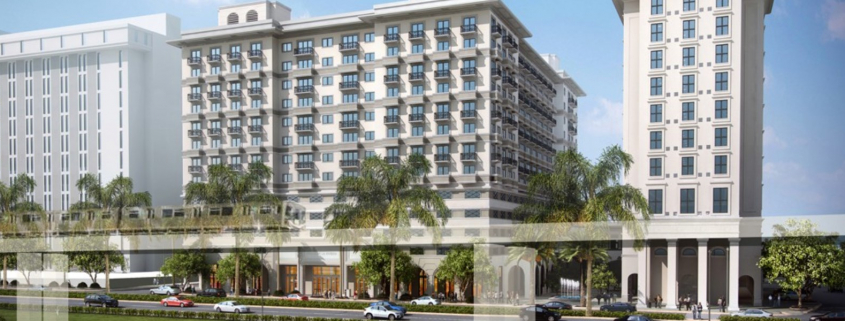
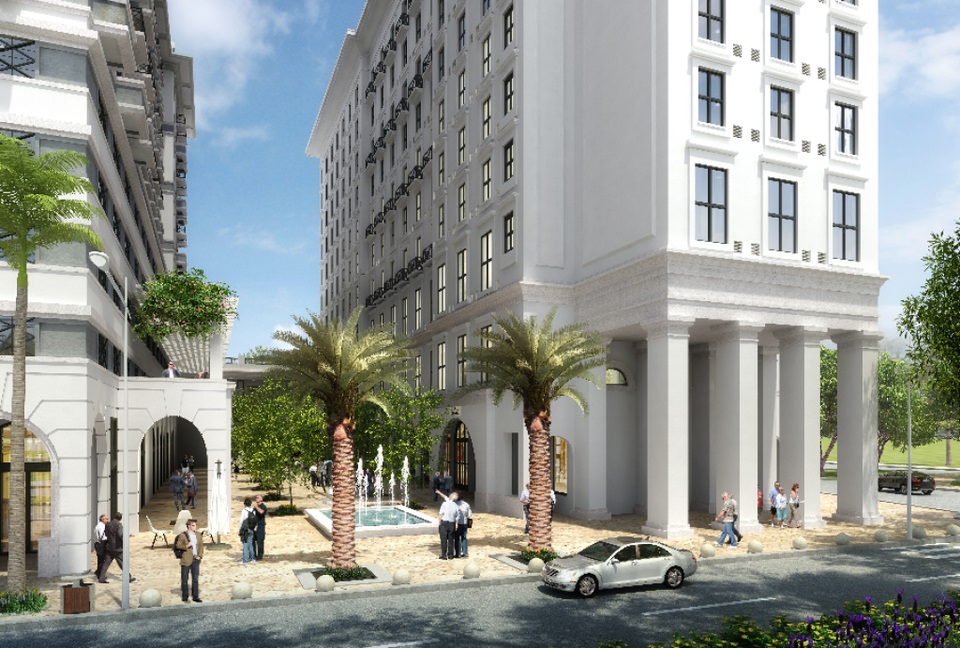
A rendering of the Brickell Flatiron. Illustration: Brickell Flatiron

A rendering of the Brickell Flatiron. Illustration: Brickell Flatiron

In April, representatives for several Miami condo buildings made the 8,000-mile-trip to the Beijing Luxury Property Show, a trade show that attracted more than 5,200 wealthy Chinese to look at international properties. Sales agents for the Fendi Chateau Residences, a luxury development going up near Florida’s Bal Harbour, handed out brochures in Mandarin for condos priced from $5 million to $22 million. Nearby was Lauren Marks, the marketing coordinator for two luxury-condo buildings: Palazzo Del Sol and the forthcoming Palazzo Della Luna, on Miami’s Fisher Island.

“I’m here on a fact-finding mission,” said Ms. Marks. “I’m trying to decide if this is the right place for us to facilitate a meaningful relationship with Chinese buyers.”

Executives of the Miami Association of Realtors, the largest local group of the National Association of Realtors, were there, too, handing out Miami market data and gold palm-tree pins attached to a card with the tagline, written in Chinese, “Enjoy the unique taste of life.”

Part of the reason for their journey: South American buyers, who comprise the largest foreign buying group in Miami, aren’t buying as rapidly anymore. A recent study by the Miami Downtown Development Authority found that sales of new condo units still under construction have slowed, in part because South American investors have less buying power, due to the increase of the U.S. dollar compared with South American currencies.

Meanwhile, Chinese buyers are beginning to take a closer look at the city.

“The Chinese are coming along very strong,” said Simon Henry, co-founder of Juwai.com, a China-based website that connects wealthy Chinese with overseas properties.“Miami looks relatively cheap compared with some of the big cities like San Francisco and New York.” Juwai says the average budget for Chinese buyers shopping for overseas properties on its site is $2.3 million.

Karen Xu, a Shanghai resident, is looking at one-bedroom condos in the U.S. as an investment. She says she didn’t consider Miami until she saw a marketing table at the Juwai Agent Summit in Shanghai in May for Brickell Flatiron, a downtown Miami development where one-bedroom condos cost $500,000 to $750,000. The deputy director of a boutique investment firm, Ms. Xu, age 35, was initially interested in a Manhattan home, but said she’s priced out. “Two to three years ago, prices were OK,” she said. “Now people are saying, ‘Buy in Brooklyn.’ I don’t want Brooklyn.”

Vanessa Grout, president of CMC Real Estate, which is developing Brickell Flatiron in downtown Miami, traveled to Shanghai in May to meet with investors and real-estate agents who could help connect her to Chinese buyers.   Photo Credit:  Alexia Fodere for The Wall Street Journal

Vanessa Grout, president of CMC Real Estate, which is developing Brickell Flatiron in downtown Miami, traveled to Shanghai in May to meet with investors and real-estate agents who could help connect her to Chinese buyers. Photo Credit: Alexia Fodere for The Wall Street Journal

CMC Group, which is developing Brickell Flatiron, is marketing the property to the Chinese via local brokerages, says Vanessa Grout, CMC Real Estate president.

Currently, only 2% of international buyers in Miami come from China, according to the Miami Association of Realtors. But potential changes in Chinese investment policies, and the relatively strong Chinese yuan, are making the Chinese look like a good bet to Miami developers. The Chinese government is expected to begin raising annual limits on how much an individual can invest overseas from the current $50,000 cap—a rule often skirted.

Lauren Marks, marketing coordinator for Palazzo Del Sol and the forthcoming Palazzo Della Luna on Miami’s Fisher Island, attended the Beijing Luxury Property Show in April. She is shown here in the Palazzo Del Sol sales office.  Photo Credit:  Alexia Fodere for The Wall Street Journal

Lauren Marks, marketing coordinator for Palazzo Del Sol and the forthcoming Palazzo Della Luna on Miami’s Fisher Island, attended the Beijing Luxury Property Show in April. She is shown here in the Palazzo Del Sol sales office. Photo Credit: Alexia Fodere for The Wall Street Journal

Lauren Marks, marketing coordinator for Palazzo Del Sol and the forthcoming Palazzo Della Luna on Miami’s Fisher Island, attended the Beijing Luxury Property Show in April.

And Chinese buyers have become an increasingly dominant force in U.S. real estate overall. According to the National Association of Realtors, Chinese buyers recently surpassed Canadians as the top foreign buyers of homes in the U.S., purchasing $28.6 billion of properties in the 12-month period ending in March.

The Miami Association of Realtors forged a partnership with Soufun Holding’s Fang.com, one of China’s largest real-estate portals, several years ago. The relationship allows association members to offer special pricing to the website, said Teresa King Kinney, CEO of the Miami  association.

One of the largest booths at the Beijing Luxury Property Show belonged to OneWorld Properties, which is marketing Paramount, a condo tower in downtown Miami with more than 500 units priced from about $650,000 to more than $6 million. Peggy Fucci, CEO of OneWorld Properties, says Miami’s luxurious image and thriving art and cultural scene appeal to Chinese buyers.

Still, there are plenty of challenges for Miami brokers trying to target the Chinese market. One of the most pressing issues is the lack of a direct flight from Beijing, Shanghai or Hong Kong to Miami.

“There were no direct flights to Hawaii until last year and up until that point foreign investment was almost nonexistent,” Mr. Henry said. “Now the Chinese are the second largest buyer there.” Spokesmen for American Airlines, which has a hub in Miami, and Cathay Pacific Airways, based in Hong Kong, both said there are currently no plans for new routes from greater China to Miami.

Ms. Grout, who spent a week in Shanghai in May, said it’s difficult to figure out what appeals to Chinese buyers, because there are many contradictions and not all buyers think alike.

During the Juwai summit, Ms. Grout said a Chinese real-estate agent asked her which direction the Brickell Flatiron units face. She told him they were east facing, toward the ocean. “He walked away right after I said that, saying facing east is bad for Feng Shui,” Ms. Grout said. “I had never heard that before.” (Feng Shui consultants say a south-facing unit is most preferable, to get ample sunshine, but a window facing east, for example, could create good energy for early birds.)

A rendering of the Fendi Chateau Residences in Miami. Agents for the development handed out brochures in Mandarin at the Beijing Luxury Property Show. —Venegas International Group

A rendering of the Fendi Chateau Residences in Miami. Agents for the development handed out brochures in Mandarin at the Beijing Luxury Property Show. —Venegas International Group

Monica Venegas, principal of the Miami-based real-estate firm Venegas International Group, has been coming to China property shows for the past seven years. “People finally recognize my face here,” Ms. Venegas said during LPS in Beijing. She added that she’s learned to be patient, as Chinese buyers rarely buy on the spot, and often are swayed by the advice of their friends.

Real-estate agents estimate that bringing a sales team and setting up a booth at a mainland property show can cost anywhere from $30,000 to $150,000—making it a pricey trip if a there’s no sales outcome. Aside from travel and accommodation costs, developers also must pay for translation services and shipping materials to China ahead of the show.

A few weeks after returning from Beijing and Hong Kong, Ms. Marks, of Palazzo Del Sol, said she hadn’t heard of any sales as a direct result of Miami developers attending the Beijing expo.

“I have a hunch our marketing dollars are going to be better served in Hong Kong with more intimate gatherings of ultra-high-net-worth individuals and less red tape,” said Ms. Marks, emphasizing that her development is looking for residents, not investors. “The only way to really grasp that was to go there and experience China in person.”


Source: The Wall Street Journal

NGBAI-banner.jpg

NGBAI-banner.jpg

With 41.6 percent of its office space considered “green,” Miami ranked ninth of 30 markets on the 2015 Green Building Adoption Index, a joint project of CBRE Group, Inc. and Maastricht University.

For the purposes of this report, “green” office space is defined as holding either an EPA ENERGY STAR label, U.S. Green Building Council (USGBC) full-building LEED certification or both. Using square feet as a measure, 41.6% of Miami’s office market is “green” – well above the national average of 38.7%.  Moreover, Miami ranked particularly well in terms of number of buildings considered green – over 17%. By square feet, 21.84% of Miami’s office market has a LEED certification, and over a third of the office market is ENERGY STAR rated.

This is the second year in a row that Miami ranked ninth on the list, behind U.S. cities such as Minneapolis, which led the Green Building Adoption Index’s city ranking for the second consecutive year with 70.4 percent of all office space currently qualified as green (down from 77.0 percent in 2014.)  San Francisco, again in second place, significantly closed the gap and now boasts a 70 percent green market, up from 67.2 percent in 2014. Chicago, at 63.4 percent, was third, while Atlanta (57.8 percent) and Houston (52.9 percent) swapped positions at fourth and fifth. The top 10 cities on the 2014 list all retained a place on the 2015 list.

The study also found that owners of small buildings have an opportunity to differentiate themselves by implementing energy-efficient practices, due to a significant gap between large and small office buildings in achieving sustainability certification. For example, 62.1 percent of office buildings in the U.S. greater than 500,000 square feet are considered green. In contrast, only 4.5 percent of all U.S. office buildings less than 100,000 square feet qualified as green.

“Our 2015 study confirmed that green building adoption has been primarily a big building, first-tier city phenomenon,” said David Pogue, CBRE’s global director of corporate responsibility. “It would appear that many smaller buildings in the majority of large markets still have an opportunity to be ‘best in class’ among their peer set by achieving these certifications.”

Executed in close collaboration with the USGBC and CBRE Research, this is the second release of the annual Green Building Adoption Index. Based on a rigorous methodology, the Index shows the growth of ENERGY STAR- and LEED-certified space for the 30 largest U.S. office markets, both in aggregate and in individual markets, over the previous 10 years.

GreenMiami4


Sources: CRE-sources

The 34-story Miami Center office tower downtown is set to undergo $20 million in renovations after main tenant Citigroup renewed its lease.

Cushman & Wakefield’s Jon Blunk represented landlord Crocker Partners in the lease, while NGKF’s Patrick Duffy represented Citigroup.

MiamiCenter2The banking giant will continue to occupy 125,000 square feet at the building, at 201 S. Biscayne Blvd., and will add a retail branch there. Citibank had $3.1 billion in deposits in that office as of June 30, 2014, according to the Federal Deposit Insurance Corp. – its most in Miami-Dade County

Crocker Partners said the $20 million in renovations to Miami Center will include a makeover of the lobby and exterior plaza, a new entrance with a valet, and elevator modernization. The tower totals 786,267 square feet.

“Locking in a long-term lease at today’s rental rates is a wise move,” Crocker Partners’ Angelo Bianco said. “Tenant demand from both organic and new tenant growth is in its fourth consecutive year of expansion. Couple that fact with the limited amount of office development in the pipeline and we have a perfect storm on the 12-to-24-month horizon for a significant increase in rents.”


Source: SFBJ

Lego is going green.

The toy company plans to invest $1 billion over the next 15 years as part of a broad effort to replace its iconic plastic building blocks with materials that are better for the environment. It will also make its packaging more sustainable.

The company made 60 billion Lego pieces last year. So a little bit of change could go a long way to “significantly reduce Lego’s impact on the planet,” Lego said in a statement.

Lego has already done things to reduce its carbon footprint — like cutting the size of packages and investing in wind power.

“Several factors influence the environmental sustainability of a material — the composition of the material, how it is sourced and what happens when the product reaches the end of its life,” CEO Jørgen Vig Knudstorp said.

This is not Lego’s first attempt to become cleaner.

In 2013, the company started a partnership with WWF, the environmental group, to help develop a plan for making its materials more sustainable.

Last October, Lego ended a 50-year relationship with Shell after falling under scrutiny over the oil giant’s drilling in the Arctic.

More than 100 new employees will be hired to work on the project at Lego’s sustainable material center in Denmark, which is expected to be finished by 2016.


Source: WPTV

While debate continues over a 10-acre development centered around a 633-foot LED tower, support is growing among some local entrepreneurs and tech investors for the Miami Innovation District proposed for the Park West section of downtown.

“I’m becoming pretty passionate about this project,” said Andres Moreno, executive chairman of Open English, a fast-growing online education company in Coconut Grove that has attracted $120 million in venture capital. “Miami is definitely coming together as an ecosystem but it is pretty spread out … We haven’t found a hub.”

Moreno is among the South Florida entrepreneurs, angel investors and board members of Endeavor Miami who have met with Innovation District developer Michael Simkins to discuss the project. Moreno, who also recently founded Next University, is among the more bullish: He said he would move his companies there.

National players may share his enthusiasm, according to Simkins, who said he is in active discussions with large tech companies as potential anchor tenants. Already lined up, Simkins said, is Silicon Valley’s 500 Startups, a well-known global venture fund for early-stage tech companies.

According to Simkins, the “verbal understanding” with 500 Startups calls for the organization to open an accelerator for top Latin American startups in one of the existing buildings on his property, possibly as early as this fall, with the goal of moving to a new tower when complete. Dave McClure, founder of 500 Startups, brought the company’s PreMoney Conference to Miami in March and said then he was looking at opportunities to expand to Miami. 500 Startups did not return calls seeking comment for this story.

A rendering of the Miami Innovation District project shows a street view of the public spaces and "cloud" layer, or elevated public space (Rendering provided by Innovate Development Group)

A rendering of the Miami Innovation District project shows a street view of the public spaces and “cloud” layer, or elevated public space (Rendering provided by Innovate Development Group)

To be sure, Simkins and his Innovate Development Group have been promoting the benefits of clustering large tech companies, mid-sized companies, startups, incubators, co-working and public spaces, services and cafes in a common area wired with super high speed Internet access as a way to accelerate the growth of a tech ecosystem — an effort supported locally by the Knight Foundation and eMerge Americas, among others. Similar districts are found in Boston/Cambridge, New York, Seattle, Philadelphia, San Francisco, Las Vegas and one emerging now in downtown Detroit, as well as London, Barcelona, Berlin, Stockholm, Medellin and many other cities, according to a 34-page Brookings Institution report. Many are in walkable-bikeable urban downtown-midtown areas close to public transportation and contain housing.

“The one thing Miami is lacking as a great city is the high-paying jobs that will allow us to evolve and elevate us overall. We visited innovation districts. We chose an architecture firm that has designed other innovation projects” — including recently Uber’s new headquarters, said Simkins, in an interview in his Miami Beach office.

He has not done a project of this scale before. Simkins’s proposal has faced a mountain of negative sentiment about the 633-foot centerpiece tower that would contain an observation deck, restaurants, retail, event space – and advertising in lights visible from the freeways. An electronic billboard in the sky is one of the nicer ways critics have described it.

Simkins prefers “a $250 million icon in the sky” and said the tower could also be used for public service messaging – a dashboard for the city if you will. But he is also quick to point out that the media tower, called the Miami Innovation Tower, is just one part of the vision for the live-work-play district, which includes nine towers with 7.4 million square feet – more than half of that earmarked for office space.

But it’s the overall concept, not the media tower, that interests the early tech supporters. What distinguishes successful innovation districts are big tech anchors. Juan Pablo Cappello, a lawyer and co-founder of the AGP angel network, said having a place – with literally the space – to house large companies is what excites him most about the Innovation District plan for Miami.

“If Miami can offer a place where enterprise tech companies like a Google, like a Facebook can have the space and resources to hire 100, 200, 500 people, that could be transformative,” Cappello said. “Companies like to cluster … With a project like this you can get some momentum building.”

Patrick McKenna, managing partner of HighRidge Global and an investor and entrepreneur who moved here a year ago from Silicon Valley, saw the power of momentum first hand. About six years ago, he said, San Francisco risked losing Twitter and other tech companies that were outgrowing their spaces. Meetings between the tech community and government ensued. Thanks to tax breaks and the rezoning of blighted sections of the city, the offices of Twitter, Square, Salesforce and Zynga lie within walking distance of one another. A district can attract both critical mass and tech anchor tenants, both critical to Miami’s tech development, he said.

Colombia-born entrepreneur Juan Franco, who moved to Miami from Silicon Valley about a decade ago to launch social gaming publisher Mentez and since has started three more companies, met Simkins through YPO, the Young Presidents Network. He, too, is a supporter of the project.

“What is missing here is an environment of entrepreneurs. That is what I like most about this project. … It will bring people together – young people with new ideas, people with experience, hopefully venture capitalists in the future. They are close together and that creates the interactions and the new ideas,” said Franco. Franco even likes the controversial tower: “I believe he Simkins needs to create a statement, that’s why I like the tower. It could be an icon of the city very related to technology and around the tower we can start to create that excitement.”

Moreno said he spent some time recently talking about the importance of frequent collisions – entrepreneur-speak for interactions that happen in tech clusters that Franco spoke about – during a visit with CEO Tony Hsieh, CEO of Zappos and engineer of Las Vegas’ innovation district. For Hsieh, moving his company headquarters and more than 2,000 employees there wasn’t enough. Hsieh also funded and led a resurgence of a once-blighted downtown area that now includes multiple big companies, startups, services, weekly speaker series, regular conferences, cafes, bars and a dog park.

Matt Haggman, Miami program director of the Knight Foundation, said he has talked with Simkins about the project in concept but has not seen the plans.

“I don’t know the details of the proposal, but our focus at Knight Foundation is to expand Miami’s entrepreneurial ecosystem, helping it become more diverse and broad-based. Any project that advances those goals would be good for the community,” Haggman said.

In the past three years, Knight Foundation has invested more than $10 million in Miami entrepreneurship programs.

Simkins plans to continue meeting with tech community leaders and wants to share plans and hear feedback at a future event by Refresh Miami, South Florida’s largest tech meet-up organization. He is also taking part in a panel discussion hosted by the Commercial Industrial Association about “Miami’s tech footprint” on Thursday. Moreno, a member of the Miami board of the global entrepreneurship nonprofit Endeavor, said a tech community advisory board is being formed for the Miami Innovation District project.

“The developer has spent a lot of time and money on what it will look like, but what will happen inside that venue is still to be defined. As a community, we still have an opportunity to shape this to be a really core part of the ecosystem. I think that is hugely exciting,” said Moreno.

Simkins, born and raised in Miami Beach, has become increasingly involved in the tech community and helped fund donations to various organizations and conferences, including Black Tech Week, Start-Up City: Miami, 500 Startups PreMoney Conference, Smart City Startups and eMerge Americas. About a year ago, he joined the AGP network, a group of angel investors, and has invested in six local startups.

He said his involvement and “brainstorming meetings” have helped shape features of the project, such as adding more community space. The plans by New York-based SHoP Architects, which also designed Uber’s new San Francisco headquarters, include a “cloud layer” – elevated public space with gardens and gathering places connecting all the towers. Also in the plans: parking lots near the I-95 exit so cars would be off the roads quickly to create a walk-bike culture, and 250- to 350-square-foot micro-unit apartments that would appeal to millenials. Nearly a third of the project – 2.4 million square feet – is earmarked for residential.

Though Simkins has already acquired the land needed, many political, legal and regulatory hurdles remain, particularly when it comes to the controversial media tower. Still, Simkins hopes to break ground next year. If that happens, he hopes to open the first buildings within three years and complete build out within seven. The developer said he is focusing first on securing a large anchor tenant. He then will move to middle-sized companies, startups, funding and support organizations in addition to 500 Startups, coworking spaces and university involvement. He’s also looking at ways to activate part of the property before construction, such as locating 500 Startups there.

Yet, the Miami Innovation District is just one piece of a much larger picture of Miami as a technology hub of the Americas, Simkins says.

“It is a component that is needed, along with a lot of the other things that are already taking shape,” he said. “But this provides the infrastructure … We need the enterprise companies that will bring the employees. That will keep the talent here.”

Panel Discussion

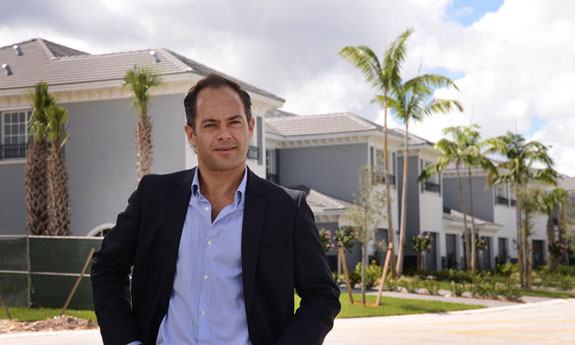
Michael Simkins

Michael Simkins

Miami Innovation District developer Michael Simkins is set to appear on a Thursday lunch panel titled What is Miami’s Tech Footprint? hosted by the Commercial Industrial Association of South Florida at Venture Hive in downtown Miami. Other panelists are Venture Hive founder Susan Amat, Pipeline founder Todd Oretsky and Peter Crovo, senior vice president of Prologis. For more information and to register for the event, CLICK HERE.


Source: Miami Herald

A Coral Springs urologist has revived his efforts to build an oceanfront eco-resort in Islamorada.

In May, Bert Vorstman submitted a downsized site plan for his 8.8-acre property, located at 83000 Old Highway. Islamorada Ecolodge, as the project is called, would have 49 units spread over a main lobby building and seven smaller villas. The lobby building would also house a restaurant, while a pool would sit next to one of the villas.

The plan is the first Vortsman has submitted since the Islamorada Village Council effectively rejected his proposal for a 70-unit hotel in July 2013. That plan garnered heavier than normal publicity for a project of its size, in part because of the many features put forward by Vorstman and his design team from the Fort Lauderdale-based EDSA planning firm.

eco-resort Islamorada


Among other items, developers promised to rehabilitate a degraded wetland near the water’s edge, clean out exotic foliage from a hardwood hammock closer to the highway, and to re-vegetate the property’s sand berm. They also planned to build a water re-use system and to generate solar power onsite. The proposal, however, proved to be too ambitious, largely because no zoning district in the village allowed for 70 units on a site of that size.

This time around, Vorstman’s less grand proposal would meet the density rules of Islamorada existing Tourist Commercial zoning category, he said. However, the property would still have to be rezoned from its current status of Native Residential, which allows for no commercial development and just two homes on the property.

Vorstman said that during a June 5 meeting, Islamorada planners told him they would oppose the proposed zoning change. “I must say that I was absolutely floored, but they were not too understanding,” he told TRD.

Islamorada biologist Sandy Sprunt did not return calls to TRD. But a document obtained via a public records request appears to back Vorstman’s assertion that planners view the Ecolodge proposal with skepticism. Among the development policies that planners highlighted for emphasis were ones related to habitat fragmentation and the clearing of native vegetation.

Vortsman said the site is so heavily disturbed with exotic vegetation that it is not a working ecosystem. But in 2013 Sprunt disagreed, saying that the property’s ecosystem was not in decline.


Source: The Real Deal

An affiliate of Codina Partners obtained two big loans from Regions Bank to build its 2020 Salzedo mixed-use project in Coral Gables.

The bank (NYSE: RF) made a $53.54 million mortgage to Codina CG for the residential portion and a $15.35 million loan to Salzedo Office for the office portion. The site covers 1.6 acres at 2020 Salzedo Street.

Codina assembled the property with purchases of $5.2 million in 2010 and $977,500 in 2013 and then paid the owners of historical properties to transfer development rights to the property.

The project will have 213 apartments in 16 stories, 46,000 square feet of office in four stories, 5,000 square feet of retail and 559 parking spaces. The parking garage will have a rooftop amenity deck with a pool.


Source: SFBJ

Florida Power & Light Co. signed a partnership with Florida International University to install more than 5,700 solar panels on its engineering center in west Miami-Dade County.

The company, a subsidiary of Juno Beach-based NextEra Energy (NYSE: NEE), plans to build 23 canopy-like structures this summer in the parking lot. Not only would the 1.6-megawatt solar array generate power for FPL customers, FIU students could study its performance in the electrical grid.

“This innovative solar project builds on FIU’s relationship with FPL, one that provides our students with unparalleled and unique training opportunities,” FIU President Mark B. Rosenberg said in a news release. “Through this project, our engineering students will make a direct contribution to the growth of solar energy in our state, while gaining invaluable experience working side by side with professionals from one of the most forward-thinking utilities in the nation.”

The solar array would measure 342,000 square feet and would also shade 600 parking spaces. FPL aims to triple its solar generation in Florida by the end of 2016.

“As the economics of solar continue to improve, we look forward to harnessing more and more energy from the sun,” FPL President and CEO Eric Silagy said in a news release. “Our partnership with FIU is designed to help us manage solar power’s interaction with the greater electric grid as part of our commitment to reliably deliver affordable clean energy for all of our customers.”

In the meantime, FPL is among the main opponents of a ballot initiative to amend the Florida constitution to allow consumers to install solar panels on their properties and sell power. Laws preventing such arrangements have limited the growth of solar panel leasing companies in Florida.


Source: SFBJ

According to the Miami Association of Realtors’ Realtor Commercial Alliance, Miami’s commercial vacancy rates continue to rank among the lowest in Florida, leading to more local investment from global companies and investors.

Miami’s vacancy rates for office (14.9 percent), industrial (5.3 percent), retail (6.3 percent), and multifamily (4.4 percent) are the lowest among major cities in Florida, according to a May 2015 Commercial Outlook report from the National Association of Realtors (NAR) and Reis, Inc., a leading provider of commercial real estate market information. Each of Miami’s commercial sectors are performing better than the U.S. average, except for multifamily which is 0.1 percent lower. The national vacancy rates in May were 15.6 percent for office, 8.4 percent for industrial, 9.6 percent for retail and 4.3 percent for multifamily, according to NAR and Reis.

“One of the world’s top global cities, Miami has become a launching pad for new industries,” said Barbara Tria, the 2015 Miami Commercial Alliance President. “Technology companies and other businesses are moving to Miami largely because of the region’s top-tier cultural offerings, outdoor lifestyle, and affordability compared to other major cities around the globe.”

Miami Office Market

Miami’s 14.9 percent office vacancy rate in May ranks as the 21st lowest out of 82 major U.S. cities, according to the NAR and Reis report. New York leads the nation at 8.9 percent. Statewide, Miami’s office vacancy rate is performing better than Florida’s major cities. The Sunshine State’s other major metropolitans had the following rates: Fort Lauderdale (18.6 percent), Jacksonville (20.4 percent), Orlando (16.5), Palm Beach (16.5) and Tampa (19.7). The national average is 15.6.

South Florida’s growing, multilingual workforce is one reason for its low office vacancy rate. Miami-Dade County added 33,700 jobs across several sectors from April 2014 to April 2015, a 3.1 percent increase, according to job numbers released May 22. Miami had the third-largest job gain in Florida behind Orlando and Tampa. Miami’s unemployment rate from April 2014 to April 2015 decreased by 0.7 percentage points, to 6.2 percent from 6.9 percent.

Miami Industrial Market

Miami’s industrial vacancy rate of 5.3 percent is the third-lowest in the nation among the 82 major American cities studied by NAR and Reis. Only Orange County (Calif.) and Los Angeles performed better than Miami in the industrial sector in May, registering vacancy rates of 3.4 and 3.6 percent, respectively. Florida’s other major metropolitans had the following rates: Fort Lauderdale (8.2), Jacksonville (6.9), Orlando (10.3), Tampa/St. Petersburg (7.8), and Palm Beach (5.5). The national average is 8.4.

Miami International Airport and PortMiami are two of South Florida’s international trade successes. Miami International ranks as the top airport in the U.S. for international freight, and the ninth-best airport for foreign cargo in the world. In 2013, Miami International handled 2.1 million tons of total airfreight, of which 88 percent was international freight.

PortMiami is the top-ranked container cargo port in Florida with 900,000 TEUs handled each year. The port has an opportunity to expand its international business as it is deepening its channel from its current 42-foot depth to 50-52. When the deep dredge project is completed, PortMiami will be the only U.S. port south of Norfolk, Va. that can accommodate the new, mega cargo vessels that will pass through the expanded Panama Canal.

Miami Retail Market

Miami has the 15th lowest retail vacancy rate among U.S. major cities, according to the NAR and Reis report. Miami’s 6.3 percent rate is considerably lower than Florida’s other large metropolitans. Fort Lauderdale (9.3 percent), Jacksonville (12.9), Orlando (11.0), Palm Beach (9.5) and Tampa (10.6) are higher than Miami. The national average is 9.6.t”>

Miami’s tourism and multilingual employment base are just two reasons why major developers are bringing new retail ventures to the region. Earlier this year, the company that owns and runs the largest mall in America announced plans to build the nation’s largest shopping mall in northwestern Miami-Dade, a roughly 200-acre entertainment complex with submarines, a Legoland, sea lions and an artificial ski slope. American Dream Miami is projected to cost as much as $4 billion to build.

Brickell City Centre and The Mall at Miami World Center are two other significant Miami retail ventures. At Brickell City Centre, Hong Kong developer Swire Properties will deliver 500,000 square feet of retail space anchored by Saks Fifth Avenue by late 2016. The Mall at Miami Worldcenter, in the heart of downtown, will complete 765,000 square feet of restaurant, retail and entertainment space by 2017.

Miami Multifamily Market

The vacancy rate for Miami’s multifamily market is tied for 38th among 82 major U.S. metros, according to the NAR and Reis report. Miami’s 4.4 percent multifamily vacancy rate is the lowest in the state. Fort Lauderdale (5.2 percent), Jacksonville (7.0), Orlando (6.1), Palm Beach (5.6), and Tampa (5.0) all have higher rates. The national average is 4.3 percent.


Source: WPJ

A growing number of cities are paying multifamily building owners to add green roofs to their buildings. That’s helping to motivate more owners to plant their rooftops.

The condominiums at The Visionaire in New York City start at $690,000. The amenities include a 2,075-sq.-ft. rooftop garden with more than 160 species of ornamental plants, including vertical screens for climbing vegetables and a fruit orchard with dwarf trees.

Adding an extensive green roof that covers most of a building’s roof space adds between $10.30 and $12.50 per sq. ft. to the cost of the roof, compared to a conventional, black roof, according to a study by the U.S. General Services Administration. Annual maintenance for a green roof is typically higher than for a black roof, by $0.21 to $0.31 per sq. ft. Of course, those costs are for the most basic green roofs. Apartment developers can spend millions to create and maintain rooftops gardens for their residents, with plants ranging from trees to roses.

“There are lots of benefits to having a green roof—the short-term benefit is having a usable amenity space,” says Steven Peck, president of Green Roofs for Healthy Cities.

Some cities offer cash incentives to help owners pay for green roofs. In Washington, D.C., owners can get a rebate of the cost to put a green roof on their buildings, though the District of Columbia Department of the Environment’s green roof rebate program. The rebates start at $10 per sq. ft. of green roof, rising to $15 per sq. ft. in targeted sub-watershed areas.

The word “sub-watershed” is an important clue to the city’s motivation to pay for green roofs. Older cities like Washington, D.C., often have sewer systems that combine water from rainstorms with waste. During large rainstorms, the systems often overflow, effectively poisoning rivers and streams. The federal Environmental Protection Agency has ordered cities solve this problem, but it’s not easy. Chicago has spent over $3 billion starting in 1970 dig a series of massive underground reservoirs to keep toxic waters from flowing into Lake Michigan. The latest phase of the Chicago Deep Tunnel Project is now expected to be complete in 2029.Infrastructure like green roofs can help by slowing rain water as it races from rooftops to sidewalks to storm drains. That gives a city’s water treatment systems time to handle the water from storms and prevents flooding.

Chicago is another city that provides cash incentives for green roofs, not surprisingly, since the Chicago Deep Tunnel project still isn’t finished. Portland, Ore.; Milwaukee, Wis.; and New York City also offer cash incentives. These programs are constantly changing as cities expand or start new incentives. San Francisco and Pittsburgh, Pa., are both on the verge of creating green roof programs.

“The best thing to do—the easiest thing to do—is call your local government and ask what incentives are available,” says Peck.

Local also require developments to create infrastructure to keep storm water from pouring off their properties. To please local officials, residential developers in many localities build storm water retention ponds and underground storage tanks.

The Solaire, New York City

The Solaire, New York City

Green roofs can be a relatively inexpensive alternative to other forms of storm water abatement. A green roof can save a building owner $14 per sq. ft. of green roof in local storm water fees or in the cost of other storm water improvements, on average, over the 50-year life of the roof, according to the GSA. The green roof also saves owners an average of between $6 and $8 in the cost of energy per sq. ft. of green roof over the 50-year life of the roof—mostly because the green roof shields the rooftop from the harsh beating of the sun during air conditioning season.

Washington, D.C., is the number one city for green roof installations according to the 2014 Green Roof Industry Survey, from Green Roofs for Healthy Cities, the green roof and green wall industry association.

Toronto, Philadelphia, Chicago, New York City, Denver, Baltimore, Montreal, Seattle and Boston rounded out the top 10 cities when it comes to the number of green roofs. Not surprisingly, many of those are older cities with aging storm water systems that are prone to flooding, and therefore offer generous local incentive programs for green roofs.


Source: NREI