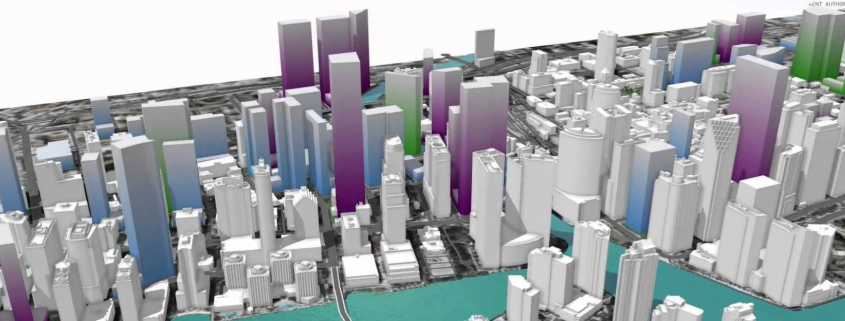
Miami’s Downtown Development Authority has released a video that provides a glimpse of what the skyline will look like when the current crop of construction projects have been completed.

The video helps to visualize the massing of Miami’s evolving skyline by showing buildings that are both proposed and under construction. Buildings where construction is underway are represented in blue, while planned and proposed towers are represented in green and purple, respectively.

It doesn’t include every project, and isn’t exact about height. Fast-rising Edgewater is mostly ignored. It also doesn’t show detailed renderings, as Brickell Magazine did last year.

Below is the Miami DDA video rendering:


Source: The Next Miami

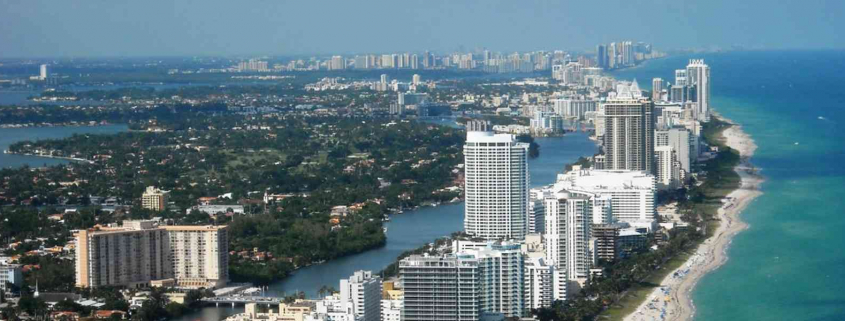
It’s up to developers and city officials to protect projects in Miami Beach from the threat of global sea level rise, architect Reinaldo Borges warned an audience gathered inside a conference room at the W South Beach on Thursday.

“Developers need to change their perspective,” Borges said. “They go in with a short-term investment mentality. That mindset has to change.”

Business leaders discuss sea level rise at the Miami Beach Community Resiliency Summit

Business leaders discuss sea level rise at the Miami Beach Community Resiliency Summit

Borges, a principal of Borges & Associates Architects, lamented that hotel projects his firm worked on like the Royal Palm Miami Beach and the Bentley Beach Hotel will be negatively impacted by sea level rise. Before new projects break ground, Borges suggested city officials find ways to provide developers with incentives if they build structures at a higher elevation.

The Miami-based architect was part of a panel of business community leaders at the Miami Beach Community Resiliency Summit Friday morning. Other speakers such as Wendy Kallergis, president and CEO of the Greater Miami and the Beaches Hotel Association, and Gabriole Van Bryce, a member of the association’s sustainable hospitality council, talked about successful efforts to convince builders and owners to make their properties greener.

“We have really helped hotels reduce the impact of climate change by reducing greenhouse gas emissions,” Van Bryce said. “We want to further reduce the effects of greenhouse emissions by promoting a cool roof initiative to place local gardens on rooftops.”

Al Roker, host and weatherman for NBC’s “Today Show,” kicked off the summit by providing attendees with a few cold hard facts about climate change. “In the next 50 years, Miami’s high tide will be five feet higher,” Roker said. “At the city’s 100th anniversary concert last night, I told the crowd, ‘I hope you’re enjoying this now because where you are standing now will be underwater one day.’”  The popular morning show personality also said the mainstream media made a mistake by coining the term “global warming,” instead of using “climate change.”

Following his presentation, Roker told The Real Deal that developers, city officials, and residents have to work together to address the real threat of climate change. “Everybody should be concerned,” Roker said. “Are buildings ready? Is the infrastructure ready? Those are all real concerns condo owners, private property owners, businesses and everybody should be concerned about.”


Source: The Real Deal

Miami’s Health District is seeing more activity.

A famed chef is launching a new concept in the University of Miami’s Life Science & Technology Park, which made headlines when its developer, Wexford Science & Technology, bet on the neighborhood a few years ago. Miami Health District’s residential and retail projects are rising.

Where does River Landing Shops and Residents fit in? GlobeSt.com caught up with Andrew Hellinger, CEO of River Landing Development, to find out what role his project will play in the evolution of the nascent Miami River District in part two of this exclusive interview. You can still read part one: Is Miami’s Health District Next Big Thing?

GlobeSt.com: What role will River Landing play in the evolution of the nascent Miami River District?

Hellinger: The development will anchor the river district to the west allowing consumers, visitors and residents to enjoy life on the Miami River. River Landing’s waterfront restaurants will add to the growing roster of trendy restaurants opening and thriving in the Miami River District, including American Social, London’s Duck & Waffle, Sushi Samba, Modern Garden, The River Seafood & Oyster Bar, Seaspice, Garcia’s and Casablanca.

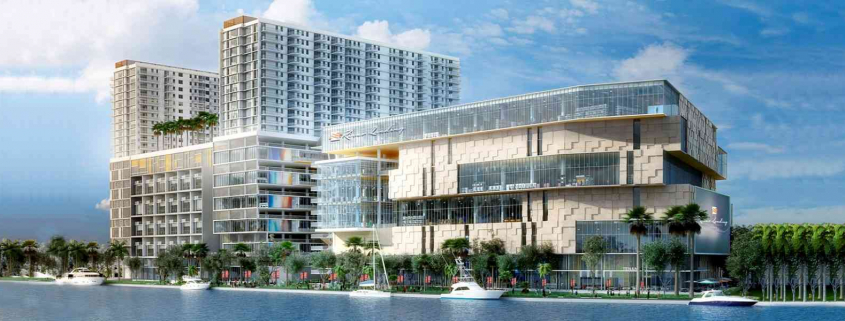
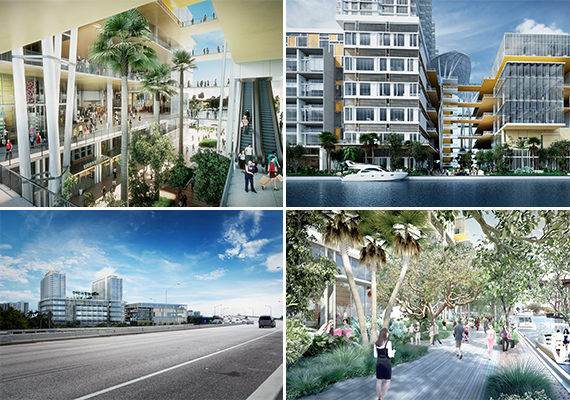
ADD Inc. conceived River Landing’s retail element as a series of stacked gift boxes to create a dynamic façade that complements the river while being accessible to pedestrians. Our riverwalk is designed as a linear waterfront park. The continuous linear, but meandering walking park, extends the length of the development and connects our property to the other waterfront properties in the river district.

GlobeSt.com: What kind of retail mix do you envision for River Landing? 

Hellinger: River Landing will be home to seven to eight national anchor tenants ranging from 20,000 square feet to 55,000 square feet as well as eight to 10 national and regional retailers. Specifically, River Landing will contain 315,000 square feet of national retailers, 86,000 square feet of regional and local retailers and 29,000 square feet of restaurants on its five levels.

The roster of tenants who will call River Landing home is a major supermarket, clothing retailers for men women and children, shoe stores, banks, athletic goods, electronics/ wireless providers, cinemas, entertainment options as well as casual and luxury restaurants.


Source: GlobeSt

At a time when mall shopping is dwindling, there’s a plan afoot to build what would become the country’s largest shopping center, complete with a ski slope, sea lions and Legoland.
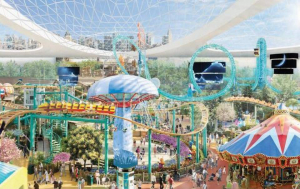
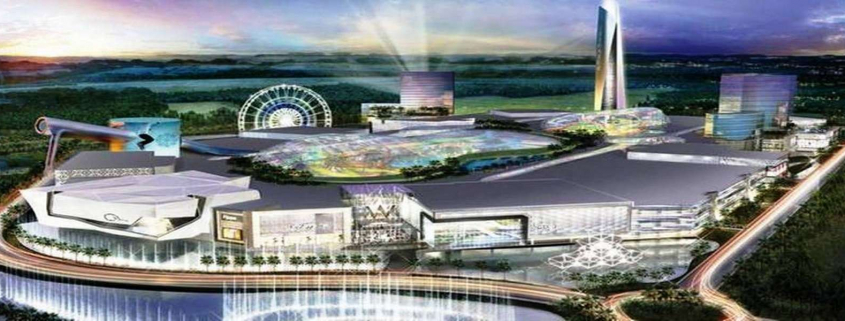
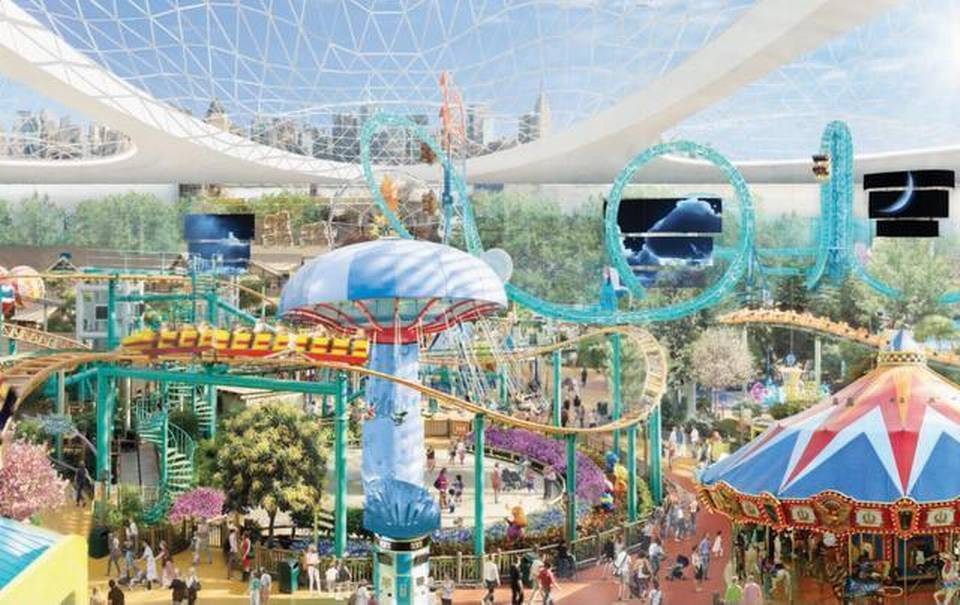
Though centered around a mall, the proposed American Dream Miami would also have a Ferris wheel, roller coaster, and 500-foot-tall observation tower. Most of it would be enclosed by a dome shown here in the artist’s rendering of the theme park. Proposed for Northwest Miami-Dade County, the project comes from the developer behind Minnesota’s Mall of America

Though centered around a mall, the proposed American Dream Miami would also have a Ferris wheel, roller coaster, and 500-foot-tall observation tower. Most of it would be enclosed by a dome shown here in the artist’s rendering of the theme park. Proposed for Northwest Miami-Dade County, the project comes from the developer behind Minnesota’s Mall of America

The $4 billion plan, as detailed by the Miami Herald, would employ 25,000 people in its 200-acre complex, which is slated to be located in Miami’s suburbs. That would make it Miami-Dade’s largest private-sector payroll, the publication noted.

The bold plan comes at a tricky time for malls, as shoppers are snubbing them in favor of Internet shopping, or simply heading to Main Street. Construction on new enclosed malls has ground to a standstill, with only one, Florida’s University Park, opening in the past decade. Given the shift in consumer trends, it may seem risky to plan such a huge undertaking, but the developer is betting that the sheer size and variety of attractions will get people hooked.

The complex is slated to offer stores and a range of attractions, such as a skating rink, a waterpark and a theme park including a roller coaster and Ferris wheel. The developer, Triple Five, is also the company behind Mall of America, which has about 4.2 million square feet and offers 520 stores and 50 restaurants. While the developer didn’t disclose the square footage of the planned Miami mall, it told the publication that the new mall will be larger than Mall of America.

“It is our intent that this project — American Dream Miami — will exceed our other world famous projects in all respects,” Triple Five said in a statement. Triple Five didn’t immediately return a request for comment.
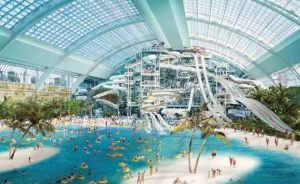
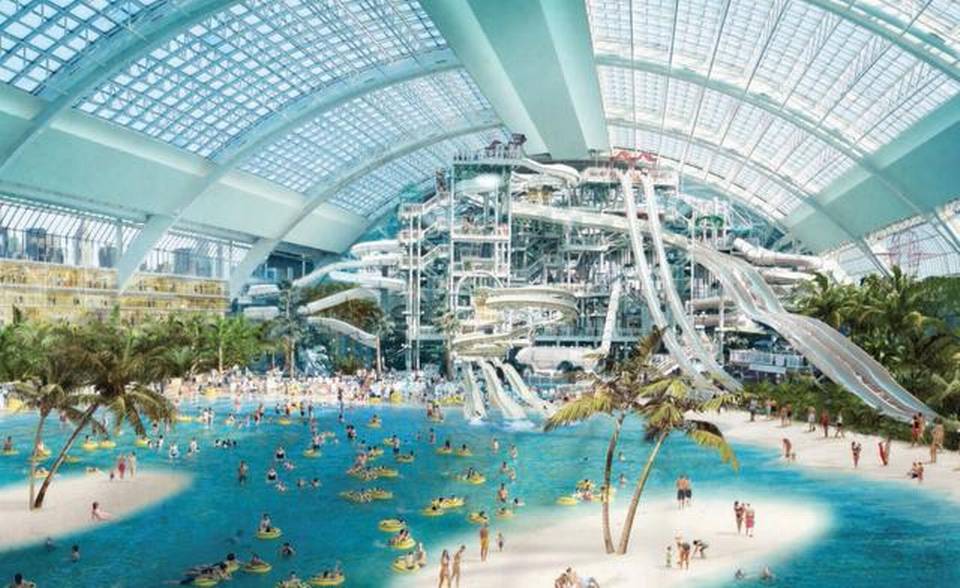
Plans for a water park at the American Dream Miami entertainment complex include 20 different “slides and water treatments,” and the world’s tallest indoor bungee tower. Proposed for Northwest Miami-Dade, the complex would be the largest mall in the United States. Proposal by developer Triple Five

Plans for a water park at the American Dream Miami entertainment complex include 20 different “slides and water treatments,” and the world’s tallest indoor bungee tower. Proposed for Northwest Miami-Dade, the complex would be the largest mall in the United States. Proposal by developer Triple Five

The outsized mall comes at time when enclosed malls are shutting down, becoming ghostly relics of a bygone retail era. There’s even a site called DeadMalls.com that records the locations of razed or shuttered malls, such as downtown Rochester, New York’s Midtown Mall, which opened in 1963 as the first urban indoor mall in America. After struggling to keep tenants, the mall was closed in 2008 and demolished in 2010.

The decline of the mall has been precipitous enough that an executive with one of the largest privately held real-estate companies last year projected that the traditional mall could be dead in a decade.

But American Dream Miami isn’t aiming to be an ordinary enclosed mall. The glass-covered structure would also include luxury hotels, miniature golf, and a ski slope with 800 feet of artificial snow.

While the mall will bring more jobs to Florida, many of those will be in the types of low-paying occupations that are common in the state, such as store clerks and waitstaff. Median household income in Florida stands at about $47,000, below the U.S. median of $53,000, according to the Census.

Still, Mall of America may be breaking the mold when it comes to the twilight of the American mall. Triple Five is currently working on a $325 million expansion of Mall of America, adding a food hall and underground valet parking. The investment is aimed at pulling in 60 million annual visitors, up from 42 million currently.


Source: Miami Herald

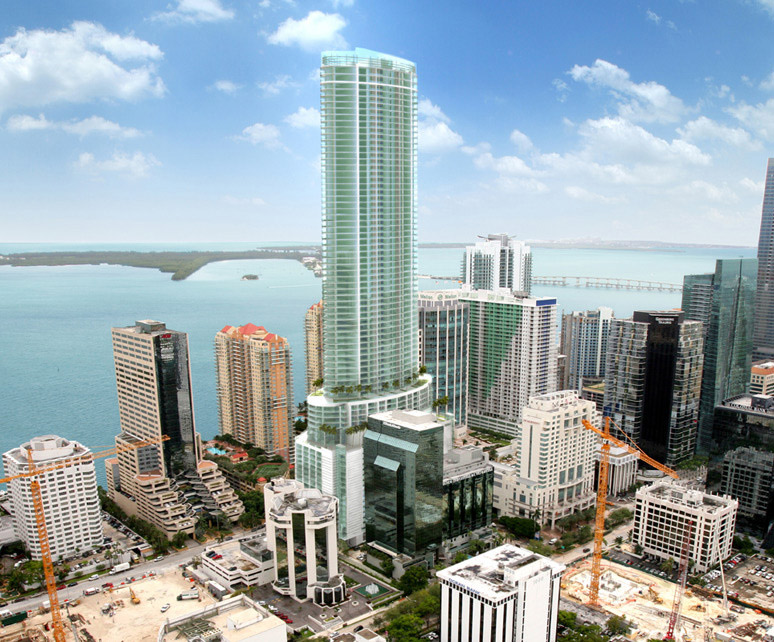
PanoramaTower2Foundation construction at developer Tibor Hollo’s Panorama Tower in Brickell, the future tallest tower in Miami, has reached ground level, and appears poised to go vertical any moment now.

About five months ago, they had just begun driving piles down for the foundations, when construction of the 822 foot tower had finally picked up after an agonizingly slow beginning.


Source: Curbed Miami

Edge, Sushi Samba, River Oyster Bar and Fox Hole Marketplace and Deli —  are just some of the planned new eateries banking on the Miami River.

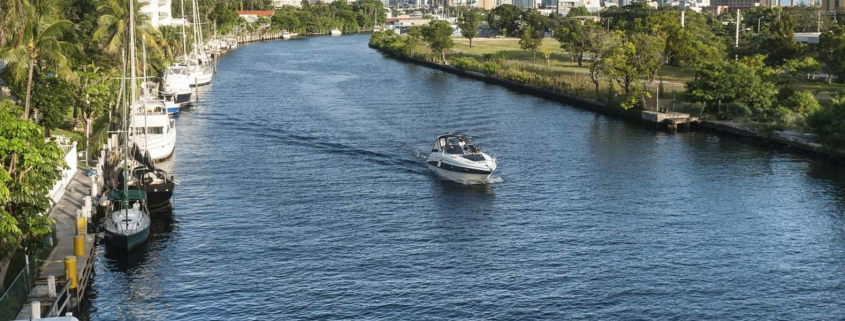
 New restaurants, retail and increased public access along the Miami River were among the highlights of a development boat tour of the five-mile-long waterfront district on Thursday.

Renderings of River Landing Project

Renderings of River Landing Project

Developers and real estate professionals toured the river as part of an Urban Land Institute and NAIOP partnership. Brett Bibeau, managing director of the Miami River Commission, said that popular restaurants Seaspice (formerly Sea Salt and Pepper), Garcia’s Seafood and Casablanca have brought business to the area.

Among the restaurants awaiting permits or under construction are Sushi Samba, at 40 Southwest North River Drive; Edge at 39 to 55 Southwest Miami Avenue Road; a new location for the River Oyster Bar at 350 Flagler Street, and Fox Hole Marketplace and Deli at Latitude on the River, 615 Southwest Second Avenue.

River Landing rendering and Andrew Hellinger

River Landing rendering and Andrew Hellinger

The Miami River has increasingly drawn interest from developers who are embracing the river lifestyle. “It’s a place that people don’t have to see as up and coming. It exists,” said Andy Hellinger, developer of the River Landing project, a massive nine-acre development that will include apartments, retail and a linear park along the riverwalk.

River Landing’s retail component will include a five-story vertical shopping center, with a different theme for each floor. Among them: restaurants and supermarkets, sporting goods and entertainment. Two acres of the project are dedicated to parks and pathways. Hellinger compared the linear park, with a 50-foot setback, to the Highline in New York.

River Landing recently applied for a seawall permit, and digging for the foundation will be complete in a few weeks, Hellinger told The Real Deal.

Cleaning up the water and building the riverwalk are both key to the area’s success. Bibeau said his organization, the Miami River Commission, sends clean-up crews to pick up trash, pressure clean and paint over graffiti. “If the riverwalk is not maintained,” Bibeau said, “it will not live up to its potential.”


Source: The Real Deal

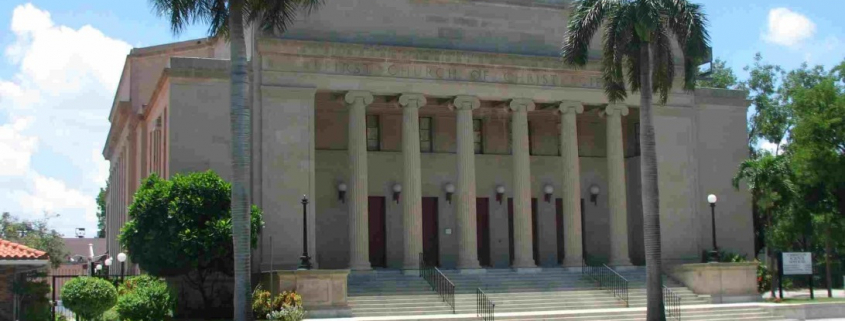
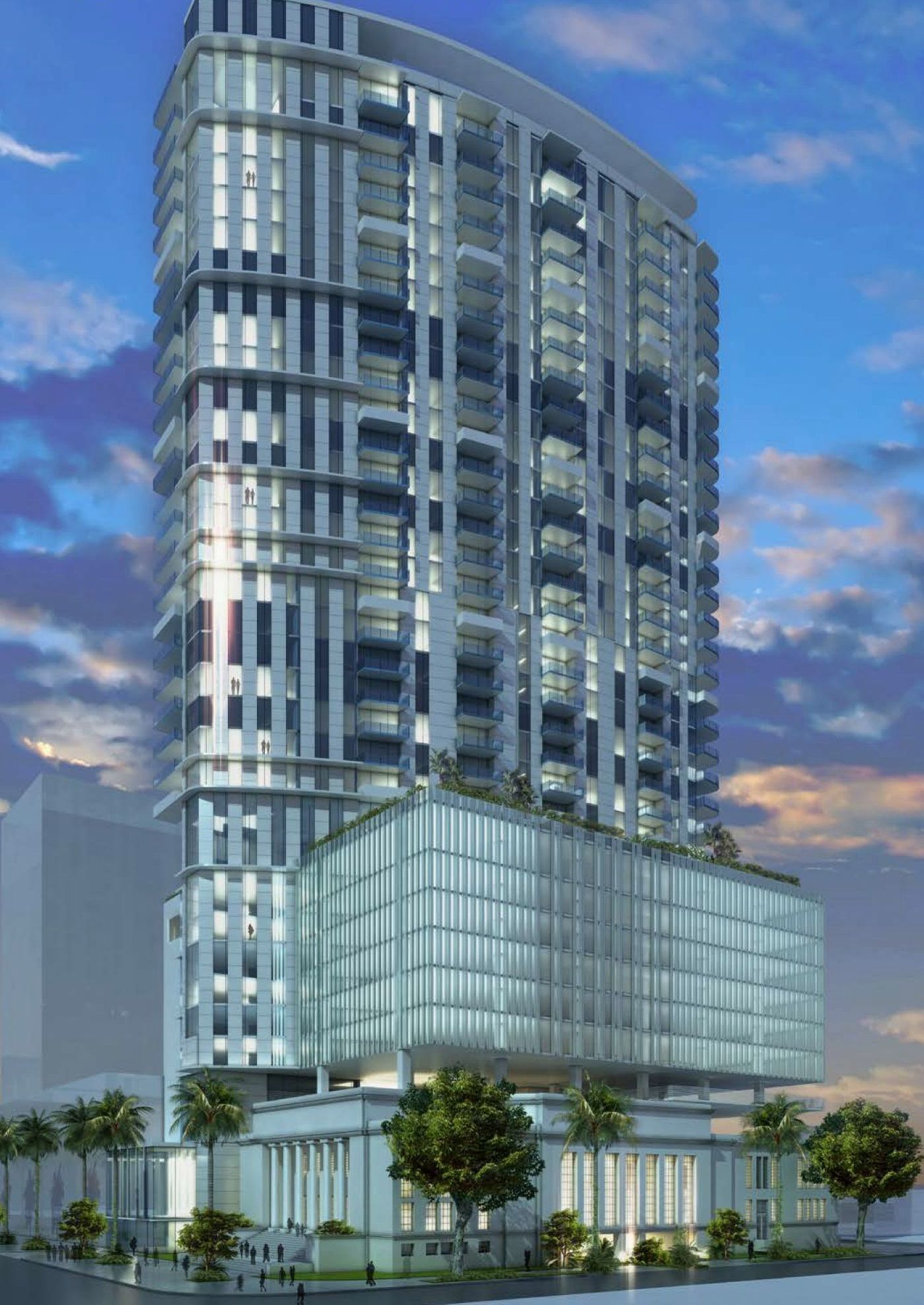
Architect ADD Inc has prepared a creative plan to preserve the historic church at 1836 Biscayne Boulevard, while adding 352 residential units and a parking garage.

1836 Biscayne Boulevard - 2Under a proposal scheduled to be reviewed by Miami’s Historic and Environmental Preservation Board, the church would be restored and retrofitted to become hurricane-resistant. Instead of a place of worship, a grocer would occupy the space.

A 34-story residential tower would be built next to the church. ‘Floating’ above the former church would be a parking garage. In total, up to 480 parking spaces are planned.

Developer Fifteen Group paid $14.25 million for the property last year. R.J. Heisenbottle Architects is working alongside ADD Inc for the developer as a historic preservation consultant.

The church is directly across the street from Atlas Capital Group’s newly proposed 429-unit residential tower at 1900 Biscayne.


Source: The Next Miami

A retail development site in Miami’s Edgewater neighborhood traded for $64 million, or $200 per square foot, to a well-known businessman.

The 7.35-acre site at the northwest corner of Northeast 17th Street and Northeast Second Ave. was previously approved as Bayview Market with 653,659 square feet of retail, a 2,047-square-foot gym/spa and 24 apartments. The seller obtained approval in 2009 but didn’t start construction.

EdgewaterMiamiBayviewMarketBDB Miami LLC and 110 Avon, a partnership between Atlanta-based BDB Realty and Redwood Capital Investments, sold the property to Rebuild Miami-Edgewater, which is headed by Richard Meruelo. The deal included $34 million of seller financing.

Meruelo was the co-founder and chairman of EVOQ Properties, which was sold in 2014 to Atlas Capital Group and Square Mile Capital Management. EVOQ was one of the largest property owners in downtown Los Angeles. He’s also part of the Cuban American Meruelo family, which has owned the Deauville Beach Resort in Miami Beach for many years.

The deal was brokered by CBRE’s Gerard Yetming, Robert Given, Zachary Sackley, Casey Rosen, Dennis Carson and Tim Gifford.

CBRE said the site could be zoned for up to 3 million square feet of development. Edgewater has a host of new condo towers rising along Biscayne Bay.

“BDB Miami is the perfect canvas for a visionary developer,” Yetming said in a news release. “Population growth for the one-mile radius around this site is forecast at nearly 10 percent over the next five years. With this acquisition, the buyer has an opportunity to capitalize on all of the new energy associated with Miami’s most transformative commercial real estate development projects.”


Source: SFBJ

Will the recent free fall of the Euro hurt sales of new and existing condominium units in Miami?

Miami right now probably feels quite expensive compared to last year for returning international visitors who are armed with euros, the official currency of 19 countries in the European Union.

The current exchange rate to convert euros into U.S. dollars stood at about $1.178 on Thursday, following a steep drop in value resulting from a surprise monetary move this week by the Swiss Central Bank, according to the foreign exchange trading website OANDA.com.

Some currency watchers say Switzerland’s sudden maneuver to protect its currency, the franc, could send Western Europe’s primary currency plummeting against the dollar in the weeks and months ahead.

The current exchange rate is the weakest the euro has been against the dollar on the date of Jan. 15 since back in 2003 when the currency was worth about $1.055. In the more than a decade since the 2003 level, the euro has had a value ranging from between $1.265 and $1.485. A year ago on Jan. 15, 2014, a euro was worth $1.367, according to OANDA.com.

The dramatic drop in the euro means that everything in Miami, from hotel rooms to bottle service at nightclubs, and rental cars to condo purchases, now cost about 14 percent more than a year ago, according to OANDA.com. A deeper weakening of the euro could diminish Miami’s reputation as a cheap, must-see global destination for vacations, shopping sprees and real estate investments with Western European visitors.

For their part, Western Europeans are a key part of the crucial pool of international buyers purchasing real estate in South Florida, according to the 2014 Profile Of International Home Buyers In Florida report released in September by the Florida Realtors.

Buyers from Western Europe purchasing in South Florida accounted for 8 percent of all international sales in the Latin American-dominated Miami area, 18 percent in Fort Lauderdale and 24 percent in the Palm Beach area.

Statewide, the report concludes that buyers from Western Europe paid a mean price of $321,500 per transaction for Florida real estate with some 85 percent of the deals transacting in cash. Price statistics for Western Europeans who purchase in the South Florida region are unknown as the Florida Realtors report does not address that topic.

What is known is that South Florida’s condo market east of Interstate 95 has a growing pool of available inventory that needs buyers, whether they originate from Western Europe, Latin America or the Northeast. An estimated 6,400 new condo units are scheduled to be completed this year east of Interstate 95 in South Florida with an additional 6,700 units slated to be delivered in 2016 and 5,000 more units in 2017, according to the preconstruction condo projects website CraneSpotters.com.(For disclosure, my firm operates the website.)

An additional 12,750 condo units are currently on the resale market east of Interstate 95 in the tri-county South Florida region. The number of condo units currently on the resale market represents nearly nine months of available inventory. Ideally, a healthy market has about six months of supply available for resale. More months of supply suggests a buyer’s market and less months a seller’s market.

The unanswered question going forward is whether South Florida’s current condo boom will be able to maintain its momentum of recent years, if buyers from Western Europe find it more expensive to buy units in the tri-county region.

Thought Of The Week: South Florida Condos “Not Priority” For Russian Investors

At a time when the U.S. currency’s run-up in value is prompting some Wall Street experts to predict the beginning of the next King Dollar era, Russian condo buyers – who have seen their home country’s currency tumble by nearly half in the last year – are reportedly rethinking their necessity to own multiple beachfront condo units in the tri-county region.

“An apartment in Miami, even the most glorious beachfront apartment, is not a priority right now,” New York Attorney Marlen Kruzhkov reportedly said in a recent press report.

This sentiment from Russian investors – a key buying pool in the tri-county region for at least the last two decades – cannot be good news for sellers of new and existing condos in South Florida who are seeking top dollar for their luxury units.


Source: The Real Deal

Rodolfo Ishak, developer of Krystal Tower  PHOTO: Mark Freerks

Rodolfo Ishak, developer of Krystal Tower
PHOTO: Mark Freerks

Rodolfo Ishak has had plenty of opportunities to launch his first condo project in Miami during boom cycles of years past, but he feels now is the perfect time.

Having completed more than 40 projects in his native Brazil, Ishak is making his Miami debut with Krystal Tower, a 35-story, 153-unit project at 530 N.W. First Court. It launched sales in November, starting at $342 a square foot, with an average price of $450 a square foot. It will also include 5,500 square feet of commercial space.

The property currently has a five-story shell of a project that stalled during the recession. Ishak’s company will build atop that structure. He plans to launch construction once presales reach 50 percent, he said.

A rendering of Krystal Tower, planned for 530 N.W. First Court in Miami.

A rendering of Krystal Tower, planned for 530 N.W. First Court in Miami.

Ishak and sales director Roderyck Reiter said his company and his experience has reached a level where he feels comfortable to come to Miami, a market that’s more conductive than in Brazil. His reservations are evenly divided between Brazilians and Venezuelans. Both countries are suffering from economic problems and the weakening of their currencies against the U.S. dollar.

“It has helped us in Miami because of the instability and insecurity of the economy in both countries,” Ishak said. “People who have the capital want to take their capital to a safe market like this. … It’s like a savings account to them. If they keep it in their country, they will lose value on inflation.”

Ishak said his goal with Krystal Tower is to offer the amenities residents would expect at a luxury building at a lower price point. It helps that he paid only $3.5 million for the property, compared to the tens of millions of dollars that other developers paid to obtain land near downtown Miami.

BY THE NUMBERS
  • $108 million – Price paid by Stiles and Prudential Real Estate Investors for New River Center. The 281,713-square-foot office tower is at 200 E. Las Olas Blvd. in Fort Lauderdale.
  • $279 – Price per square foot for KAR Properties’ $12.5 million purchase of a 1.03-acre site in Miami’s Wynwood neighborhood.
  • 57,012 – Square footage of C-G of South Florida’s warehouse at 6865 N.W. 36th Ave. in Miami as it faces a $2.5 million foreclosure lawsuit from Ocean Bank.
  • $11.5 million – Price Origin Behavioral HealthCare paid for the 90-bed Hanley Center, a substance abuse facility in West Palm Beach.


Source: SFBJ