David Beckham’s top Miami negotiator said Thursday that owners of the private land needed for a Miami soccer stadium “probably will blow this deal up,” sounding the alarm over a potential failure of negotiations he said must be completed within a few weeks.
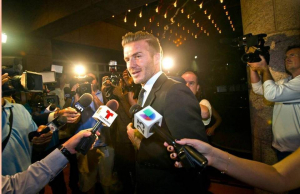
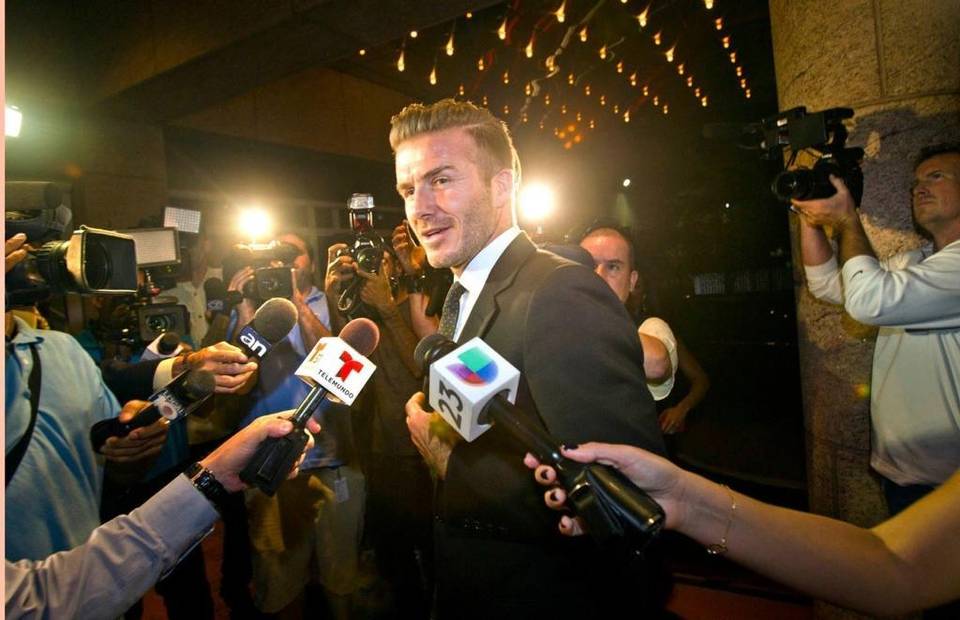
Soccer star David Beckham arrives for an event at the Adrienne Arsht Center in February 2014 (PHOTO CREDIT: PATRICK FARRELL, MIAMI HERALD STAFF)

Soccer star David Beckham arrives for an event at the Adrienne Arsht Center in February 2014 (PHOTO CREDIT: PATRICK FARRELL, MIAMI HERALD STAFF)

In an interview with the Miami Herald Editorial Board, Miami Beckham United’s Tim Leiweke said the partnership continues to make progress with the city of Miami to purchase city land across the street from Marlins Park and then transfer it to the Miami-Dade School Board, which would shield the new stadium from property taxes. But he said parallel negotiations to purchase six private parcels on the proposed stadium footprint have stalled as land owners haggle for unreasonable prices.

“They know what we’re doing, and unfortunately they’ve let that create an absolutely unrealistic conversation. They can absolutely blow this deal up, and they probably will blow this deal up,” Beckham’s top Miami negotiator, Tim Leiweke said. “We’re willing to overpay. We just don’t want to be the stupidest guys on the face of the earth.”

If the negotiations fail, Leiweke said Beckham’s group has a fallback plan at another undisclosed site. He also said Miami Beckham United hasn’t ruled out looking to a different city.

“We do have a backup,” Leiweke said. “We will not be held hostage.”
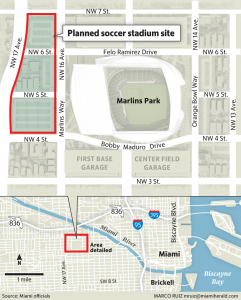
SoccerStadium

His blunt remarks could be an example of public brinkmanship to put pressure on the land-holders trying to get top dollar for their real estate, or it could signal real trouble in Beckham’s third try for a stadium site in his two-year quest to bring Major League Soccer to Miami. Miami plans a referendum on the expected stadium plan in March, to coincide with the presidential primary.

At least one property owner within the stadium footprint, Violeta Jimenez, said no one from Miami Beckham United has approached her to officially start negotiations. And for now, she said, it is better that way.

“Ideally, I would prefer that they don’t offer me anything and to stay in my house until I die. I have lived here for years,” said Jimenez, who lives in a duplex and whose next-door neighbor is her sister Adelfa. “We don’t want to get millions; we want to live peacefully.”

She said news of the stadium talks prompted a flood of third-party offers for her property. And yet, she said, “I’m not totally opposed to negotiating a fair deal.”
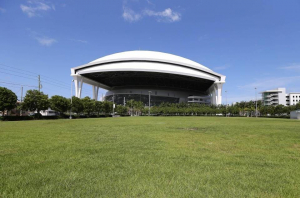
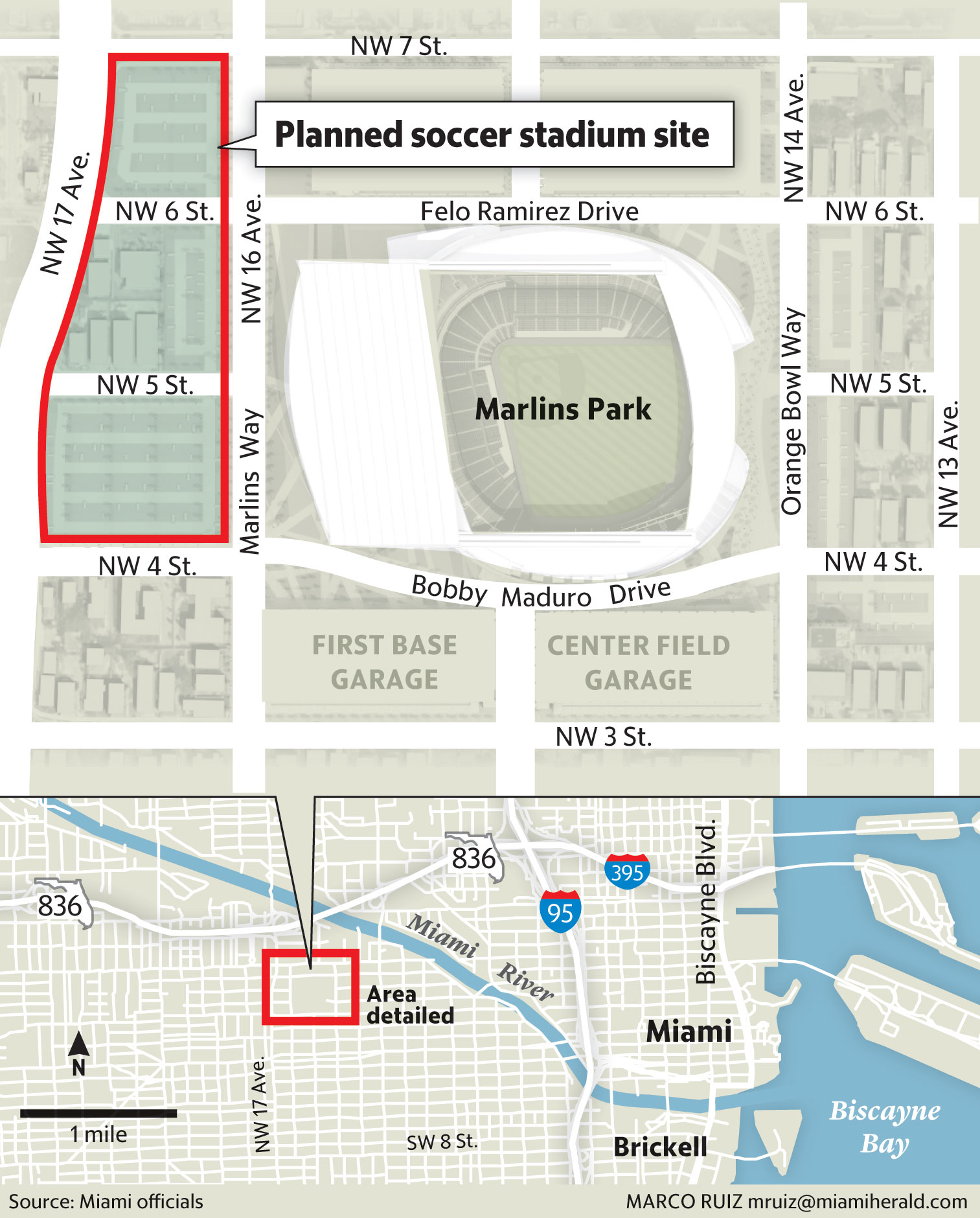
The land adjacent to Marlins Park in Little Havana, where David Beckham’s group is trying to build a soccer stadium (PHOTO CREDIT: DAVID SANTIAGO, EL NUEVO HERALD)

The land adjacent to Marlins Park in Little Havana, where David Beckham’s group is trying to build a soccer stadium (PHOTO CREDIT: DAVID SANTIAGO, EL NUEVO HERALD)

The Beckham camp confirmed that its real-estate team has not yet spoken to Jimenez as it tries to work out deals with larger properties nearby. It isn’t clear which property owners allegedly asked for an exorbitant amount of money.

Rene Diaz, owner of Candy House Daycare, told el Nuevo Herald on Thursday that he met with Beckham negotiators last month. He said he asked to be paid an undisclosed amount for his property, plus the value of his business, in addition to compensation for relocation of his daycare. Diaz said the negotiators told him his requests were “reasonable.”

“They agreed and even said they would send me a written offer,” Diaz said. “I’m not going to give away my property. They are not going to build a stadium to lose money, they are coming here to make money. They are not a charity or a church.”

An attorney for Beckham United, however, disputed his characterization of the negotiations. Michelle Gonzalez said in a statement that she met with Diaz last month and asked him what he thought he should receive for his property, which according to the property appraiser has a market value of $368,000.

“The number he came back to us with was 30 times the fair market value of what the land has been appraised at,” Gonzalez said. “We feel that is completely unreasonable.”

Attempts to reach Diaz again Thursday evening for a response were unsuccessful.

Beckham was thwarted last year in bids to build on government land at PortMiami and downtown Miami. Leiweke, who recently came aboard as a partner and negotiator, was critical of the efforts that led to such high-profile failures.

“We’ve shot ourselves in the foot quite a bit in the last two years,” said Leiweke, president of the company behind Toronto’s MLS team and the former CEO of AEG, which owns an MLS franchise in Los Angeles.

Leiweke was instrumental in bringing Beckham to play for the L.A. Galaxy in 2007, a deal that included an option for Beckham to buy an MLS team himself at a deep discount.

MLS Commissioner Don Garber has already extended Beckham’s option as his Miami stadium chase dragged on, and Leiweke said the upcoming MLS owners meeting on Dec. 5 is the latest deadline. He said that without an agreement with the school board, city and land owners, he’s not confident MLS will extend the option again.

“I’ll let the commissioner decide,” Garber said. “But I don’t like those odds and it makes me very nervous about MLS in Miami.”

Beckham’s investment group is offering to build the $200 million stadium and pay Miami for the city-owned land needed for the stadium. It had been pursuing county ownership of the facility to shield the new stadium from property taxes, but last month abruptly switched the plan to Miami-Dade’s school system being the landlord.

Schools chief Alberto Carvalho touted the potential deal as a win for the schools, which get no tax dollars from government-owned stadiums. By owning Beckham’s stadium, it could have a 30,000-seat venue for large football games, graduations and events. But Leiweke revealed Thursday that one of Carvalho’s top requests wouldn’t be granted: building a magnet school dedicated to sports management inside the stadium itself.

“Quite frankly, we don’t have the space or the money for that,” Leiweke said. Instead, the stadium would accommodate visiting students to learn about sports. In a statement, Carvalho said both sides want to create “meaningful educational space” within the stadium.

Miami-Dade Mayor Carlos Gimenez saw the switch to school ownership as a political move by Miami Mayor Tomás Regalado, whose daughter, Raquel, sits on the school board and is challenging Gimenez in the 2016 mayoral race. Leiweke said Thursday it was Tomás Regalado who suggested the Beckham group meet Carvalho about potential ownership, which the city mayor called “an interesting concept.”

Leiweke said Beckham’s group will agree to continue paying the same property taxes that the private landowners currently pay local governments, but not the far larger bill for a stadium expected to cost about $200 million to build.

“If you put a true property tax on this property, this thing could never be built,” Leiweke said of the stadium.


Source: Miami Herald

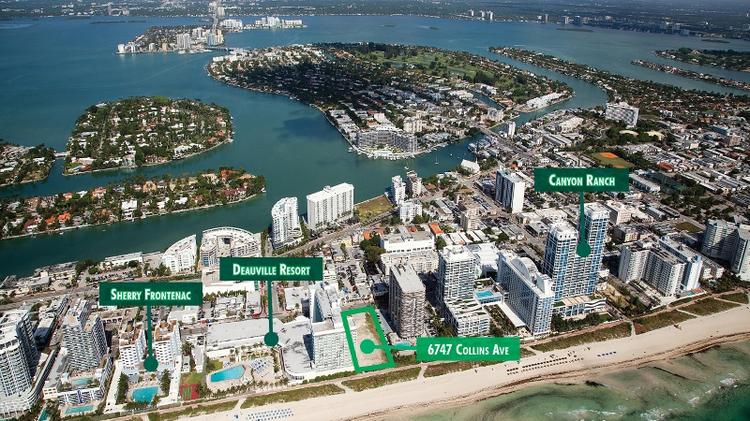
A Chinese investment group paid $38.5 million for less than 1 acre at 6747 Collins Ave. in Miami Beach.

China City Construction Company Da Tang Development and Management LLC struck the eight-figure deal with the Peebles Corp. for a 0.98-acre oceanfront site approved for high-density multifamily development.

The buyer, part of China City Construction Holding Group, has New York-based operations as well as offices in Miami, Los Angeles, San Francisco and San Diego. It operates six regional service centers in China, targeting high-profile investors looking to acquire U.S. properties.

China City Construction Co. acquired the site at 6747 Collins Ave. in Miami Beach.

China City Construction Co. acquired the site at 6747 Collins Ave. in Miami Beach.

Its new purchase sits between 67th and 69th Streets with the Deauville Beach Resort to the south and Sterling condominiums to the north.

Approved plans allow a 19-story development with 60 residential units and a 150-room condo hotel with gross building square footage of up to 93,600 square feet. The company appears to be wasting little time moving forward with plans for the site.

Dr. Shan-Jie Li, chief executive officer of American Da Tang Group

Dr. Shan-Jie Li, chief executive officer of American Da Tang Group

Information on its website shows CEO Shanjie Li and general manager Haibo Pan traveled to Miami and Atlantic City between March 31 and April 6 to scout development prospects. While in Miami, they met with real estate developers, architects and lawyers to create a land development plan, according to the site. Their meetings likely included CBRE Inc.‘s Miami-based hotel division since the real estate brokerage house announced Thursday it handled the massive sale.

CBRE executives Robert Taylor and Paul Weimer of the hotels division teamed with Gerard Yetming of the firm’s multifamily arm and Irving Padron of Engel & Volkers to represent Peebles Corp. They marketed the land as one of Miami Beach’s last vacant oceanfront properties.

“This beachfront site is ideally situated in one of the nation’s most sought-after real estate markets, a top-performing hotel market and a place where residential sales top $2,000 per square foot,” CBRE senior vice president Robert Taylor said.

Peebles chairman and CEO Donahue Peebles called the site a “prudent investment with immeasurable potential.”

“As the Peebles Corporation shifts focus to our large-scale projects in the Northeast, we will watch with great enthusiasm as China City Construction Co. brings this exciting development opportunity to life,” Peebles said.

American Da Tang Group and Borda Commercial Real Estate represented the buyers in the transaction.


Source: DBR

A day after Miami-Dade’s cultural affairs director disclosed the county is interested in teaming up with private developers to build high rise towers at the downtown cultural complex that is home to HistoryMiami and the central library, Mayor Carlos Gimenez said there are many more projects that could be open to public-private partnership, or P3s.

“The only way we are going to get any of them done is with P3s,” Gimenez said. “If we have to maintain and operate all these things, we couldn’t do it.”

On Friday, Gimenez participated in a panel discussion about the county’s transportation needs, put on by the P3 Institute at Florida International University’s north campus. A packet prepared by the P3 Insitute listed roughly $7.5 billion in unfounded county projects Miami-Dade officials are considering for possible partnerships with private companies.

Some of the projects include three general maintenance and office facilities that will cost an estimated $120 million to build, a $20 million African Heritage Cultural Arts Center, an expansion and new garage for the Miami-Dade County Auditorium that will cost an estimated $40 million, and four new jail facilities that will cost an estimated $625 million. On Thursday, the county’s cultural affairs director had discussed the future partnership potential of the downtown cultural complex, as reported by the South Florida Business Journal.

Gimenez said the county will also consider public-private partnerships for all future transit projects, including Baylink, a light rail that will connect Miami Beach to Miami via the MacArthur Causeway, and for an east-west transit connection from the airport to Kendall. Gimenez also said he would like to see Baylink’s track expanded in Miami Beach and Miami to include the Julia Tuttle Causeway, so that trains could go through the Design District, Midtown and Mid-Beach.

Neil Sklar, a partner with the law firm Peckar & Abramson and P3 Institute president, told The Real Deal that his organization hosted two-day panels on public-private partnerships to give the county an opportunity to meet with private company executives who are interested in pursuing deals.

“I was surprised to learn the county has many more projects that people don’t know about,” Sklar said.


Source: The Real Deal

It’s no secret that Miami has become one of the world’s most attractive markets for international investors.

South Americans in particular have had a heavy influence in local real estate as one of the main demographics snapping up properties throughout South Florida.

But data from CBRE, a commercial brokerage that tracks such international trends, indicates that one region of the world is poised to take a much larger role in South Florida’s real estate game and in the United States as a whole: the Middle East.

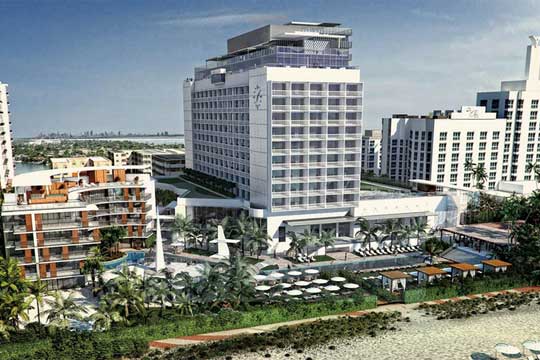
Miami Beach EDITION hotel

Miami Beach EDITION hotel

So far, buyers from the Middle East have stuck to high-profile properties in Miami. This was made evident in February with the Abu Dhabi Investment Authority’s acquisition of the Miami Beach EDITION hotel for an incredible $230 million. That sale accounted for the majority of the $280 million Middle Easterners have sunk into South Florida real estate during the first half of this year, according to CBRE data.

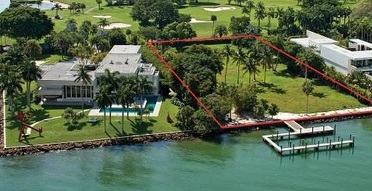
Plot on Indian Creek Island — the highest price ever recorded for vacant land in the neighborhood

Plot on Indian Creek Island — highest price ever recorded for vacant land in the neighborhood

Also in February, a corporate entity linked to Saudi Royalty paid $23 million for a plot on Indian Creek Island — the highest price ever recorded for vacant land in the neighborhood.

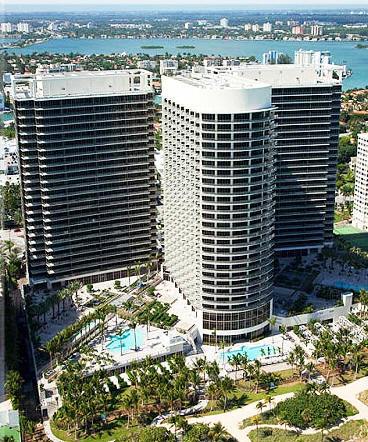
St. Regis Bal Harbour hotel

St. Regis Bal Harbour hotel

Compared to last year, buyers from the Middle East have spent $37 million more on Miami real estate, CBRE data shows. The previous year saw Al Faisal Holding, a private company based out of Qatar, pay $213 million for the St. Regis Bal Harbour hotel, among other smaller transactions. However, in the context of the region’s historically large purchases, that increase does not necessarily translate to a large uptick in activity.

The evidence of this emerging trend instead comes from looking at the huge amount of money that the Middle East is pouring into U.S. real estate.

For the first half of 2015, the region spent $2.7 billion on real estate in the Americas, according to CBRE. That’s a significant chunk of the $11.8 billion total that investors from the Middle East have spent on global real estate during that time period, and CBRE expects that number to grow by another $2.4 billion by the end of the year. Most of that money comes from sovereign wealth funds.

“There’s no question that Miami has arrived as a primary market for investors worldwide, in the same league with other U.S. cities like New York, San Francisco and D.C., as this Middle East investment report suggests,” Quinn Eddins, CBRE’s director of research and analysis for Florida, said in a statement.

“The amount of foreign investment in South Florida office, retail and industrial product during the first half of 2015 alone was over $775 million – more than that of all the previous two years combined. If we factored in apartment, hotel and land sales, that number jumps to more than $1.2 billion. A lot of capital is still coming from Canada, Europe and Latin America, but there’s definitely an uptick in Middle Eastern and Asian investment – it’s an exciting trend that we’re tracking closely.”

South Florida was the fourth hottest market in the U.S. for Middle Eastern investment during the first two quarters of 2015. It stands to supplant the third spot belonging to Washington, D.C., which saw only $1 million more in transactions from the region. Above D.C. is Atlanta with $338 million in purchases so far this year, and New York in the top spot with $1.1 billion, CBRE data shows.


Source: The Real Deal

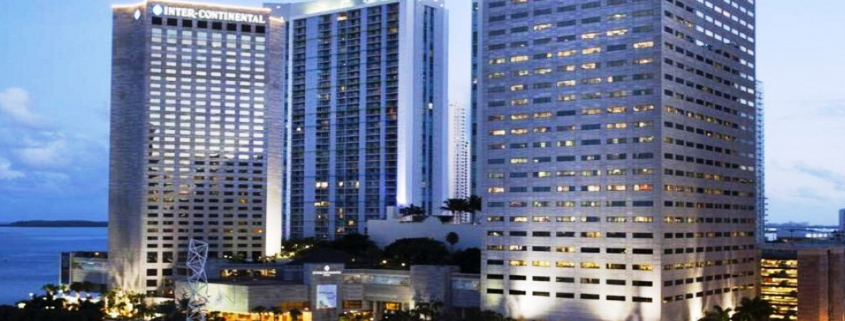
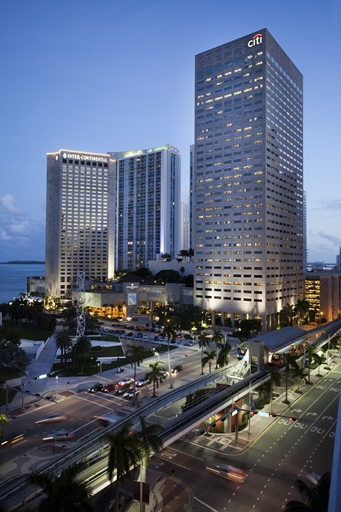
The 34-story Miami Center office tower downtown is set to undergo $20 million in renovations after main tenant Citigroup renewed its lease.

Cushman & Wakefield’s Jon Blunk represented landlord Crocker Partners in the lease, while NGKF’s Patrick Duffy represented Citigroup.

MiamiCenter2The banking giant will continue to occupy 125,000 square feet at the building, at 201 S. Biscayne Blvd., and will add a retail branch there. Citibank had $3.1 billion in deposits in that office as of June 30, 2014, according to the Federal Deposit Insurance Corp. – its most in Miami-Dade County

Crocker Partners said the $20 million in renovations to Miami Center will include a makeover of the lobby and exterior plaza, a new entrance with a valet, and elevator modernization. The tower totals 786,267 square feet.

“Locking in a long-term lease at today’s rental rates is a wise move,” Crocker Partners’ Angelo Bianco said. “Tenant demand from both organic and new tenant growth is in its fourth consecutive year of expansion. Couple that fact with the limited amount of office development in the pipeline and we have a perfect storm on the 12-to-24-month horizon for a significant increase in rents.”


Source: SFBJ

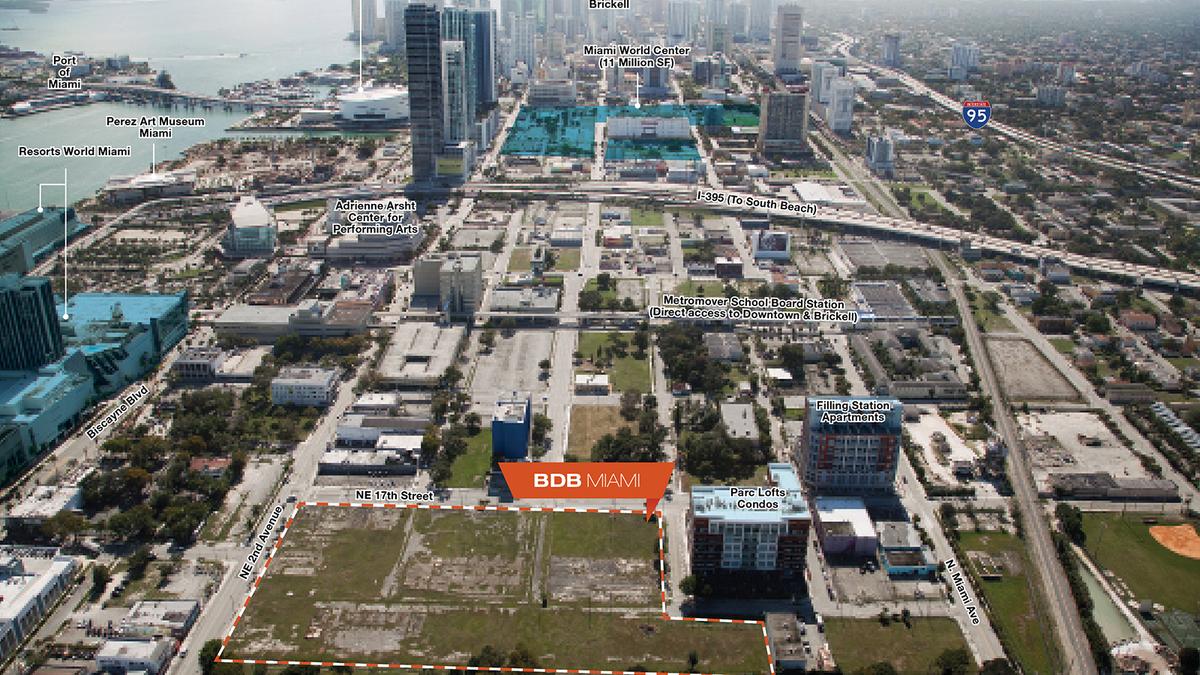
A retail development site in Miami’s Edgewater neighborhood traded for $64 million, or $200 per square foot, to a well-known businessman.

The 7.35-acre site at the northwest corner of Northeast 17th Street and Northeast Second Ave. was previously approved as Bayview Market with 653,659 square feet of retail, a 2,047-square-foot gym/spa and 24 apartments. The seller obtained approval in 2009 but didn’t start construction.

EdgewaterMiamiBayviewMarketBDB Miami LLC and 110 Avon, a partnership between Atlanta-based BDB Realty and Redwood Capital Investments, sold the property to Rebuild Miami-Edgewater, which is headed by Richard Meruelo. The deal included $34 million of seller financing.

Meruelo was the co-founder and chairman of EVOQ Properties, which was sold in 2014 to Atlas Capital Group and Square Mile Capital Management. EVOQ was one of the largest property owners in downtown Los Angeles. He’s also part of the Cuban American Meruelo family, which has owned the Deauville Beach Resort in Miami Beach for many years.

The deal was brokered by CBRE’s Gerard Yetming, Robert Given, Zachary Sackley, Casey Rosen, Dennis Carson and Tim Gifford.

CBRE said the site could be zoned for up to 3 million square feet of development. Edgewater has a host of new condo towers rising along Biscayne Bay.

“BDB Miami is the perfect canvas for a visionary developer,” Yetming said in a news release. “Population growth for the one-mile radius around this site is forecast at nearly 10 percent over the next five years. With this acquisition, the buyer has an opportunity to capitalize on all of the new energy associated with Miami’s most transformative commercial real estate development projects.”


Source: SFBJ

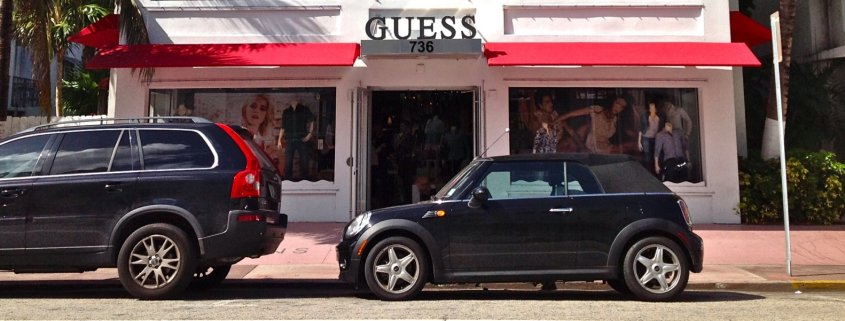
An 8,300-square-foot building operating as a fashion store for Guess in Miami Beach has sold for $12.5 million, which equates to $1,499 per square foot.

Marcus & Millichap represented the seller, a Miami-based owner/developer. The buyer, also represented by Marcus & Millichap, is an institutional investment group interested in building a South Florida retail portfolio.

“The building is a trophy retail asset located in the heart of the Collins Avenue fashion district,” said Drew Kristol, VP of investments in Marcus & Millichap’s Miami office. “Guess has occupied the property since 1998, and over the years has re-invested into their build-out. The new owner is an excellent position to capitalize on the below market in-place rental structure.”

The two-story building, located at 736 Collins Ave. between Seventh and Eighth streets in Miami Beach, was extensively remodeled in 1998 and has received complete interior renovations from Guess within the last 18 months.


Source: SFBJ