
Miami Green Lights Coconut Grove Playhouse Revival After Two Decades Of Battles
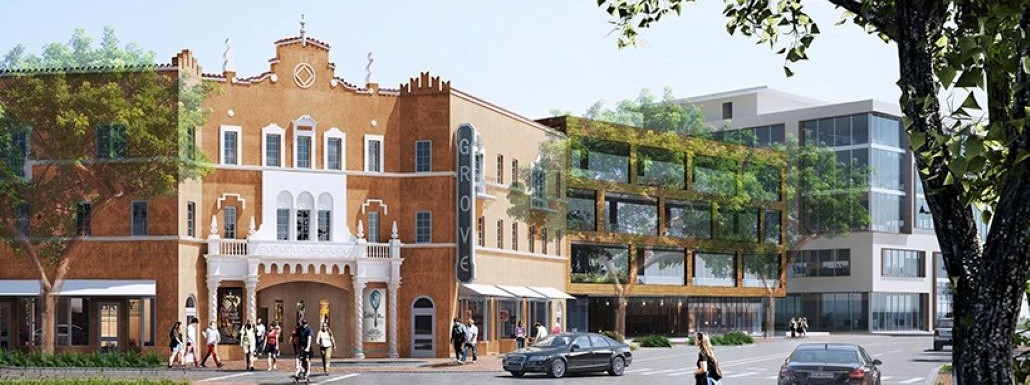
The long-awaited redevelopment of the historic Coconut Grove Playhouse took a major step forward after the Miami City Commission approved Miami-Dade County’s plan to restore and redevelop the property, ending more than two decades of legal, political and preservation battles.
The approval grants the county five zoning exceptions and four waivers, allowing the restoration of the playhouse’s iconic 1926 facade while replacing much of the existing structure with a new 310-seat theater. The project also includes an open-air plaza, 2,600 square feet of retail space, 3,800 square feet of restaurant space, 28,000 square feet of offices, 2,600 square feet dedicated to educational programming and a 289-space parking garage adjacent to the site.
County officials say the redesigned plaza will help reconnect the playhouse, located at 3498-3500 Main Highway, with the neighboring historically Black West Coconut Grove, also known as “Little Bahamas.” Opponents, however, argue that the addition of retail and office space will make the project overly commercial while increasing traffic in the surrounding neighborhood.
The county maintains that commercial uses have always been part of the playhouse property and are being restored rather than added for the first time. Officials also said the retail and office components are intended to generate revenue to support the facility’s long-term operations without relying on county funding.
Although the commission’s vote removes one of the project’s biggest obstacles, legal challenges remain possible. Miami-Dade County must also secure remaining permits and meet several approval conditions before construction can fully proceed.
As part of the approval, commissioners authorized increasing the site’s maximum lot coverage from 50% to 62.4%, reducing required green space from 30% to 14.9%, adding more impervious pavement and constructing a 30-foot-wide driveway connecting Main Highway to the parking garage. County officials said the reduction in green space is primarily intended to accommodate additional sidewalks requested during public outreach.
The redevelopment carries an estimated price tag of $58.4 million. Funding includes $28.5 million from Miami-Dade’s 2004 General Obligation Bond program, $13.4 million from the countywide infrastructure investment program, $9.1 million from 2005 Special Obligation Bonds, $5.4 million in parking revenues and a $2 million grant from the Knight Foundation. Although the City of Miami had previously pledged $10 million toward the project, the county has since withdrawn that funding request.
The commission’s decision reversed a recommendation by the city’s Planning, Zoning and Appeals Board, which voted against the proposal in May following extensive public testimony.
Community organizations, including Preserve the West Grove and the Coconut Grove Homeowners and Tenants Association, have continued to press the county for stronger commitments on traffic mitigation, local hiring, neighborhood programming and recognition of the area’s historic Black community.
The project has also faced scrutiny at the state level. In 2025, the Florida Department of State concluded that the redevelopment would adversely affect the National Register-listed historic property, requiring the county to preserve key architectural elements, comply with historic preservation standards and conduct archaeological monitoring.
State Rep. Fabián Basabe also opposed the project, arguing it conflicted with state preservation requirements and proposing legislation to transfer the county’s lease. Miami-Dade officials responded that they had documented and preserved significant historic features, stabilized the deteriorating structure and continued complying with preservation and archaeological requirements. Basabe withdrew his proposal in March but has indicated he intends to reintroduce it.
Originally constructed in 1926 as the Paramount Pictures movie palace, the Spanish Rococo-style Coconut Grove Playhouse later became one of South Florida’s premier regional theaters before financial difficulties forced it to close in 2006. The State of Florida purchased the property in 1980, and the City of Miami designated it a local historic landmark in 2005.
After the building was declared unsafe in 2010, Miami-Dade County leased the property from the state in 2013. Since then, redevelopment plans have been the focus of years of public hearings, preservation reviews, appeals and lawsuits over proposals to partially demolish and rebuild the theater.
Construction also faced another setback about a year ago when part of the building’s third floor collapsed, temporarily halting demolition. Work has since resumed as the county moves closer to bringing the historic venue back to life.
Source: The Real Deal

